Introduction
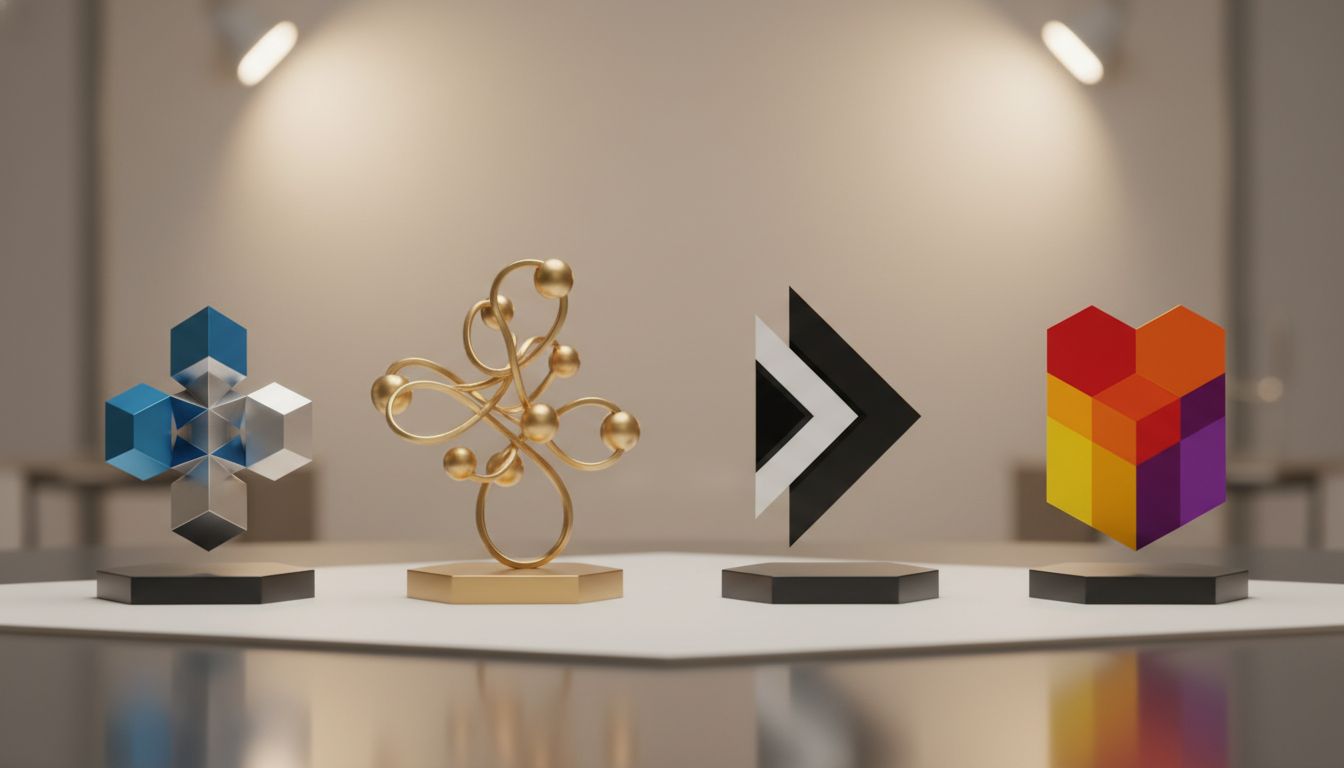
In the highly competitive and rapidly evolving digital landscape, a brand’s visual identity serves as its most critical silent ambassador. Before a prospective client reads a single word of your marketing copy or interacts with your sales team, they process your logo. This instantaneous visual processing dictates their foundational perception of your business, making logo design an integral component of your broader lead generation and brand positioning strategies. Among the myriad of design philosophies available today, geometric logo design has emerged as a dominant force. The strategic use of fundamental shapes—circles, squares, triangles, and complex polygons—taps into deep-seated psychological associations, allowing brands to communicate complex values through minimalist execution. If you are exploring the 4 Geometric Logo Design Styles To Strengthen Your Brand Identity, you are already taking a crucial step toward establishing a timeless, scalable, and highly impactful corporate presence.
Industry trends continuously lean toward minimalism and cognitive fluency. Modern consumers are inundated with thousands of visual stimuli daily. Consequently, overly intricate logos often fail to leave a lasting impression, getting lost in the visual noise. Geometric logos, on the other hand, leverage the principles of Gestalt psychology, allowing the human brain to quickly recognize, categorize, and remember the brand mark. They are infinitely scalable, looking just as crisp on a tiny mobile screen as they do on a massive billboard. This comprehensive guide will deeply explore the foundational psychology of shapes, dissect the 4 Geometric Logo Design Styles To Strengthen Your Brand Identity, and provide actionable insights to help you leverage these styles to capture high-quality leads and foster unwavering brand loyalty.
Key Takeaways
- Psychological Impact: Geometric shapes are not merely aesthetic choices; they trigger subconscious emotional responses that can either build or erode consumer trust.
- Scalability and Versatility: Geometric logos inherently adapt perfectly to modern digital requirements, from responsive website headers to social media favicons.
- The Four Core Styles: Understanding the distinct advantages of squares (stability), circles (community), triangles (dynamism), and abstract polygons (innovation) is crucial for brand alignment.
- Strategic Differentiation: Combining geometric styles with deliberate typography and color psychology creates a unique, lead-generating visual identity.
- Professional Execution: Achieving the perfect balance in geometric design often requires expert precision to ensure mathematical harmony and visual weight distribution.
The Subconscious Power of Geometric Psychology in Branding
Before diving into the specific styles, it is imperative to understand why geometric shapes wield such profound influence over consumer perception. The human brain is hardwired to seek patterns, order, and meaning in the visual world. When we observe a specific shape, our subconscious immediately cross-references it with natural phenomena and historical contexts. This cognitive process is known as visual semiotics.
For a business, this means that the literal shape of your logo does the heavy lifting in communicating your core values. A brand that wishes to project unyielding security and tradition will inherently fail if its logo relies on chaotic, unstructured, or overly fluid shapes. Conversely, a disruptive tech startup aiming to revolutionize an industry will send mixed signals if it utilizes the rigid, heavy constraints of a traditional box. By mastering the 4 Geometric Logo Design Styles To Strengthen Your Brand Identity, businesses can deliberately engineer their desired brand perception, aligning their visual identity with their target audience’s psychological expectations. This alignment builds immediate trust, which is the foundational prerequisite for converting a casual observer into a qualified lead.
Exploring the 4 Geometric Logo Design Styles To Strengthen Your Brand Identity
1. The Symmetrical and Minimalist Square: Communicating Unyielding Stability
The square, alongside its rectangular counterpart, is the ultimate symbol of structure, order, and stability. In the physical world, squares form the foundation of our homes, our secure vaults, and our structural grids. Psychologically, the right angles and equal proportions of a square communicate fairness, conformity, and steadfast reliability. When a brand utilizes a square-based geometric style, it is boldly declaring its permanence and trustworthiness.
Industry Applications: This geometric style is overwhelmingly favored by industries where risk aversion and trust are paramount. Financial institutions, legal firms, insurance agencies, and construction companies frequently utilize square and rectangular motifs. For these businesses, the primary lead generation hurdle is convincing the prospect that their assets, legal standing, or physical safety are in secure hands. A solid, unyielding square visually reinforces this promise.
Design Nuances: While squares are powerful, they run the risk of appearing overly rigid, cold, or unimaginative. Expert designers often mitigate this by softening the corners (using rounded rectangles), utilizing negative space within the square to create secondary imagery, or tilting the square on its axis to form a diamond, which retains the stability of the shape while adding a subtle sense of premium exclusivity and luxury.
2. The Continuous and Unified Circle: Fostering Community and Approachability
Circles are arguably the most ubiquitous shape in nature, representing the sun, the moon, the eye, and the cyclical nature of time. Lacking any sharp angles or distinct beginning and end points, the circle is visually soothing and inherently approachable. It communicates unity, wholeness, eternity, and global connection. A circular geometric logo style actively invites the viewer in, suggesting a brand that is inclusive, protective, and human-centric.
Industry Applications: Because circles project warmth and inclusivity, they are the go-to geometric style for non-profit organizations, social media platforms, community-driven applications, and lifestyle brands. Furthermore, because the circle suggests global reach and continuous motion, it is also highly effective for international logistics companies and telecommunications brands that want to emphasize connectivity.
Design Nuances: The challenge with circular logos is achieving distinction, as the shape is incredibly common. To create a unique identity, designers might utilize concentric circles to imply radiating energy or sound waves, interlocking rings to symbolize partnership and collaboration, or broken circles to indicate an open, welcoming environment. When evaluating the 4 Geometric Logo Design Styles To Strengthen Your Brand Identity, the circle is unparalleled in its ability to soften a corporate image and foster emotional resonance with potential leads.
3. The Dynamic and Edgy Triangle: Projecting Innovation and Forward Momentum
The triangle is the most dynamic and aggressive of the primary geometric shapes. Unlike the stable square or the harmonious circle, the triangle represents tension, action, and direction. Because it inherently points, it acts as a visual guide, pushing the viewer’s eye toward a specific destination. When resting on its broad base, a triangle represents an immovable mountain or a pyramid, symbolizing ultimate strength and ascent. When inverted, it creates a sense of precarious balance and high tension. When pointing to the right, it universally signifies forward movement, progress, and the “play” action.
Industry Applications: Triangles are the preferred geometric style for brands that want to be perceived as cutting-edge, fast, and disruptive. Technology startups, athletic apparel brands, motor companies, and high-performance engineering firms frequently rely on triangular logos. If your lead generation strategy relies on convincing customers that your product will accelerate their growth, improve their speed, or revolutionize their workflow, the triangle is your most potent visual tool.
Design Nuances: Triangles carry a distinct masculine energy and can sometimes appear overly aggressive or harsh if not balanced correctly. Modern brands often utilize intersecting triangles, gradients, or slightly rounded vertices to maintain the shape’s dynamic energy while ensuring it remains aesthetically pleasing and accessible. The precise angle of the triangle’s peak can drastically alter its perception; a steep, acute triangle feels fast and dangerous, while an equilateral triangle feels more balanced and purposeful.
4. The Complex and Abstract Polygon: Showcasing Multifaceted Expertise
Moving beyond the basic shapes, the fourth style involves complex polygons—hexagons, octagons, and intricate geometric tessellations. Polygons bridge the gap between simple geometry and complex, futuristic architecture. The hexagon, for instance, is a marvel of natural engineering (found in honeycombs), representing efficiency, synergy, and intelligence. Abstract geometric logos often combine multiple shapes to create a three-dimensional illusion on a two-dimensional plane, utilizing isometric grids and overlapping transparencies.
Industry Applications: Abstract polygons are the hallmark of highly technical, multifaceted organizations. Software development agencies, blockchain and cryptocurrency networks, scientific research firms, and creative agencies utilize this style to communicate that they are more than the sum of their parts. This style tells a prospective lead that the brand possesses deep, multidimensional expertise capable of solving complex, layered problems.
Design Nuances: The primary risk with abstract geometric polygons is visual clutter. If a logo becomes too complex, it loses its scalability and becomes unrecognizable at small sizes (such as a website favicon or an app icon). Successful execution of this style requires a rigorous adherence to grid systems and a masterful use of negative space. The goal is to imply complexity without actually rendering a complicated, messy graphic.
How to Choose the Right Geometric Style for Your Industry
Selecting the correct style from the 4 Geometric Logo Design Styles To Strengthen Your Brand Identity is not a matter of personal aesthetic preference; it is a strategic business decision. Your logo must serve as a visual translation of your brand’s unique value proposition. To make the right choice, you must first define your brand archetype. Are you the ‘Caregiver’ aiming to nurture and protect? The circle is your ideal choice. Are you the ‘Hero’ promising to conquer challenges with strength and speed? The triangle will serve you best. Are you the ‘Ruler’ offering order and stability? Embrace the square. Are you the ‘Creator’ building innovative, complex solutions? Abstract polygons are your domain.
This strategic alignment is where professional design expertise becomes invaluable. A poorly executed geometric logo can look like a generic piece of clip art, failing entirely to generate leads or build trust. Partnering with seasoned professionals like London Logo Designs can help ensure that your geometric branding is not only psychologically accurate but also visually distinct, mathematically precise, and perfectly tailored to resonate with your specific target market.
The Crucial Role of Color and Typography in Geometric Branding
While the shape provides the structural foundation of your brand identity, color and typography provide the nuanced emotional context. A geometric shape does not exist in a vacuum; its psychological impact is profoundly altered by the color palette applied to it.
Consider a heavy, stable square. If rendered in a deep navy blue, it projects profound corporate trust, authority, and financial security. However, if that exact same square is rendered in a vibrant, neon orange, it suddenly transforms into a symbol of youthful energy, creativity, and accessible construction. Similarly, a dynamic triangle in red screams urgency, passion, and high-speed action, whereas a green triangle suggests environmental growth, renewable energy, and forward-thinking sustainability.
Typography must also harmonize with your chosen geometric style. A highly modern, abstract polygon logo will clash jarringly with a highly ornate, traditional serif font. Instead, geometric logos typically pair best with clean, geometric sans-serif typefaces that share the same structural DNA as the logo mark itself. The line weight of the typography should ideally match the line weight of the geometric symbol, creating a cohesive, unified brand signature that exudes professionalism and attention to detail.
Scalability and Future-Proofing Your Visual Identity
One of the most compelling reasons to adopt one of the 4 Geometric Logo Design Styles To Strengthen Your Brand Identity is the inherent future-proofing it provides. We live in a multi-device, omnichannel world. Your logo must perform flawlessly on a massive 4K television advertisement, a printed business card, a mobile application icon, and a tiny smartwatch screen.
Highly illustrative or intricate logos degrade quickly when scaled down, losing their detail and becoming illegible smudges. Geometric logos, built on mathematical proportions and clean lines, are infinitely scalable. They maintain their structural integrity and visual impact regardless of the medium. This adaptability ensures that your brand remains instantly recognizable across all touchpoints, reinforcing brand recall and ensuring that your marketing efforts consistently compound over time to generate sustainable leads.
Frequently Asked Questions
1. Why are geometric logos so popular in modern branding?
Geometric logos are incredibly popular because they offer a perfect blend of simplicity and psychological depth. In a crowded digital landscape, consumers process simple, clean shapes much faster than complex illustrations. This cognitive fluency makes geometric logos highly memorable, infinitely scalable across digital devices, and capable of instantly communicating a brand’s core values through subconscious visual cues.
2. Can a geometric logo be too simple for my brand?
While simplicity is a strength, a geometric logo can become too simple if it lacks distinctiveness, risking resemblance to generic icons or competitors’ marks. The key is to introduce subtle, unique modifications—such as custom color gradients, strategic use of negative space, custom typography integration, or intersecting lines—to ensure the logo remains minimalist but highly proprietary to your specific brand.
3. How do I know which of the geometric shapes fits my specific industry?
You must align the psychological traits of the shape with your brand’s core promise. If your industry demands trust, security, and structure (like finance or law), choose squares. If you rely on community, global reach, and harmony (like social platforms or NGOs), choose circles. If you sell speed, innovation, and disruption (like tech or sports), choose triangles. If you offer multifaceted, complex solutions (like software or consulting), opt for abstract polygons.
4. Should I combine multiple geometric shapes in one logo?
Combining multiple shapes can be highly effective if done with intention and balance. For example, placing a dynamic triangle inside a stable circle can communicate “safe innovation” or “controlled speed.” However, combining too many disparate shapes can result in a chaotic, confusing visual that dilutes your brand message. If you combine shapes, they must adhere to a strict, unifying grid system.
5. Are geometric logos suitable for small, local businesses?
Absolutely. Geometric logos are not exclusive to global conglomerates. In fact, for a small or local business, a clean, professional geometric logo can immediately elevate the brand’s perceived value, making the business look more established, trustworthy, and authoritative. This high-end visual presentation is a powerful tool for generating local leads and competing with larger, more entrenched competitors.
Conclusion
Establishing a dominant brand identity requires far more than simply picking an attractive graphic; it requires a strategic alignment of visual psychology and business objectives. By understanding and implementing the 4 Geometric Logo Design Styles To Strengthen Your Brand Identity, you equip your business with a visual asset that works tirelessly to build trust, communicate value, and attract high-quality leads.
Whether you harness the unyielding stability of the square, the inclusive harmony of the circle, the dynamic momentum of the triangle, or the innovative complexity of abstract polygons, your geometric logo will serve as the scalable, future-proof foundation of your marketing efforts. Remember that simplicity in design is not the absence of complexity, but the mastery of it. When your brand’s visual identity resonates clearly and powerfully with your target audience’s subconscious, you transcend basic aesthetic appeal and step into the realm of lasting, profitable brand loyalty. Invest deeply in your visual geometry, partner with proven design professionals, and watch as your strengthened brand identity drives measurable growth for years to come.