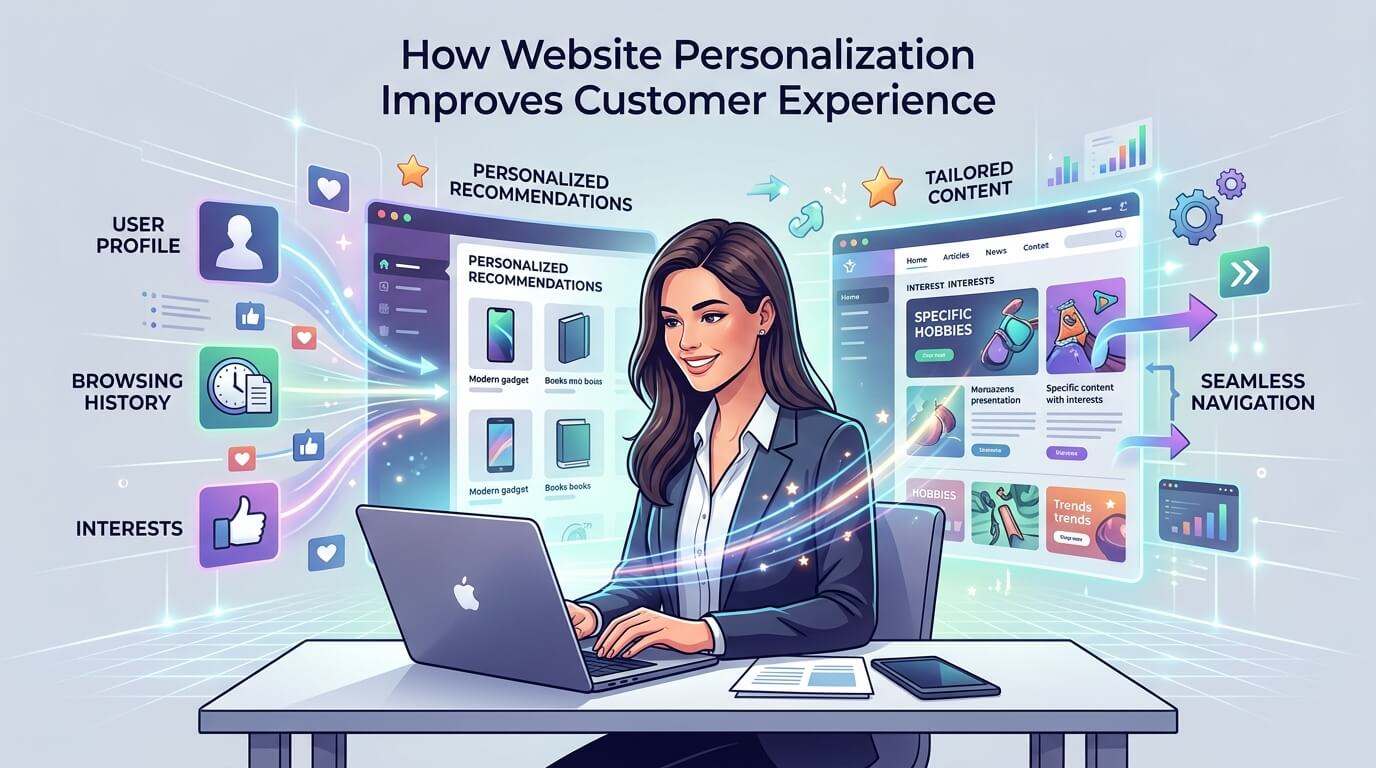
A website is often the first meaningful interaction a customer has with a business. Before speaking with a representative, visiting a physical location, or making a purchase, people frequently explore a company’s website to understand what it offers and whether it can meet their needs. Because of this, the quality of the online experience can have a direct influence on how customers perceive a brand. A website that feels confusing, generic, or difficult to navigate can quickly lose attention, while one that feels relevant and intuitive can encourage visitors to stay longer and explore further.
Website personalization has become an important part of creating that relevant experience. Instead of presenting exactly the same content, products, recommendations, or messages to every visitor, personalization allows a website to adapt elements of the experience according to available customer information and behavior. This may include displaying relevant products, remembering preferences, presenting location-specific information, recommending content based on previous interactions, or adjusting messaging according to where a visitor is in the customer journey.
The purpose of personalization is not simply to make a website look different for every visitor. Its real value comes from making digital interactions more useful and convenient. When customers can find information that matches their interests without unnecessary searching, their overall experience can improve. For businesses, this can also create opportunities to build stronger relationships, increase engagement, and encourage repeat visits.
What Is Website Personalization?
Website personalization refers to the practice of adapting website content, features, recommendations, and experiences based on information about individual visitors or groups of visitors. The information used for personalization can come from several sources, including browsing behavior, previous purchases, account preferences, geographic location, referral sources, and interactions with the website.
For example, an online clothing store might display winter jackets to visitors browsing from a colder region while highlighting lightweight clothing to visitors in warmer locations. An ecommerce website may recommend products based on items a customer has previously viewed. A business website could show returning visitors recently viewed services rather than asking them to start their search again.
Personalization can be relatively simple or highly sophisticated. Even remembering a customer’s language preference can create a more convenient experience. More advanced systems can combine multiple behavioral signals to determine which content is most relevant at a particular moment.
The key principle is relevance. Customers generally do not want to spend unnecessary time searching through information that does not apply to them. Personalization helps reduce that friction by bringing potentially useful information closer to the visitor.
Why Customer Experience Matters on a Website
Customer experience encompasses every interaction a person has with a business, from discovering the brand to navigating its website, purchasing a product, receiving support, and returning for another interaction. A website plays an important role because many of these interactions now happen digitally.
A customer may arrive on a website with a specific question. If the answer is difficult to find, the visitor may leave. Another customer may be ready to purchase but become frustrated because the website does not remember their preferences or makes them repeat information. These seemingly small inconveniences can affect how people perceive the entire business.
Personalization addresses some of these problems by making interactions more relevant. Instead of requiring every visitor to follow the same path, a personalized website can provide different routes based on individual circumstances.
This does not mean every aspect of a website needs to change for every visitor. Effective personalization can involve relatively small adjustments that make the overall journey smoother.
Personalization Makes Content More Relevant
One of the clearest ways personalization improves customer experience is by making website content more relevant to individual visitors. A website may contain hundreds of pages, articles, products, or services, but customers usually care about only a portion of that information.
When a website understands what a visitor has shown interest in, it can highlight related content. For example, someone reading several articles about email marketing might see recommendations for other content related to campaign strategy, automation, or analytics.
Relevant Recommendations Reduce Search Effort
Finding useful information can become frustrating when visitors have to navigate through multiple unrelated pages. Personalized recommendations can reduce this effort by presenting relevant options at appropriate points in the journey.
For ecommerce businesses, this might mean showing complementary products. For content-focused websites, it could involve recommending related articles or guides. For service businesses, personalized content might direct visitors toward services that correspond with their interests.
The result is a website experience that feels more organized from the customer’s perspective.
Personalization Creates More Convenient Navigation
Navigation is one of the most important components of website usability. Customers should be able to understand where they are, where they can go next, and how to find what they need. Personalization can make navigation more convenient by adapting the experience to previous interactions or known preferences.
A returning customer, for example, may not need to start from the homepage every time. A personalized dashboard can provide quick access to recent orders, saved products, account information, or previously viewed content.
This convenience becomes especially valuable when customers interact with a website repeatedly. Instead of treating every visit as a completely new session, personalization allows the website to build continuity.
Returning Visitors Can Receive a More Familiar Experience
A returning customer expects some level of recognition. If they have already created an account, saved preferences, or interacted with products, repeating the same steps can feel unnecessary.
Personalized experiences can remember appropriate information and use it to make future visits easier. This might include saved addresses, preferred categories, recently viewed products, language settings, or content recommendations.
When used appropriately, this creates a sense of continuity without requiring customers to repeatedly provide the same information.
Personalized Product Recommendations Improve Discovery
Product recommendations are among the most recognizable forms of website personalization. Ecommerce websites can analyze browsing and purchasing behavior to suggest products that may be relevant to a customer.
For example, someone who has purchased a camera might receive recommendations for memory cards, lenses, or protective equipment. A visitor who repeatedly views a particular category may see related products when returning to the website.
Personalized recommendations can improve the experience because they help customers discover products they may genuinely find useful.
However, recommendations should be relevant rather than excessive. Showing too many unrelated products can make the experience feel cluttered. The goal is to help customers make decisions, not overwhelm them with choices.
Website Personalization Can Improve Customer Engagement
Customer engagement refers to how actively people interact with a business and its digital experiences. Personalized content can encourage visitors to explore more pages, interact with recommendations, read additional content, or return to the website.
Generic messages can be easy to ignore because they are presented to everyone. Personalized messages can be more meaningful when they reflect an individual’s interests or stage in the customer journey.
For example, a first-time visitor might receive introductory information about a service, while an existing customer could see information about advanced features or related services. Each person receives content that better matches their current relationship with the business.
Context Makes Messages More Useful
Personalization becomes particularly effective when context is considered. A visitor who has just discovered a company may need educational information. Someone who has already compared several products may need detailed specifications or purchasing information.
Showing the same message to both visitors may not be equally useful. Contextual personalization allows businesses to address different needs without forcing every customer through the same experience.
Personalization Can Make Customer Support More Efficient
Customer support is another area where personalization can improve the online experience. Customers often want answers quickly, particularly when they are trying to resolve a problem or make a purchasing decision.
A personalized support experience can use information already associated with an account or previous interactions to make assistance more relevant. For example, an account area may display order information, frequently asked questions related to previous purchases, or support resources connected to a customer’s products.
This can reduce the need for customers to repeatedly explain their situation.
Personalization can also help businesses present different support content depending on the customer’s stage. New customers may need setup instructions, while experienced customers may benefit from troubleshooting documentation or advanced guidance.
Personalization Helps Build Customer Trust When Used Transparently
Personalization can improve customer experience, but the way customer data is handled matters. People want relevant experiences, but they also want to understand how their information is being used.
Businesses should therefore approach personalization responsibly. Customers should have appropriate control over their preferences, and websites should communicate relevant privacy information clearly.
When personalization feels helpful and expected, it can contribute to a positive relationship. When it feels invasive or unexplained, it can have the opposite effect.
The distinction often comes down to value and transparency. Remembering a customer’s language preference may feel convenient. Making unexpected assumptions based on sensitive information may feel uncomfortable.
Responsible Personalization Supports Long-Term Relationships
A successful personalization strategy should focus on improving the customer’s experience rather than simply collecting as much data as possible. Businesses should consider whether a particular piece of information genuinely helps make the website more useful.
This approach encourages more thoughtful personalization. Instead of changing everything based on every available signal, businesses can focus on changes that provide clear customer value.
Personalization Across Different Customer Journey Stages
Customers do not all visit a website with the same intentions. Some are discovering a business for the first time, while others are comparing products, preparing to purchase, or looking for post-purchase support.
Personalization can help address these different needs.
| Customer Journey Stage | Potential Personalization | Customer Experience Benefit |
| Awareness | Relevant educational content | Helps visitors understand the business |
| Research | Related guides and recommendations | Makes information easier to find |
| Consideration | Product or service comparisons | Supports informed decisions |
| Purchase | Personalized product suggestions | Makes shopping more relevant |
| Post-purchase | Account information and support resources | Makes follow-up interactions easier |
| Retention | Relevant updates and recommendations | Encourages continued engagement |
When personalization reflects the customer’s actual needs, the website can feel more useful at each stage. This creates a more connected journey rather than a collection of unrelated pages.
Personalization Can Improve Conversion Opportunities
Although customer experience should remain the central focus, a better experience can also support business outcomes. When visitors can find relevant products, services, or information more easily, they may be more comfortable taking the next step.
A personalized call to action can be more appropriate than a generic one. For example, someone who has already explored a service page may benefit from an option to schedule a consultation, while a first-time visitor may need a detailed explanation before making that decision.
Personalization does not guarantee conversions, but it can remove unnecessary friction from the journey.
Businesses should avoid making every personalized interaction sales-focused. Customers may be looking for information rather than preparing to buy. Providing useful content at the right time can be more valuable than constantly presenting promotional messages.
Personalization Supports a More Consistent Customer Journey
Customers often interact with businesses through multiple channels. They may discover a company through search, visit its website on a mobile device, return later through a social media link, and eventually purchase through a desktop computer.
A personalized website can help create continuity between these interactions.
For example, a customer who has saved products or started an account process should not necessarily have to begin again when returning later. Maintaining appropriate continuity can make the business feel more organized and customer-focused.
Consistency is particularly important for businesses with longer purchasing journeys. Customers may need several visits before making a decision, and remembering relevant interactions can make those visits more productive.
The Role of Data in Website Personalization
Data is the foundation of most personalization systems. However, useful personalization depends on the quality and relevance of the information being used.
Websites can use first-party data such as account information, purchase history, preferences, and interactions directly collected through the business’s own channels. Behavioral data can also reveal which pages visitors explore and which products or topics attract their attention.
Businesses need to interpret this information carefully. A customer viewing a product once does not necessarily mean they want to purchase it. Personalization systems should therefore consider context rather than treating every action as a definitive preference.
Good personalization combines useful signals with sensible assumptions.
Personalization Should Work Across Mobile and Desktop Experiences
Customers increasingly access websites from different devices, making responsive personalization important. A recommendation or preference that works well on desktop may need to be presented differently on a smaller mobile screen.
The objective should remain the same: make the experience easier and more relevant without making the interface complicated.
Mobile personalization can include remembering account information, displaying relevant content efficiently, simplifying navigation, or prioritizing frequently used features. Because mobile users often have less screen space, relevance can be especially valuable.
How Businesses Can Measure the Impact of Personalization
Personalization should be evaluated through customer experience and business performance data. Metrics such as engagement time, repeat visits, content interaction, product discovery, customer satisfaction, and conversion behavior can provide useful insights.
However, businesses should avoid assuming that every improvement comes directly from personalization. Website performance can be influenced by design, pricing, product quality, marketing campaigns, seasonality, and many other factors.
Testing different personalized experiences can help businesses understand what actually benefits their customers. A controlled approach allows companies to compare experiences and identify which changes produce meaningful improvements.
Common Challenges With Website Personalization
Website personalization also presents challenges. One concern is excessive personalization. If a website changes too aggressively or makes assumptions that are incorrect, customers may find the experience confusing.
Another challenge is maintaining accurate customer data. Outdated preferences can result in irrelevant recommendations. Technical complexity can also become an issue when businesses use multiple systems to manage customer information.
Privacy is another important consideration. Businesses need to handle customer information responsibly and provide appropriate transparency around data collection and use.
The most effective approach is therefore balanced. Personalization should solve real customer problems rather than exist simply because the technology is available.
The Future of Personalized Website Experiences
As digital experiences become increasingly sophisticated, personalization is likely to become more integrated into website design and customer journeys. Artificial intelligence and machine learning can help businesses identify patterns in customer behavior and deliver more relevant experiences at scale.
However, technology will not replace the basic principle behind good personalization. Customers still want websites that are clear, useful, fast, and easy to navigate. Advanced systems are valuable only when they support those fundamentals.
Future personalization strategies are likely to focus increasingly on context, timing, and customer intent. Rather than simply recommending products based on previous clicks, websites can aim to understand what visitors are trying to accomplish and provide appropriate assistance.
Conclusion
Website personalization can improve customer experience by making digital interactions more relevant, convenient, and connected. From personalized recommendations and content to easier navigation and more useful support, small adjustments can reduce friction and help visitors find what they need more efficiently.
The most successful personalization strategies are centered on customer value. They use relevant information responsibly, respect privacy, and avoid overwhelming visitors with unnecessary changes. When personalization works alongside strong design, clear content, responsive performance, and intuitive navigation, it can turn a generic website into an experience that feels more useful and customer-focused.
Frequently Asked Questions
Q. What is website personalization?
Website personalization is the process of adapting website content, recommendations, navigation, or features based on information about visitors and their interactions with a website.
Q. How does personalization improve customer experience?
It can make websites more relevant and convenient by helping customers find useful products, information, services, and support resources with less effort.
Q. Can website personalization increase engagement?
Yes. Relevant recommendations and content can encourage visitors to explore more of a website, interact with additional resources, and return for future visits.
Q. Is website personalization safe for customer privacy?
It can be when businesses collect and use information responsibly, provide appropriate transparency, follow applicable privacy requirements, and give customers meaningful control over their preferences.
Q. What are examples of website personalization?
Examples include personalized product recommendations, recently viewed items, location-specific information, saved preferences, customized content recommendations, personalized account dashboards, and support resources based on previous interactions.