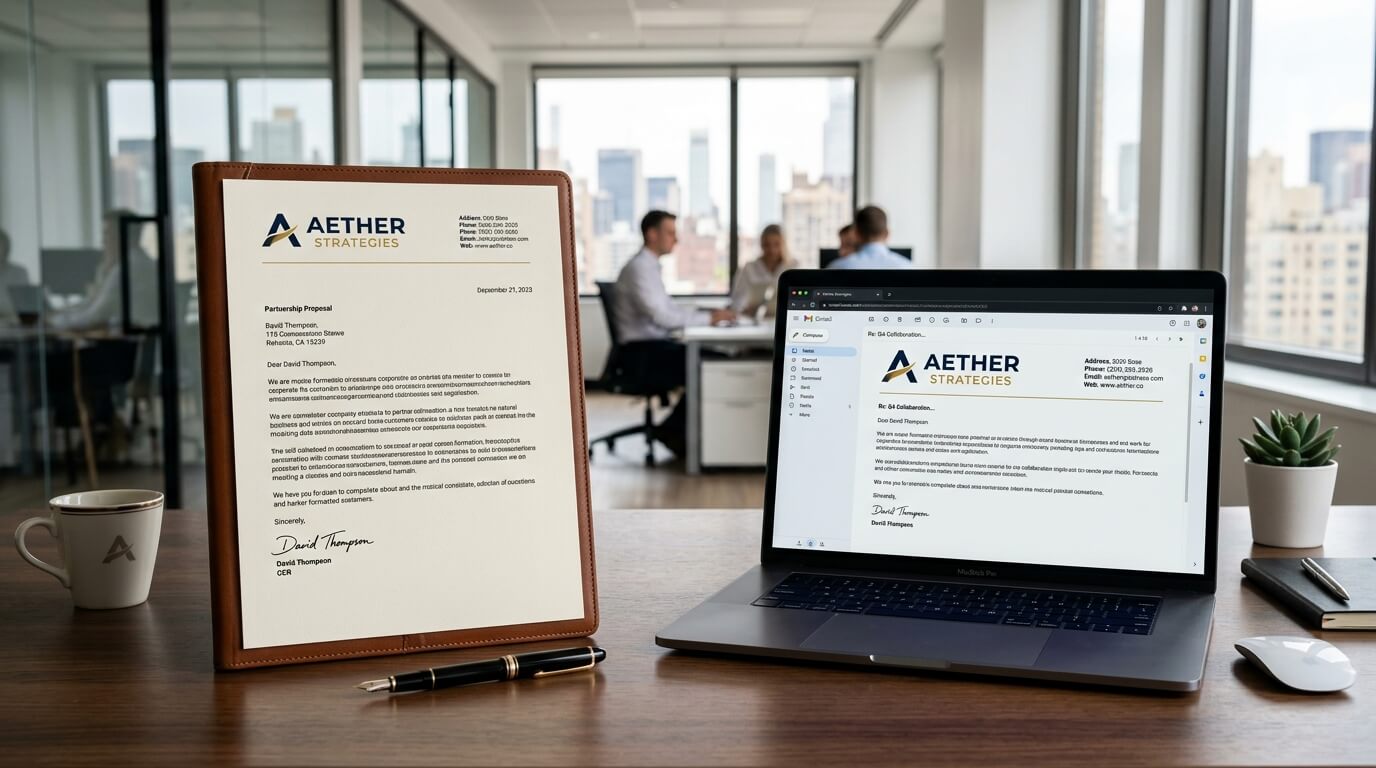
Letterheads have long been an important part of professional business communication. A well-designed letterhead can make a simple document look organized, credible, and connected to a company’s identity. However, the way businesses communicate has changed significantly. Emails, PDFs, online proposals, digital contracts, and electronic invoices are now common, making digital letterheads just as relevant as traditional printed versions.
The choice between printed and digital letterheads is not necessarily about replacing one with the other. Instead, businesses need to understand how each format works, where it performs best, and how it contributes to professional communication. Printed letterheads offer a physical presence that digital documents cannot completely reproduce, while digital letterheads provide speed, flexibility, and convenience.
Understanding the differences can help businesses create a stationery system that supports both traditional and modern communication needs.
Understanding Printed Letterheads
Printed letterheads are physical sheets of paper that contain a company’s branding elements. These commonly include the business name, logo, contact information, website, address, and other relevant details. Depending on the organization and purpose, printed letterheads may also incorporate design elements such as borders, patterns, brand colors, or specialty finishes.
Printed letterheads continue to have value because physical documents can create a different impression from digital communication. A signed letter, formal notice, certificate, proposal, or presentation document can feel more official when printed on professionally designed stationery.
The quality of the paper and printing can also influence how the document is perceived. Thick paper, textured stocks, embossing, foil details, or high-quality printing can add a sense of craftsmanship to corporate communication. For businesses that regularly interact with clients in person, printed letterheads can therefore remain an important part of their stationery.
The Professional Presence of Printed Documents
One of the strongest characteristics of printed letterheads is their physical presence. When a recipient holds a professionally printed document, they can immediately experience its paper quality, typography, colors, and overall finish.
This can be particularly useful for industries where formal documentation remains important. Legal practices, financial institutions, consulting firms, real estate companies, educational organizations, and professional service providers may still use printed documents for specific situations.
A printed letter can also feel more deliberate. Unlike a quick email, a physical document requires preparation, printing, signing, and delivery. That additional effort can communicate a sense of importance when the situation calls for it.
Design Possibilities With Printed Letterheads
Printed letterheads provide access to physical design techniques that are difficult to reproduce digitally. Embossing, debossing, foil stamping, spot finishes, textured papers, specialty inks, and unusual paper stocks can make stationery visually and physically distinctive.
These details are especially useful for businesses that want their stationery to reinforce a premium brand identity. A luxury property company, law firm, architecture studio, or high-end consultancy may benefit from stationery that feels substantial when handled.
However, physical design elements also increase production costs. Businesses should therefore consider whether the additional investment supports their communication goals.
Understanding Digital Letterheads
Digital letterheads are electronic templates designed for documents such as PDFs, proposals, invoices, reports, presentations, and formal letters. Instead of printing the letterhead onto paper, the branding is incorporated directly into a digital document.
A digital letterhead might be created as a Word template, PDF template, or another editable document format. It can contain the same fundamental branding elements as printed stationery, including the logo, company name, contact information, colors, typography, and other visual details.
The major advantage is convenience. Employees can prepare professional documents without needing to access physical stationery or a printer.
Speed and Accessibility
Digital letterheads are particularly useful for businesses that communicate frequently and remotely. An employee working from home can create a branded document and send it to a client within minutes.
This eliminates the need to print, scan, physically sign, and mail documents in situations where electronic communication is sufficient. It can also simplify internal workflows because multiple employees can use the same approved template.
Digital letterheads are therefore closely connected to modern business operations. They fit naturally into email communication, cloud-based document management, electronic proposals, and digital contracts.
Printed vs Digital Letterheads: Key Differences
Although both formats serve the same fundamental branding purpose, their practical applications are different.
| Feature | Printed Letterheads | Digital Letterheads |
| Physical presence | Strong | None |
| Speed of delivery | Slower | Immediate |
| Printing cost | Ongoing | Minimal after setup |
| Design finishes | Extensive | Limited to digital effects |
| Environmental considerations | Uses paper and ink | Primarily electronic |
| Remote accessibility | Limited | Excellent |
| Signing documents | Physical signatures possible | Digital signatures possible |
| Best suited for | Formal physical communication | Emails, PDFs, proposals, reports |
| Storage | Requires physical space | Easy digital storage |
| Revisions | Require new printing | Easy to update |
The table demonstrates that neither format is universally better. Each addresses different communication requirements.
The Cost Consideration
Cost is one of the most important factors when comparing printed and digital letterheads. Printed stationery involves expenses related to paper, printing, finishing, storage, and delivery. The total cost can increase considerably when a company chooses premium materials or specialty printing techniques.
Digital letterheads typically require a design investment at the beginning. Once a professional template has been created, however, the business can reuse it across numerous documents without paying for individual sheets of stationery.
For companies that send hundreds of documents every month, digital letterheads can significantly simplify document production. Printed stationery may still be worthwhile for specific communications, but digital templates can handle routine documents more efficiently.
Considering Long-Term Value
The cheapest option is not always the most appropriate option. Businesses should consider how letterheads contribute to their overall communication strategy.
For example, a printed letterhead may be worthwhile when sending a formal welcome package to a major client. A digital letterhead may be more appropriate for sending a routine project update. The value comes from matching the format to the communication rather than choosing one format exclusively.
Branding and Visual Consistency
Brand consistency is another important consideration. Both printed and digital letterheads should follow the company’s established visual identity.
Logo placement, typography, colors, spacing, contact details, and other elements should remain consistent regardless of whether the document is printed or viewed on a screen. Inconsistent letterhead design can make a business appear less organized.
Maintaining the Same Brand Across Formats
A company may have a beautiful printed letterhead but a poorly formatted digital template. When this happens, recipients may encounter different versions of the brand depending on how they receive information.
A stronger approach is to develop a letterhead system that works across both formats. The digital version can preserve the core visual characteristics of the printed version while adapting the design for screen readability.
For example, a printed letterhead may use a subtle background texture that does not translate well to digital documents. The digital version could simplify that element while retaining the same logo, typography, spacing, and brand structure.
Digital Letterheads and Remote Work
The growth of remote and hybrid workplaces has increased the usefulness of digital letterheads. Teams may be spread across cities, countries, or time zones, making physical stationery less practical for everyday communication.
Digital templates allow employees to access standardized documents from almost anywhere. A marketing manager can create a branded proposal from home, while a sales representative can prepare a client document while traveling.
This flexibility also supports faster collaboration. Multiple team members can work with the same document template, helping maintain consistency across departments.
Printed Letterheads and Formal Communication
Despite the growth of digital communication, certain documents can still benefit from being printed. Formal notices, signed agreements, certificates, official correspondence, awards, and personal letters may have greater impact when presented physically.
Printed documents can also be useful during meetings. A professionally designed handout can make information easier to review when people are sitting together rather than looking at separate screens.
In some situations, the physical document becomes part of the experience. A client may keep a printed proposal, presentation, or welcome letter because it feels tangible and carefully prepared.
Environmental Considerations
Environmental impact is another factor businesses may consider. Printed letterheads consume paper, ink, energy, and transportation resources. Businesses that produce large quantities of printed documents need to think about how much stationery they actually use.
Digital letterheads reduce the need for physical materials when documents can be delivered electronically. However, digital communication also relies on electronic devices, servers, and data infrastructure. The environmental discussion is therefore more complicated than simply labeling one format as environmentally friendly.
Businesses can reduce unnecessary printing by using digital letterheads for routine communication while reserving printed stationery for situations where physical documents add genuine value.
Security and Document Control
Digital letterheads also create opportunities for document control, but they require careful management. A company should ensure that employees are using approved templates and current contact information.
If an outdated digital template contains an old address, telephone number, logo, or legal statement, it can create confusion. Centralized document templates and clear internal processes can help prevent these problems.
Printed letterheads have their own security considerations. Blank branded stationery should be stored appropriately, especially in organizations that handle sensitive correspondence. Physical documents can also be misplaced, copied, or discarded improperly.
The format itself does not guarantee security. Good document-management practices remain important in both environments.
How Design Should Change for Digital Use
A printed letterhead and a digital letterhead should not always be identical in every technical detail. Screen-based documents need to account for readability, file size, device compatibility, and digital viewing conditions.
A design that looks excellent on paper may become distracting on a laptop or smartphone. Heavy background graphics, very small text, and low-contrast elements can create problems when viewed electronically.
Digital letterheads should therefore prioritize clean layouts and readable typography. The design should also leave enough space for the actual document content so that branding does not overwhelm the information.
How Design Should Change for Print
Printed letterheads need to account for physical production. Margins, paper size, ink coverage, color reproduction, and finishing methods can affect the final result.
Colors may look different on paper compared with a screen, while very fine lines or tiny typography may not reproduce as expected. Professional print preparation can help ensure that the final stationery matches the intended design.
Paper selection is equally important. A basic office letter may work well on standard stock, while a high-end corporate communication may benefit from a heavier or textured paper.
Can Businesses Use Both?
For many businesses, using both printed and digital letterheads is a practical approach. Instead of treating them as competing choices, companies can assign each format to the situations where it makes the most sense.
Routine communication can use digital letterheads, particularly when documents are sent through email or shared online. Printed letterheads can be reserved for important physical correspondence, client meetings, signed documents, ceremonies, and situations where tangible presentation matters.
This hybrid strategy allows a company to maintain a professional identity without relying too heavily on either physical or digital stationery.
Creating a Unified Letterhead System
A unified system starts with a strong brand foundation. The logo, fonts, colors, spacing, and contact information should be established before the business creates individual templates.
The printed version can then be prepared specifically for physical production, while the digital version can be optimized for electronic documents. Both should look unmistakably like the same brand.
This approach also makes future updates easier. When a company changes its address, website, or branding, the printed and digital versions can be updated together.
Which Letterhead Is Better for Different Situations?
The appropriate format depends heavily on the purpose of the document. A routine internal report may not require printed stationery at all, while an important signed letter may benefit from physical presentation.
| Business Situation | Suitable Format | Main Reason |
| Routine email attachment | Digital | Fast and convenient |
| Formal physical letter | Printed | Tangible and professional |
| Client proposal sent by email | Digital | Easy to share and revise |
| Signed ceremonial document | Printed | Physical presentation |
| Internal business memo | Digital | Efficient distribution |
| Premium client package | Printed | Adds physical brand experience |
| Remote team communication | Digital | Accessible from anywhere |
| Meeting handout | Printed | Easy to review physically |
| Electronic report | Digital | Simple storage and distribution |
| Important mailed correspondence | Printed | Traditional formal presentation |
The important point is that the decision should be based on communication needs rather than trends alone.
The Role of Letterheads in Modern Business Communication
Letterheads may appear to be a small branding detail, but they contribute to the overall perception of an organization. Every branded document is another opportunity to present a consistent identity.
Modern businesses often communicate across many channels, including websites, social media, email, messaging platforms, presentations, proposals, and printed materials. A letterhead connects formal documents to the wider brand system.
Digital letterheads have made professional stationery more accessible, while printed letterheads continue to provide a physical dimension to business communication. Together, they can support a more complete brand experience.
Choosing the Right Approach for Your Business
The right solution depends on how a company communicates, who its customers are, how frequently it sends formal documents, and whether physical presentation plays an important role in its industry.
A small digital-first business may use digital letterheads almost exclusively. A traditional professional practice may rely more heavily on printed stationery. A growing company with both online and offline customers may benefit from maintaining both.
The goal should be consistency, practicality, and professionalism. A letterhead should make communication easier while reinforcing the identity of the organization behind it.
Conclusion
Printed and digital letterheads both have an important place in modern business communication. Printed letterheads provide physical presence, tactile quality, and a sense of formality, while digital letterheads offer speed, flexibility, accessibility, and convenience. Rather than viewing them as opposing formats, businesses can use both strategically.
A well-designed letterhead system should reflect the company’s brand while adapting to the realities of modern communication. When printed and digital versions are designed as parts of the same identity, businesses can present a professional and consistent image across physical and digital channels.
FAQ
Q1. What is the main difference between printed and digital letterheads?
Printed letterheads are physical sheets of branded stationery, while digital letterheads are electronic templates used for PDFs, letters, reports, proposals, and other digital documents.
Q2. Are digital letterheads more cost-effective?
They can be, particularly for businesses that produce many documents electronically. Once the digital template is created, it can generally be reused without ongoing paper and printing expenses.
Q3. Are printed letterheads still relevant?
Yes. Printed letterheads can remain useful for formal correspondence, signed documents, client meetings, certificates, and other situations where physical presentation is valuable.
Q4. Can a company use both printed and digital letterheads?
Yes. Many businesses can benefit from using digital letterheads for everyday electronic communication and printed letterheads for selected physical communications.
Q5. Should printed and digital letterheads have the same design?
They should share the same core brand identity, but the layouts can be adjusted to suit their respective formats. Digital versions should prioritize screen readability, while printed versions can take advantage of physical paper and finishing options.