Introduction
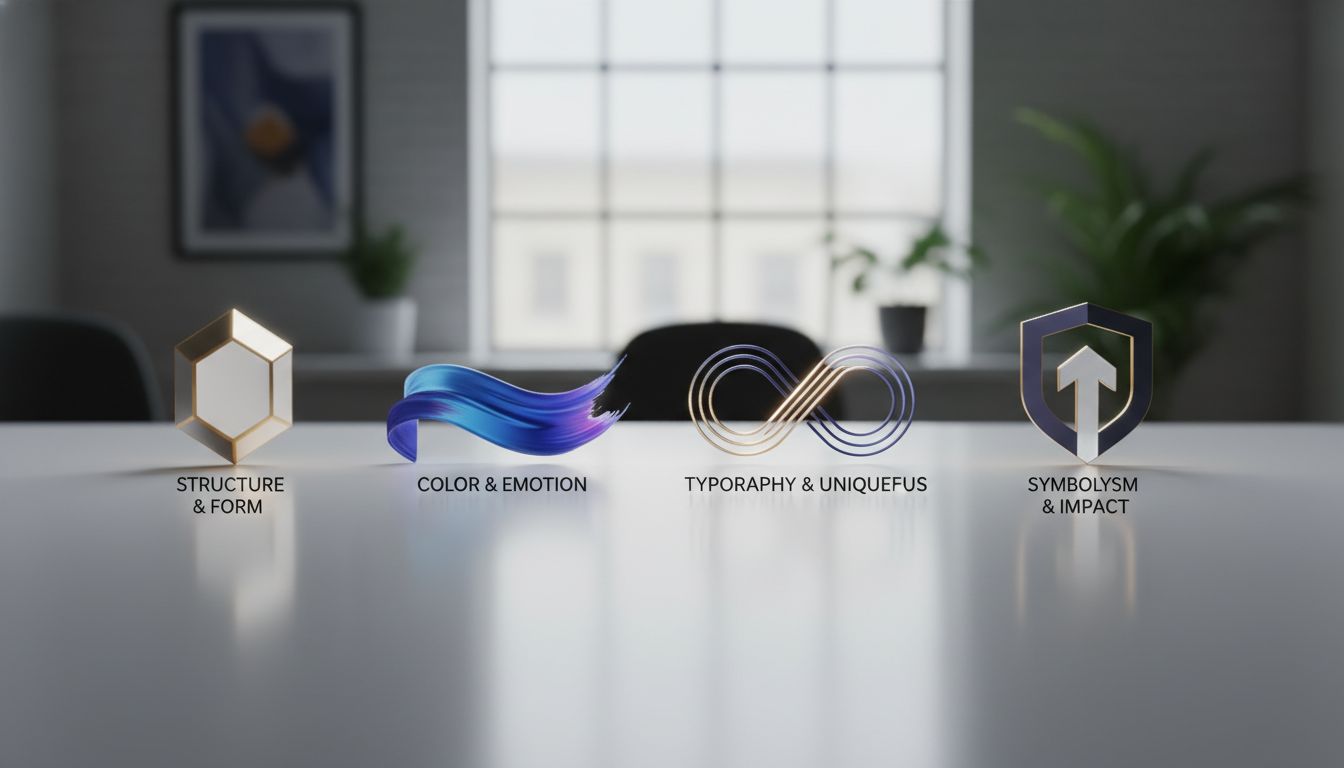
In today’s hyper-connected digital landscape, the concept of a personal brand has evolved from a buzzword into a vital professional asset. Whether you are a freelance consultant, a thought leader, an entrepreneur, or an influencer, your personal brand is the unique combination of skills, experiences, and values that you present to the world. However, before your target audience engages with your written content, listens to your podcast, or purchases your services, they interact with your visual identity. This is where strategic design becomes paramount. Understanding the 4 Essential Logo Design Elements To Boost Your Personal Brand is the critical first step in transforming how the market perceives your professional value.
Recent industry trends indicate that human attention spans are shorter than ever, with users forming an opinion about a brand’s visual appeal within milliseconds. In this split-second window, your logo does the heavy lifting. It acts as the silent ambassador of your brand, communicating your niche, your professionalism, and your unique personality. A poorly designed logo can instantly degrade trust, while a meticulously crafted one builds immediate credibility. This comprehensive guide will explore the deep-seated psychology, architectural framework, and strategic implementation of the core elements required to build a personal brand logo that captivates, converts, and endures.
The Shift from Corporate to Personal Visual Identities
Historically, robust visual identities were reserved for massive corporate conglomerates. Today, the democratization of digital media has leveled the playing field, making personal branding a critical necessity for individual professionals. Unlike a corporate brand, which often relies on a collective mission statement, a personal brand is intrinsically tied to a single human being. Therefore, the visual representation must be highly authentic, deeply personal, yet uncompromisingly professional.
When developing your visual identity, you are essentially translating your human characteristics—your tone of voice, your expertise, your core values—into a graphical format. This requires a nuanced approach to design. The goal is not merely to create a pretty graphic, but to architect a strategic tool that generates leads, fosters audience loyalty, and commands premium pricing in your respective industry. To achieve this, you must master the foundational pillars of design. Let us delve deeply into the 4 Essential Logo Design Elements To Boost Your Personal Brand.
Element 1: Strategic and Expressive Typography
Typography is arguably the most critical component of a personal brand logo, particularly because many personal brands rely heavily on the individual’s name (e.g., a signature mark or a wordmark). The typeface you select speaks volumes before a single word is even read.
The Psychology of Font Selection
Every font family carries its own psychological weight and historical context. Understanding these nuances is essential for aligning your visual identity with your professional persona.
- Serif Fonts: Characterized by the small decorative strokes at the end of their letters (think Times New Roman or Garamond), serif fonts exude tradition, authority, reliability, and sophistication. If your personal brand is in law, finance, or high-end academia, a serif typography establishes immediate intellectual trust.
- Sans-Serif Fonts: Clean, modern, and devoid of decorative strokes (think Helvetica or Montserrat), sans-serif fonts communicate innovation, approachability, and forward-thinking. Tech entrepreneurs, modern marketers, and lifestyle influencers often leverage sans-serifs to appear accessible and contemporary.
- Script and Signature Fonts: These mimic human handwriting. When used correctly, they add a layer of elegance, creativity, and deep personal touch. They are highly popular among photographers, life coaches, and artists. However, they must be used cautiously, as overly intricate scripts can severely damage legibility.
Kerning, Leading, and Custom Lettering
Beyond selecting a base font, the manipulation of that typography separates amateur designs from world-class branding. Kerning refers to the spacing between individual letters. A logo with tight kerning might feel urgent or clustered, while wide, expansive kerning breathes luxury and high-end positioning into the brand name. Furthermore, customized lettering—where a designer slightly alters a standard font to make it completely unique to you—ensures that your personal brand cannot be easily replicated by competitors using out-of-the-box software.
Element 2: Intentional Color Psychology
The second crucial component in the 4 Essential Logo Design Elements To Boost Your Personal Brand is color. Color is not just an aesthetic choice; it is a primal communication tool. The human brain processes color prior to processing text or shapes, making your color palette a powerful emotional trigger.
Decoding Emotional Responses to Color
Strategic color selection involves aligning the psychological associations of specific hues with your brand’s core message. Here is an analytical look at how different colors influence audience perception:
- Blue: Universally recognized as the color of trust, stability, and calm. It is no coincidence that major financial institutions and tech platforms utilize blue. If your personal brand promises security, consulting, or reliable B2B services, blue is a formidable choice.
- Red: The color of passion, urgency, and high energy. Red stimulates the nervous system and encourages action. Motivational speakers, fitness coaches, and aggressive sales consultants often integrate red to convey dynamism.
- Green: Intrinsically linked to nature, growth, wealth, and renewal. Green is highly effective for personal brands operating in the wellness space, financial planning, or sustainable technologies.
- Yellow and Orange: These warm tones radiate optimism, creativity, and youthful energy. They are excellent for creative directors, childcare specialists, or brands focused on happiness and energetic disruption.
- Black and White (Monochrome): The ultimate signifiers of luxury, minimalism, and timeless elegance. High-fashion influencers, luxury real estate agents, and minimalist designers often rely on a stark monochrome palette to convey premium exclusivity.
Maintaining Technical Color Consistency
A professional personal brand must maintain absolute color consistency across all mediums. Your logo must look identical on a digital screen, a printed business card, and a massive billboard. This requires a deep understanding of color spaces. Your design should be established using the Pantone Matching System (PMS) for exact ink matching, CMYK for standard printing, and RGB/Hex codes for digital applications. Inconsistency in your brand colors subtly erodes trust, making technical precision a non-negotiable aspect of your design strategy.
Element 3: Memorable and Scalable Iconography
While many personal brands thrive on a purely typographic logo (a wordmark), incorporating a distinctive symbol, monogram, or icon provides an incredible advantage. This visual shorthand becomes the anchor of your brand recognition.
The Power of Monograms and Abstract Symbols
For a personal brand, a monogram—a motif made by overlapping or combining two or more letters, usually your initials—is a highly effective strategy. It bridges the gap between your literal name and a memorable visual mark. Alternatively, you might utilize an abstract symbol that represents your methodology or niche. For example, a personal brand focused on “growth hacking” might use an abstract geometric shape that subtly points upward. The key is to avoid clichés. If you are a writer, avoid the overused quill pen; if you are a real estate agent, avoid the generic roof silhouette. Instead, aim for abstract representations that evoke the feeling of your service rather than the literal object.
Mastering Negative Space
World-class logo designs often utilize negative space—the empty space around and between the subject of an image. By cleverly manipulating the background, designers can hide secondary meanings or initials within the logo. This creates an “aha!” moment for the viewer, fostering a deeper psychological connection and making the logo infinitely more memorable. Implementing such high-level design tactics significantly elevates your personal brand above the noise of average competitors.
Element 4: Uncompromising Adaptability and Versatility
The final pillar of the 4 Essential Logo Design Elements To Boost Your Personal Brand is purely functional, yet often overlooked by amateur designers: versatility. In the modern digital ecosystem, your logo will not live in a single environment. It must survive and thrive across a multitude of platforms, sizes, and formats.
Building a Comprehensive Logo Suite
A single logo file is insufficient for a robust personal brand. You require a complete “logo suite” that adapts to different spatial constraints without losing its core identity. A professional logo suite includes:
- The Primary Logo: Your main logo, typically horizontal, including both your typography and your icon. This is used on your website header and official documents.
- The Secondary Logo: A stacked or vertical variation of your primary logo. This is essential for square or tall aspect ratios where a horizontal logo would be too small to read.
- The Submark: A highly simplified, compact version of your logo, often just the icon or monogram. This is critical for social media profile pictures, favicons (the tiny icon in a web browser tab), and watermarks.
Vector Formats and Responsive Design
To achieve true adaptability, your logo must be designed as a vector graphic (typically in formats like SVG, EPS, or AI). Unlike raster images (JPEG, PNG) which are made of pixels and become blurry when enlarged, vector graphics are based on mathematical equations. This means your logo can be scaled from the size of a postage stamp to the side of a skyscraper without losing a single fraction of clarity. Furthermore, your logo must be responsive—meaning it remains legible whether it is printed in full vibrant color, reverse-white on a dark background, or entirely in stark black and white for faxing or simple printing.
Integrating the Elements for Maximum Lead Generation
Understanding these four elements—typography, color psychology, iconography, and versatility—is only the beginning. The true magic happens when they are seamlessly integrated into a cohesive visual identity that actively works to generate leads and build your authority. Your personal brand logo should act as a visual funnel; its professionalism attracts high-ticket clients, its psychological cues build rapid trust, and its memorable nature ensures you remain top-of-mind when a purchasing decision is being made.
Executing this level of strategic design often requires the expertise of seasoned professionals who understand the nuances of brand architecture. If you want to guarantee that your visual identity is crafted to perfection, partnering with an elite agency like London Logo Designs can provide the industry-leading expertise necessary to translate your personal ethos into a powerful, market-dominating visual asset.
Key Takeaways
- Typography Drives Tone: Select serif, sans-serif, or custom script fonts based on the specific psychological message and level of authority you wish to convey to your target audience.
- Color is Psychological: Do not choose colors based merely on personal preference. Leverage color psychology to trigger specific emotional responses, and ensure technical consistency across RGB, CMYK, and Pantone formats.
- Icons Build Recognition: Utilize custom monograms or abstract symbols rather than literal, cliché imagery to create a distinct and memorable visual shorthand for your personal brand.
- Versatility is Mandatory: Ensure your logo is created in vector format and develop a full logo suite (primary, secondary, and submark) so your brand remains legible and impactful on every platform, from favicons to billboards.
- Professional Execution Matters: The 4 Essential Logo Design Elements To Boost Your Personal Brand work synergistically; investing in professional design ensures these elements harmonize to generate leads and establish deep market trust.
Frequently Asked Questions
1. Do I really need a logo for my personal brand, or is a professional headshot enough?
While a high-quality professional headshot is a crucial component of your personal brand, it serves a different purpose than a logo. A headshot humanizes you, but a logo professionalizes you. A logo acts as a scalable, versatile brand mark that can be used on document headers, merchandise, watermarks, and favicons where a headshot would be inappropriate or illegible. Together, they create a comprehensive personal brand identity.
2. How many colors should I include in my personal brand logo?
As a best practice in professional design, you should limit your primary logo to one to three distinct colors. Overcomplicating the color palette makes the logo difficult to reproduce, increases printing costs, and can visually overwhelm the viewer. The most iconic and recognizable logos in the world rely on a highly restrained, strategic color palette. Always ensure your logo also functions perfectly in single-color black and white.
3. What is the difference between a raster and a vector logo file?
Raster files (like JPGs and PNGs) are constructed using thousands of tiny colored squares called pixels. If you zoom in or enlarge a raster file, it becomes blurry and pixelated. Vector files (like AI, EPS, and SVG) are built using mathematical formulas that calculate points, lines, and curves. Because of this, vector logos can be scaled infinitely without any loss of quality or sharpness. A professional logo must always be designed as a vector.
4. Should my personal brand logo include my full name or just my initials?
This depends entirely on your brand strategy and the length of your name. If you have a short, highly memorable name, a full wordmark is highly effective. If your name is very long or difficult to pronounce, utilizing a monogram of your initials combined with a clear, sans-serif subtext of your full name is often the best approach. A robust logo suite will provide variations of both.
5. How often should I update or redesign my personal brand logo?
If you have built your logo correctly using the foundational elements discussed, it should remain effective for 5 to 10 years. You should only consider a redesign or a “brand refresh” if your target audience changes drastically, you pivot into an entirely new industry, or if your current logo was not professionally designed and is actively hindering your ability to attract high-tier clients.
Conclusion
Building a lucrative, authoritative personal brand in today’s saturated market requires much more than just subject matter expertise; it requires a strategic, visually arresting presentation. Your logo is the foundational cornerstone of that presentation. By mastering and implementing the 4 Essential Logo Design Elements To Boost Your Personal Brand—strategic typography, intentional color psychology, memorable iconography, and uncompromising versatility—you transition from being just another professional in your field to a recognized, trusted, and premium brand entity.
Remember that your visual identity is an investment, not an expense. A meticulously crafted logo works tirelessly on your behalf, creating stellar first impressions, building subconscious trust, and laying the groundwork for sustained lead generation and business growth. Take the time to audit your current visual assets, apply these four essential elements, and watch as your personal brand commands the attention and respect it truly deserves in the marketplace.