Introduction
The digital airwaves have never been more crowded. With millions of active shows available across platforms like Apple Podcasts, Spotify, and Google Podcasts, the audio landscape is a highly competitive arena. While the quality of your audio and the substance of your content are ultimately what retain listeners, it is your visual branding that attracts them in the first place. In a medium defined by sound, the irony is that your first impression is entirely visual. Listeners scroll through endless grids of thumbnails, making split-second decisions about which show is worth their time based almost exclusively on cover art. This is why investing time and thought into your visual identity is non-negotiable.
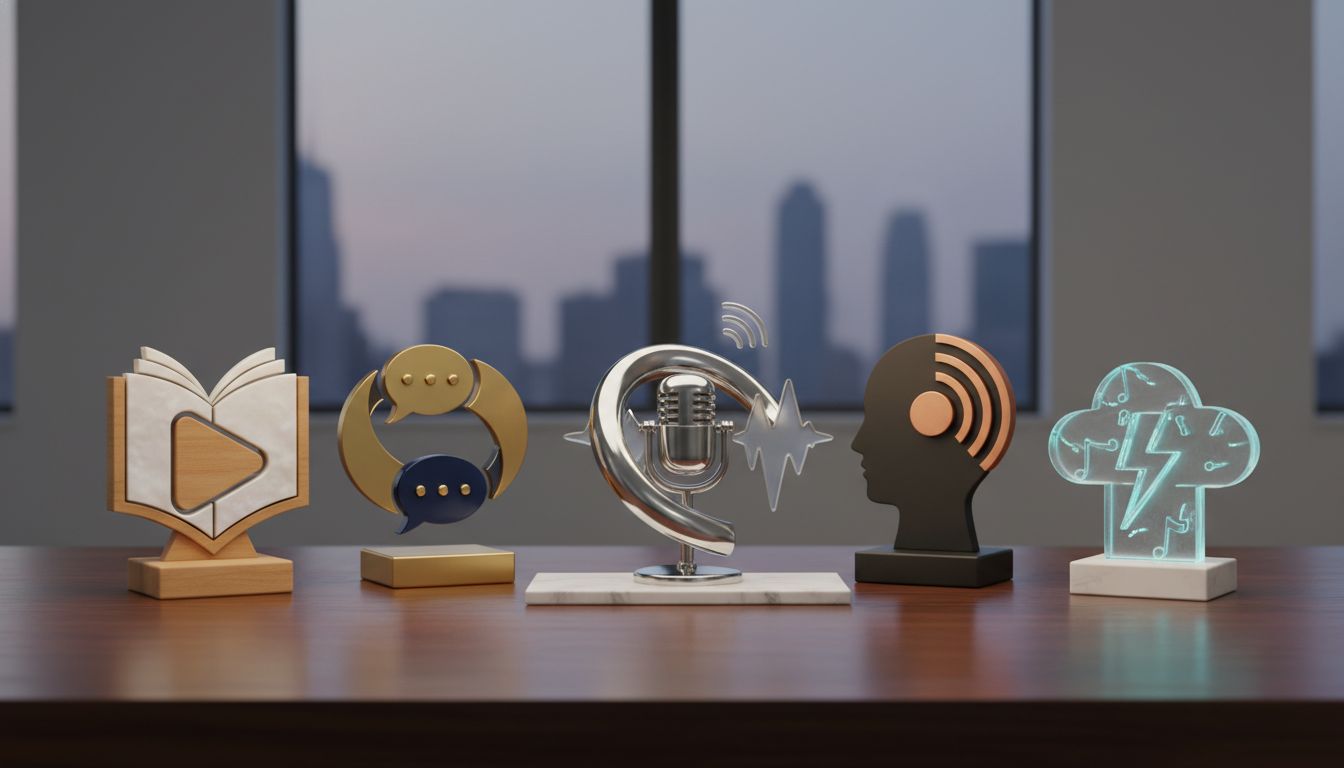
Your podcast logo is the anchor of your brand. It communicates your genre, your tone, and your professionalism before a single word is spoken. A poorly designed cover can make even the most highly produced audio documentary look amateurish, while a striking, professionally crafted logo can instantly elevate a newly launched indie show to top-tier status. If you are preparing to launch a new show or looking to rebrand an existing one, exploring these 5 Podcast Logo Ideas To Spark Your Creativity will give you the strategic edge needed to capture attention, communicate your unique value proposition, and build a loyal audience.
Key Takeaways
- First Impressions Matter: Your podcast logo is the primary driver of initial clicks and listener acquisition on major podcast directories.
- Scalability is Crucial: A successful design must look just as compelling and legible on a massive desktop monitor as it does on a tiny smartphone screen.
- Typography Speaks Volumes: The fonts you choose convey the mood and professionalism of your show just as much as any illustration or photograph.
- Avoid Cliché Imagery: Moving away from overused icons (like standard microphones or headphones) helps your brand stand out in a saturated market.
- Professionalism Drives Growth: High-quality branding signals high-quality audio, encouraging sponsorships and audience trust.
Why Your Podcast Logo Matters More Than You Think
To truly understand the power of a podcast logo, you must look at consumer behavior. When a user opens a podcast app, they are presented with a visual mosaic. They are scanning for something that piques their interest, resonates with their current mood, or promises to solve a problem. Your logo serves as a visual elevator pitch.
Furthermore, your logo does not just live in podcast directories. It becomes the face of your social media profiles, your YouTube channel, your merchandise, and your official website. It is a vital component of your cross-platform marketing strategy. A cohesive, recognizable logo builds brand equity. Over time, as listeners develop a parasocial relationship with you as a host, that logo becomes a symbol of trust, entertainment, and education. Therefore, relying on a generic template is a missed opportunity. You need a design that encapsulates the soul of your show.
5 Podcast Logo Ideas To Spark Your Creativity
Finding the right visual direction can be daunting. To help you navigate the creative process, here is an in-depth exploration of 5 Podcast Logo Ideas To Spark Your Creativity. Each of these concepts offers a unique way to visually articulate your show’s core message.
1. Minimalist and Typography-Driven Designs
In the world of digital design, the adage “less is more” frequently holds true. Minimalist podcast logos strip away unnecessary illustrative elements and rely heavily on striking typography, bold color contrasts, and strategic use of white space. This approach is highly effective because it guarantees readability—a critical factor when your logo is scaled down to a 50×50 pixel thumbnail on a mobile device.
When executing a typography-driven design, the font itself becomes the primary art element. A bold, sans-serif font like Helvetica or Futura can communicate modernism, authority, and straightforwardness, making it an excellent choice for business, technology, or news podcasts. Conversely, an elegant serif font can evoke a sense of history, sophistication, and storytelling, which is perfect for narrative history shows or literary discussions. The key to minimalism is visual hierarchy. The title of your podcast should be the absolute focal point, with perhaps a subtle, secondary visual element—like a geometric shape or a single, defining color—to anchor the text. This style exudes high production value and supreme confidence.
2. Character and Mascot Logos
If your podcast relies heavily on the personality of its host or hosts, a character-driven logo might be the perfect fit. Humans are biologically wired to recognize and connect with faces. By incorporating a stylized caricature, an illustrated portrait, or an entirely fictional mascot into your logo, you immediately establish a human connection with your potential listener.
This style is incredibly popular in the comedy, pop culture, and tabletop role-playing game (TTRPG) niches. A well-designed mascot gives your audience something tangible to relate to. Furthermore, characters are highly versatile for future branding endeavors. A mascot can be easily adapted for animated YouTube intros, dynamic social media posts, and highly desirable merchandise like t-shirts and stickers. When opting for this route, ensure the illustration style matches the tone of the show. A gritty, comic-book-style illustration works wonders for a true-crime or investigative show, while a bright, vector-based cartoon is ideal for lighthearted entertainment.
3. Abstract and Conceptual Art
For podcasts that deal with complex themes—such as philosophy, mental health, deep technology, or avant-garde storytelling—literal representations often fall short. This is where abstract and conceptual art shines. Instead of showing the audience exactly what the podcast is about, an abstract logo makes them feel what it is about.
Abstract logos utilize geometric shapes, fluid lines, and unique color gradients to evoke emotion and curiosity. For instance, overlapping circles might represent community and dialogue, while sharp, upward-pointing triangles can symbolize growth, momentum, and business success. A conceptual logo might combine two seemingly unrelated elements to create a new, thought-provoking image. This type of design stands out beautifully in a directory full of faces and microphones. It signals to the listener that your content is intellectual, modern, and perhaps a little mysterious, inviting them to click and discover the meaning behind the imagery.
4. Retro and Vintage Aesthetics
Nostalgia is a powerful marketing tool. Designing your podcast logo with a retro or vintage aesthetic can instantly transport your audience to a specific era, setting the perfect stage for your content. This design idea taps into the emotional resonance of the past, leveraging familiar visual tropes to build instant rapport with listeners who share those cultural touchstones.
There are countless ways to execute a retro aesthetic. You might choose an 80s synth-wave motif, complete with neon pink and cyan colors, grid landscapes, and chrome lettering—ideal for a movie review podcast or a show about retro gaming. Alternatively, you could opt for a 1950s mid-century modern look, utilizing muted pastel colors, offset printing effects, and distressed textures to create a sense of classic Americana. Vintage designs often utilize techniques like halftone patterns, faux film grain, and classic badge layouts. This style tells the listener that your show is curated, stylish, and deeply appreciative of history and pop culture.
5. Clever Use of Negative Space
If you want a logo that looks incredibly sophisticated and leaves a lasting impression, exploring negative space is a masterstroke. Negative space design involves using the empty space around or inside a primary subject to create a secondary image. It creates an optical illusion that rewards the viewer with an “aha!” moment when they finally see the hidden element.
For example, a podcast about wine and literature might feature a graphic of a wine glass, but the negative space inside the stem forms the silhouette of a fountain pen. A real estate podcast might show a city skyline where the gaps between the buildings form a key. This type of design requires a high level of artistic skill and conceptual thinking, but the payoff is immense. A negative space logo proves to your audience that you are clever, detail-oriented, and dedicated to high-quality craftsmanship—traits they will naturally associate with the audio content of your podcast.
Essential Design Principles for Podcast Logos
While exploring these 5 Podcast Logo Ideas To Spark Your Creativity is an exciting first step, executing them requires strict adherence to industry-standard design principles. A brilliant concept can easily be ruined by poor technical execution. Here are the foundational rules you must follow.
Platform Specifications and Scalability
Podcast directories have strict technical requirements for cover art. Apple Podcasts, which sets the industry standard, requires artwork to be a perfect square, measuring anywhere from 1400 x 1400 pixels to a maximum of 3000 x 3000 pixels. The file must be in JPEG or PNG format, utilizing the RGB color space. Designing your logo at the maximum resolution (3000 x 3000) ensures it will look crisp on high-definition retina displays.
However, high resolution does not solve the problem of scalability. Most users will view your logo on a mobile phone screen, where it might render at a minuscule 50 x 50 pixels. Therefore, fine details, intricate background patterns, and thin, wispy fonts will completely disappear or turn into an illegible blur. You must design with a “mobile-first” mindset. Ensure your primary text is large and bold, and keep the visual composition balanced and uncluttered.
The Psychology of Color in Podcasting
Color is not just an aesthetic choice; it is a psychological trigger. The colors you select for your podcast logo will subconsciously communicate the tone of your show before the user even reads the title. Understanding color psychology is essential for effective lead-oriented branding.
- Red: Evokes urgency, passion, energy, and danger. It is highly effective for true crime podcasts, intense political commentary, or high-energy sports talk.
- Blue: Communicates trust, stability, intelligence, and calmness. It is the dominant color in the corporate world, making it the go-to choice for business, finance, and educational podcasts.
- Yellow: Represents optimism, happiness, and energy. It is eye-catching and vibrant, frequently used in comedy podcasts or uplifting self-help shows.
- Green: Associated with nature, growth, wealth, and health. It is ideal for podcasts focusing on wellness, environmentalism, or personal finance.
- Black and White: Offers high contrast and communicates sophistication, minimalism, and serious journalism.
Avoiding the Cliché Trap
One of the most common mistakes new podcasters make is relying on literal interpretations of the medium. The directories are absolutely flooded with logos featuring microphones, headphones, sound waves, and retro broadcast towers. While these icons tell the viewer that the image represents a podcast, they do absolutely nothing to tell the viewer what the podcast is about.
Unless your podcast is literally a show about audio engineering or the podcasting industry itself, avoid these clichés. Instead, focus your imagery on the niche, the subject matter, or the emotional core of your content. Let the fact that the image is housed in a podcast app be enough to tell the user it is a podcast.
Professional vs. DIY: Making the Right Investment
With the rise of free graphic design tools and AI image generators, many podcasters attempt to create their logos themselves. While this can be a viable option for hobbyists with a zero-dollar budget, it often results in generic, uninspired branding that fails to capture the essence of the show. If you view your podcast as a business, a brand, or a powerful lead-generation tool, investing in professional design is a necessity.
Professional designers understand the nuances of typography, color theory, and platform specifications. They can take your abstract concepts and translate them into a cohesive visual identity. When you are ready to invest in a premium brand identity, partnering with experts like London Logo Designs ensures your artwork translates perfectly across all digital platforms. A professionally crafted logo not only attracts more listeners but also signals to potential sponsors that your show is a serious, high-quality production worthy of their advertising dollars.
Frequently Asked Questions
1. What are the exact dimensions required for a podcast logo?
To meet the requirements of major platforms like Apple Podcasts and Spotify, your logo must be a perfect square. The minimum size is 1400 x 1400 pixels, but it is highly recommended to design it at the maximum size of 3000 x 3000 pixels at 72 DPI, using the RGB color space. The file format should be either a high-quality JPEG or a PNG.
2. Should I include my face or a photograph in my podcast logo?
Including a photograph of yourself is highly effective if the show relies heavily on your personal brand, such as in coaching, solo business podcasts, or influencer-driven shows. However, ensure the photo is professionally shot, well-lit, and the background is removed or uncluttered so the focus remains on you and the text.
3. How many fonts should I use in my podcast cover art?
As a golden rule of design, you should use no more than two fonts in your podcast logo. Use a strong, highly readable primary font for the title of the show, and a simpler, complementary secondary font if you need to include a subtitle or the host’s name. Too many fonts create visual clutter and reduce readability.
4. Is it a bad idea to use a microphone in my podcast logo?
While not inherently “bad,” using a microphone, headphones, or sound waves is considered highly cliché in the podcasting industry. Because listeners are already browsing a podcast app, they know the content is audio. It is much more effective to use imagery that reflects the specific topic, theme, or genre of your show to stand out from the competition.
5. Can I change my podcast logo later if I want to rebrand?
Yes, you can update your podcast logo at any time by replacing the image file in your podcast hosting platform (via your RSS feed). However, frequent changes can confuse your existing audience and damage brand recognition. It is best to invest in a strong design from the start, or only execute a visual rebrand when there is a significant shift in the show’s format or quality.
Conclusion
Launching a podcast is an incredibly exciting endeavor, but in a sea of millions of voices, audio quality alone is not enough to get noticed. Your visual branding is the silent ambassador of your content. It operates 24/7, catching the eyes of scrolling users, communicating your genre, and promising a specific type of experience. By taking the time to review these 5 Podcast Logo Ideas To Spark Your Creativity, you are taking a crucial step toward building a recognizable and authoritative media brand.
Whether you choose the clean lines of a minimalist typography design, the relatable charm of a character mascot, the intellectual intrigue of conceptual art, the nostalgic pull of a vintage aesthetic, or the sheer brilliance of negative space, your logo must ultimately reflect the heart of your show. Remember to prioritize scalability, utilize color psychology strategically, and avoid overused industry clichés. By combining a powerful visual concept with professional execution, you will create a podcast logo that not only sparks your own creativity but instantly ignites the curiosity of listeners worldwide.