Introduction
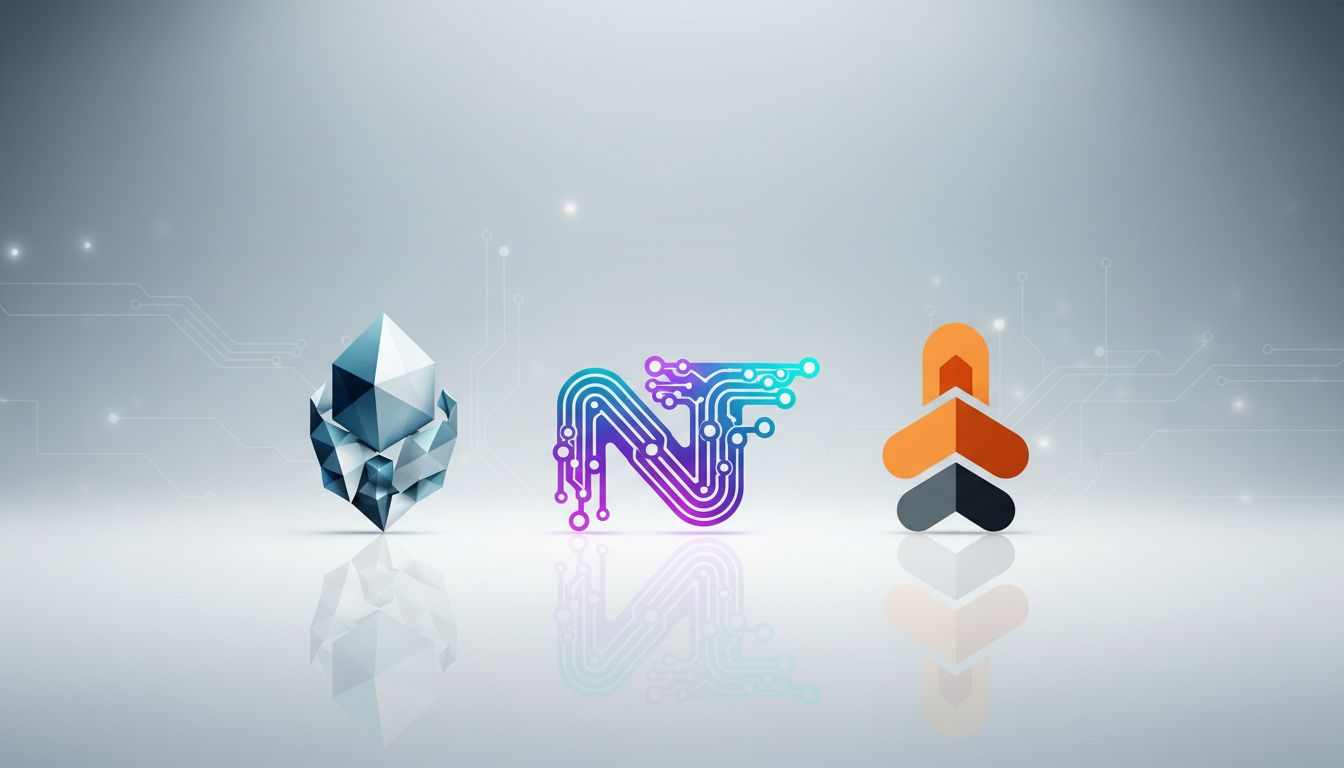
The technological landscape is evolving at an unprecedented pace, and as we look toward the future, the visual identities of emerging companies must adapt to keep up. In a hyper-competitive digital ecosystem dominated by artificial intelligence, spatial computing, Web3, and sustainable innovations, a startup’s brand identity is no longer just a static symbol on a webpage. It is a dynamic, interactive, and psychological tool designed to establish immediate trust and convey complex technical capabilities in a fraction of a second. Exploring the Top Logo Design Styles For Tech Startups In 2026 reveals a fascinating intersection between cutting-edge technology and human-centric design psychology.
By 2026, the traditional rules of branding will have been entirely rewritten. Consumers and B2B clients alike are inundated with digital stimuli, making it increasingly difficult for new tech ventures to cut through the noise. A logo must now function seamlessly across a multitude of environments—from microscopic smartwatch screens and augmented reality overlays to massive digital billboards and immersive virtual reality environments. The Top Logo Design Styles For Tech Startups In 2026 reflect a deep understanding of these technological shifts, moving away from generic corporate minimalism and toward highly specialized, purpose-driven aesthetics.
Whether you are launching a disruptive decentralized finance protocol, a next-generation healthcare AI, or an eco-conscious supply chain platform, your logo is the foundational cornerstone of your market presence. This comprehensive guide will deep-dive into the most influential and effective design trends shaping the future of tech branding. We will explore the theoretical underpinnings, practical applications, and strategic advantages of each style to help you engineer a visual identity that not only resonates with the market of tomorrow but also drives measurable business growth.
Key Takeaways
- Adaptability is Non-Negotiable: The Top Logo Design Styles For Tech Startups In 2026 prioritize dynamic, kinetic, and spatial adaptability over rigid, static imagery.
- AI-Driven Aesthetics: Generative design algorithms are allowing startups to create living logos that adapt to user behavior and environmental data.
- Spatial Computing Readiness: With the rise of AR and VR, logos must be designed with the Z-axis in mind, utilizing 3D elements and immersive textures.
- Nostalgia Meets Futurism: Cyber-nostalgia and Y2K aesthetics are making a massive comeback, specifically tailored for consumer-facing tech brands.
- Sustainability as a Visual Core: GreenTech and ClimateTech startups are redefining organic design, moving away from cliché leaves toward sophisticated eco-geometry.
The Strategic Importance of Brand Identity in the 2026 Tech Sector
Before diving into the specific visual trends, it is crucial to understand why logo design carries such immense weight in the contemporary tech ecosystem. In previous decades, a strong product could often compensate for a mediocre brand identity. However, in 2026, the barrier to entry for software development and technological deployment has plummeted due to AI-assisted coding and no-code platforms. Consequently, market saturation is at an all-time high. When multiple startups offer virtually identical technological solutions, brand equity becomes the primary differentiator.
A meticulously crafted logo serves as a visual shorthand for a company’s values, security protocols, and innovative capacity. For instance, a cybersecurity firm utilizing a high-contrast, brutalist logo communicates raw power and impenetrable defense, while a wellness app employing soft, generative fluid dynamics communicates empathy and personalization. Investors, stakeholders, and early adopters make split-second judgments based on these visual cues. Therefore, leveraging the Top Logo Design Styles For Tech Startups In 2026 is not merely a matter of aesthetic preference; it is a critical business strategy aimed at lowering customer acquisition costs and accelerating market penetration.
Top Logo Design Styles For Tech Startups In 2026
1. Generative and Data-Driven Dynamic Logos
One of the most revolutionary shifts in the Top Logo Design Styles For Tech Startups In 2026 is the transition from static vector graphics to generative, data-driven identities. Rather than having a single, unchangeable logo, tech startups are increasingly utilizing algorithmic design to create “living” logos. These dynamic identities are programmed to mutate, shift, and adapt based on real-time data inputs. For example, a fintech startup’s logo might subtly change its color gradient based on current market volatility, or a health-tech company’s icon might alter its shape depending on the user’s biometric data.
This style relies heavily on parametric design principles. The core architecture of the logo remains recognizable—perhaps retaining a specific typographic structure or a foundational geometric boundary—but the internal elements are in a constant state of controlled flux. This communicates to the user that the underlying technology is highly responsive, intelligent, and deeply integrated with real-time data. Furthermore, dynamic logos are exceptionally effective in building personalized connections; when a user feels that an interface is reacting specifically to them, brand loyalty increases exponentially.
2. Spatial and 3D Volumetric Design
With the widespread consumer adoption of spatial computing devices, augmented reality (AR) glasses, and virtual reality (VR) environments, flat design is rapidly becoming a relic of the past. Startups building software for these immersive environments must ensure their branding exists seamlessly within a three-dimensional space. The spatial and 3D volumetric design trend focuses on depth, lighting, texture, and physics. Logos in this category are rendered as tangible objects that users can interact with in a mixed-reality environment.
Unlike the skeuomorphism of the early 2010s, the 3D logos of 2026 are highly sophisticated. They utilize advanced rendering techniques such as ray tracing, glass morphism, and subsurface scattering to create materials that look simultaneously hyper-realistic and distinctly digital. Imagine a logo that appears to be constructed from frosted glass and glowing neon, floating in the user’s peripheral vision. This style is particularly dominant among metaverse infrastructure companies, AR gaming studios, and decentralized web platforms that want to project a sense of cutting-edge immersion and architectural stability.
3. Hyper-Minimalist Geometric Reductionism
While some startups are embracing complexity through 3D and dynamic designs, another massive trend within the Top Logo Design Styles For Tech Startups In 2026 is hyper-minimalist geometric reductionism. As digital real estate becomes increasingly fragmented—with logos needing to remain legible as tiny favicons, smartwatch app icons, and embedded software widgets—extreme simplification is a functional necessity. This style strips away all superfluous details, gradients, and drop shadows, leaving only the most essential mathematical shapes.
This aesthetic relies on perfect symmetry, grid-based layouts, and absolute precision. The typography associated with this style often features custom-built sans-serif fonts with uniform stroke weights and distinct, recognizable letterforms. By reducing the logo to its absolute geometric core, startups achieve maximum scalability and instant cognitive recognition. This style is heavily favored by enterprise SaaS (Software as a Service) companies, B2B cloud infrastructure providers, and artificial intelligence laboratories that wish to project an image of pristine efficiency, logic, and clinical precision.
4. Kinetic and Motion-First Identity Systems
In 2026, a logo that does not move is a logo that is ignored. The consumption of digital media is overwhelmingly video-centric, driven by short-form content platforms and highly interactive digital interfaces. Consequently, the kinetic and motion-first identity style has emerged as a dominant force. In this approach, the animation of the logo is not an afterthought added by a motion graphic designer at the end of the project; rather, the motion is the fundamental concept upon which the logo is built.
A motion-first logo is designed to tell a micro-story through its movement. For a logistics tech startup, the logo might continuously assemble and disassemble itself from individual data packets. For an AI communication tool, the logo might pulse and expand like a sound wave. The static version of the logo (for print or static digital use) is simply a single frame pulled from this continuous animation. This style commands attention, increases user engagement times, and perfectly encapsulates the energy and forward momentum inherent to startup culture.
5. Cyber-Nostalgia and Neo-Y2K Aesthetics
Design trends are inherently cyclical, and the tech industry is not immune to the powerful psychological pull of nostalgia. As we navigate the complex, often intimidating realities of advanced AI and automation in 2026, many consumer-facing tech startups are looking backward to build emotional comfort. Cyber-nostalgia and Neo-Y2K aesthetics draw heavy inspiration from the early days of the consumer internet (late 1990s to early 2000s), blending retro motifs with ultra-modern execution.
This style features elements like pixel art, bitmap fonts, wireframe graphics, metallic gradients, and vibrant, highly saturated color palettes (think acid greens, electric blues, and neon pinks). However, rather than looking outdated, these elements are refined with modern anti-aliasing and high-definition rendering. This visual style is incredibly popular among Web3 startups, Gen-Z focused social networks, and indie game developers. It signals a sense of rebellion, digital optimism, and a return to the decentralized, wild-west ethos of the early web.
6. Eco-Centric Organic Tech
As the global focus on climate change and sustainability intensifies, ClimateTech, AgriTech, and renewable energy startups represent a massive sector of the 2026 tech economy. The challenge for these companies is visually combining the organic nature of the environment with the sterile, precise nature of high technology. The Eco-Centric Organic Tech style bridges this gap beautifully.
This design trend abandons the cliché imagery of the past—such as literal green leaves or globes—in favor of abstract, organic fluidity. The logos utilize biomimicry, drawing inspiration from cellular structures, topographical maps, and fluid dynamics. The color palettes are sophisticated, utilizing muted earth tones, deep ocean blues, and bio-luminescent accents. Typography tends to feature subtle curves and humanistic sans-serifs. This style communicates that the startup’s technology is working in harmony with nature, offering advanced, sustainable solutions without relying on tired, outdated environmental tropes.
7. Monochromatic and High-Contrast Brutalism
For startups looking to disrupt established industries aggressively, blending in is not an option. Monochromatic and high-contrast brutalism is a design style that intentionally breaks traditional graphic design rules to create a raw, unapologetic, and highly memorable visual identity. Rooted in the architectural brutalist movement, this digital translation focuses on stark utility, heavy typography, and absolute minimalism in color.
These logos typically utilize a strict black-and-white color palette, occasionally punctuated by a single, aggressive accent color like construction yellow or hazard red. The typography is often oversized, utilizing heavy, extended fonts that dominate the visual space. There is a distinct lack of whitespace, and elements are often intentionally misaligned or crowded to create visual tension. This style is highly effective for cybersecurity firms, blockchain infrastructure developers, and hardware startups that want to project an image of unyielding strength, transparency, and anti-corporate rebellion.
How to Choose the Right Style for Your Tech Startup
Selecting the appropriate visual identity from the Top Logo Design Styles For Tech Startups In 2026 requires a deep understanding of your product, your target audience, and your long-term business objectives. A mismatch between your technological offering and your visual identity can create cognitive dissonance, leading to a lack of trust among potential users and investors.
First, analyze your target demographic. Are you selling enterprise software to Fortune 500 CIOs? If so, the Hyper-Minimalist Geometric Reductionism style will project the necessary stability and efficiency. Are you launching a consumer-facing decentralized app targeting Gen-Z? The Cyber-Nostalgia or Kinetic styles will likely yield the highest engagement. Secondly, consider the primary medium where your brand will live. If your product is an AR application, a Spatial 3D logo is imperative. If you are building a smartwatch integration, extreme scalability is your top priority.
Finally, it is highly recommended to partner with specialized branding experts who understand the nuances of the tech industry. For startups seeking world-class execution and strategic brand positioning, collaborating with an agency like London Logo Designs can ensure your identity not only aligns with current trends but possesses the timeless foundational qualities necessary to scale alongside your company. Professional designers will conduct rigorous competitive analysis and user testing to guarantee your logo performs optimally in the modern digital ecosystem.
Frequently Asked Questions
What is the most important factor to consider when designing a tech logo in 2026?
The single most critical factor is multi-platform adaptability. In 2026, a logo must perform flawlessly across a vast array of digital touchpoints, from ultra-high-definition spatial computing headsets to tiny mobile app widgets. A logo that looks great on a desktop monitor but becomes illegible on a smartwatch is fundamentally flawed. Scalability, motion readiness, and contrast are paramount.
Why are kinetic and animated logos becoming a standard for startups?
Kinetic logos are becoming standard because digital consumption is overwhelmingly driven by motion and video. Static images struggle to capture user attention in feeds dominated by short-form video content. A motion-first logo allows a startup to tell a micro-story, convey the speed and capability of their technology, and significantly increase user engagement and brand recall.
How do dynamic and generative logos actually work from a technical standpoint?
Generative logos utilize code—often via SVG animation, WebGL, or CSS variables—to alter their appearance based on specific data inputs. Instead of a single image file (like a PNG or JPG), the logo is essentially a small piece of software. It can be connected via APIs to read data such as time of day, user cursor movement, or live market metrics, allowing the logo’s parameters (color, shape, speed) to shift in real-time.
Is the minimalist logo trend dying in the tech industry?
Minimalism is not dying; it is evolving into hyper-minimalist geometric reductionism. While some sectors of the tech industry are moving toward complex 3D and brutalist designs, core software and enterprise SaaS companies still rely on minimalism for its functional benefits. Minimalist logos load faster, scale better, and convey a sense of logical efficiency that is highly valued in the B2B tech space.
Can a tech startup rebrand if they choose the wrong logo style initially?
Yes, rebranding is highly common in the startup ecosystem, especially as a company pivots its product offering or scales from a seed-stage venture to a Series A or B enterprise. However, rebranding is resource-intensive and can temporarily disrupt brand equity. It is always more cost-effective and strategic to invest heavily in a forward-thinking, adaptable logo from the very beginning to ensure long-term market traction.
Conclusion
As we navigate the complexities of the modern digital economy, the importance of a powerful, strategic visual identity cannot be overstated. The Top Logo Design Styles For Tech Startups In 2026 represent a sophisticated blend of technological capability and human psychology. From the data-driven adaptability of generative designs to the immersive depth of spatial 3D logos, these trends dictate how the next generation of industry leaders will present themselves to the world.
Building a successful tech startup requires immense innovation, relentless execution, and the ability to instantly communicate your value proposition to a distracted audience. Your logo is the tip of the spear in this endeavor. By understanding and leveraging these advanced design styles, you can engineer a brand identity that not only captures attention but builds the foundational trust required to turn early adopters into lifelong advocates. In 2026, the most successful tech companies will be those that realize their brand is just as innovative, dynamic, and forward-thinking as the proprietary technology they build.