Introduction
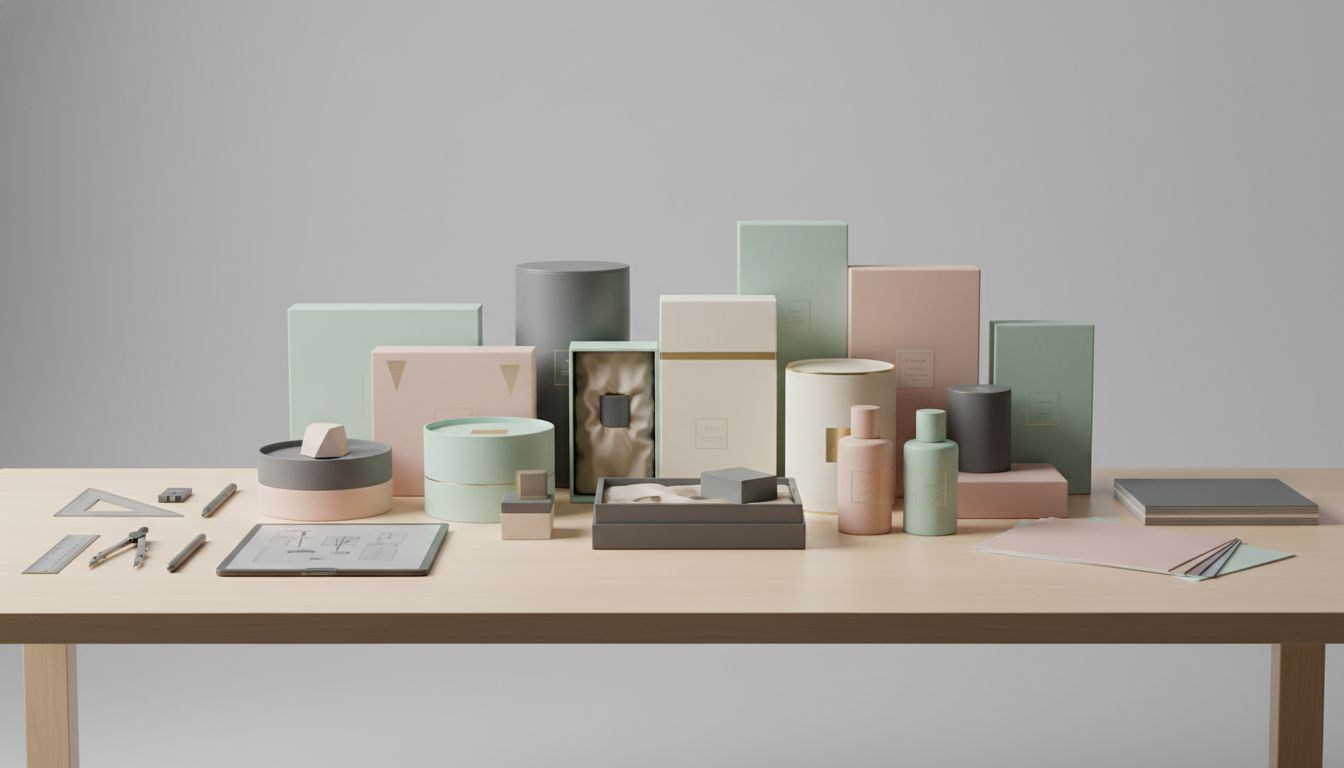
In today’s hyper-competitive retail and e-commerce landscape, a product is no longer just a product; it is a holistic brand experience. For new businesses entering saturated markets, the physical presentation of a product can mean the difference between a fleeting glance and a lifelong customer. Welcome to The Ultimate Packaging Design Guide For Startup Brands. In this comprehensive resource, we will explore the intersection of consumer psychology, structural engineering, graphic design, and brand identity to help you create packaging that not only protects your product but actively sells it.
Recent industry trends indicate that modern consumers are increasingly driven by visual aesthetics and sustainable practices. Studies show that over 70% of purchasing decisions are made directly at the shelf—whether that shelf is in a physical brick-and-mortar store or on a digital screen. Furthermore, the rise of the “unboxing experience” on social media platforms has transformed packaging from a mere protective shell into a powerful marketing asset. When an influencer or a customer shares your beautifully crafted box online, your packaging becomes a lead-generating billboard.
This article serves as an authoritative masterclass. We will dissect the layers of packaging, explore the critical relationship between logo design and physical branding, detail the step-by-step process of creating market-ready packaging, and highlight the common pitfalls that cost startups thousands of dollars. By the end of this guide, you will possess the actionable insights required to elevate your brand’s physical presence and drive measurable business growth.
Understanding the Three Layers of Packaging
Before diving into the creative process, startup founders must understand that packaging is rarely a single entity. To ensure product safety, regulatory compliance, and a premium customer experience, packaging is typically broken down into three distinct layers. Mastering all three is essential for any brand looking to scale.
Primary Packaging
Primary packaging is the material that makes direct physical contact with your product. If you are selling a craft beverage, the glass bottle and the metal cap are the primary packaging. If you are selling an organic face cream, the primary packaging is the jar and the lid. The primary focus of this layer is containment, preservation, and direct consumer interaction. Because the customer will handle this layer intimately, the materials must feel premium, and the label design must clearly communicate the product’s value proposition.
Secondary Packaging
Secondary packaging houses the primary packaging. It is the cardboard box that holds the jar of face cream or the custom-molded tray that secures a new smartphone. Secondary packaging serves a dual purpose: it provides an additional layer of protection against physical impact and light exposure, and it offers a larger canvas for brand storytelling, typography, and logo placement. For retail environments, this is the layer that sits on the shelf and competes for attention.
Tertiary Packaging
Tertiary packaging is strictly utilitarian, designed for bulk handling, warehouse storage, and shipping. This includes the heavy corrugated cardboard boxes, shrink wrap, and wooden pallets used to transport your goods from the manufacturer to a retail distribution center. While tertiary packaging rarely requires intricate graphic design, clever startups still utilize custom packing tape or branded stamps to maintain brand visibility throughout the supply chain.
Why Packaging Design is Critical for Startup Brands
Many startups make the fatal error of treating packaging as an afterthought, allocating the vast majority of their budget to product development and digital marketing. However, packaging is the only marketing channel that reaches 100% of your offline customers. Here is why investing deeply in packaging design is non-negotiable.
The Psychology of First Impressions
Human beings are intensely visual creatures. Within milliseconds of viewing your product, a consumer makes subconscious judgments about its quality, its price point, and its relevance to their lifestyle. High-quality, thoughtfully designed packaging triggers a psychological response known as the “halo effect,” where the perceived excellence of the packaging transfers directly to the perceived excellence of the product inside. Conversely, cheap, flimsy packaging immediately devalues even the most innovative products.
Brand Differentiation in Crowded Markets
Startups often enter markets dominated by legacy brands with massive advertising budgets. To survive, you must disrupt the visual status quo. If every competitor in the organic tea space is using earth tones and minimalist kraft paper, a startup might choose vibrant, contrasting colors and bold typography to dominate shelf visibility. Packaging is your silent salesperson, working 24/7 to communicate why your brand is uniquely superior.
The Ultimate Packaging Design Guide For Startup Brands: Step-by-Step
Creating successful packaging is a methodical process that bridges raw creativity with stringent technical requirements. Follow this comprehensive step-by-step framework to ensure your startup’s packaging is both beautiful and functional.
Step 1: Define Your Target Audience and Buyer Persona
Effective design is never created in a vacuum; it is engineered to appeal to a specific demographic. Before sketching a single concept, you must define who will be purchasing your product. Are you targeting eco-conscious Gen Z consumers who value sustainability and minimalism? Or are you appealing to luxury buyers who expect heavy, textured materials, gold foil stamping, and an aura of exclusivity? Your audience dictates your material choices, your color palette, and the tone of your copywriting.
Step 2: Solidify Your Brand Identity and Logo Design
Your packaging is an extension of your overarching brand identity. Before you even think about box dimensions or structural engineering, you must have a flawless logo, a defined color palette, and specific brand guidelines. Working with a professional agency like London Logo Designs ensures that your foundational branding is versatile enough to scale across all packaging formats. A logo that looks great on a digital screen must also translate perfectly when embossed on a cardboard box or printed on a curved glass bottle.
Step 3: Establish Information Architecture
Consumers do not read packaging; they scan it. Therefore, you must establish a strict visual hierarchy that guides the consumer’s eye through the most important information. The most effective information architecture typically follows this flow:
- Brand Name/Logo: Who are you?
- Product Name: What is the product?
- Key Benefit/Differentiator: Why should the consumer care? (e.g., “100% Organic,” “Clinically Proven,” “Sugar-Free”).
- Net Weight/Volume: Essential compliance information.
Step 4: Choose the Right Materials
Material selection impacts your product’s perceived value, its environmental footprint, and your profit margins. Startups today are increasingly leaning toward sustainable options to align with consumer demands. Consider materials like biodegradable bioplastics, post-consumer recycled (PCR) cardboard, mushroom packaging, and glass. Beyond sustainability, the tactile feel of the material—whether it is a soft-touch matte finish, a high-gloss UV coating, or a textured linen paper—plays a massive role in the sensory experience of the product.
Step 5: Select the Optimal Printing Technique
Understanding printing technology is crucial for maintaining design fidelity and managing costs. The three most common printing methods for packaging are:
- Lithography (Offset Printing): Ideal for high-volume runs of folding cartons and labels. It offers unparalleled color accuracy and the highest image quality, but requires high setup costs and minimum order quantities (MOQs).
- Flexography: Commonly used for corrugated boxes and flexible pouches. It is cost-effective for large runs and works well on rougher materials, though it cannot match the photographic quality of lithography.
- Digital Printing: The holy grail for startup brands. Digital printing requires no printing plates, making it perfect for short runs, rapid prototyping, and variable data printing (where each box can have a unique design).
Step 6: Engineer the Unboxing Experience
E-commerce startups must view the unboxing process as a theatrical performance. The way a box opens, the sound of the tissue paper rustling, and the placement of the product all contribute to customer delight. Consider structural elements like magnetic closures or custom die-cut inserts that present the product like a jewel. Include personalized touches such as handwritten thank-you notes, branded stickers, or discount codes for future purchases. A phenomenal unboxing experience virtually guarantees user-generated content and organic word-of-mouth marketing.
The Crucial Intersection of Logo Design and Packaging
As this guide falls under the broader category of Logo Design, it is vital to explore how a logo interacts with physical packaging. A logo is the anchor of your brand’s visual identity, and its application on packaging requires precise strategic thinking.
Adaptability and Responsive Logo Design
A static logo is no longer sufficient. Startups need responsive logos—a primary logo, a secondary logo (often stacked or horizontal), and a simplified brand mark or icon. On a large shipping box, your primary logo can take center stage. However, on the small lid of a lip balm, you may only have room for a minimalist brand mark. Your logo must maintain its legibility and brand recognition regardless of how small it is scaled or what material it is printed on.
Color Psychology and Contrast
Your logo’s colors must work in harmony with the packaging material. If your logo relies on subtle pastel gradients, it may look muddy when printed on brown kraft paper. High contrast is essential for shelf impact. Furthermore, consider the psychological implications of your color palette. Blue evokes trust and calm (ideal for health supplements), green signifies nature and health (perfect for organic foods), and black communicates luxury and sophistication (frequently used in premium cosmetics and electronics).
Common Packaging Design Mistakes Startups Must Avoid
Even with a solid understanding of design principles, startups frequently fall into traps that compromise their product launches. Avoid these costly mistakes to ensure a smooth transition from digital concept to physical reality.
Ignoring Bleed Lines and Dielines
A dieline is the flat, 2D template that dictates where a box will be cut and folded. Bleed refers to extending the artwork beyond the dieline to ensure there are no unprinted white edges when the packaging is cut. Startups often submit artwork to manufacturers without proper bleeds or safety margins, resulting in misaligned text and unprofessional, uneven borders.
Designing in RGB Instead of CMYK
Digital screens display colors using light in RGB (Red, Green, Blue), which allows for vibrant, neon hues. However, physical packaging is printed using ink in CMYK (Cyan, Magenta, Yellow, Key/Black). If you design your packaging in an RGB color space, the final printed product will likely look dull and completely different from what you saw on your monitor. Always set your design software to CMYK from the very beginning.
Over-Packaging and Wasted Space
While a large box might seem like a good way to grab attention, it actively harms your startup’s bottom line. Excessive packaging increases manufacturing costs, requires more storage space, and drastically inflates shipping fees (which are often calculated by dimensional weight, not just actual weight). Furthermore, modern consumers despise over-packaging due to its negative environmental impact. Design packaging that fits your product snugly and efficiently.
Failing to Test for Durability
Beautiful design is useless if the product arrives shattered. Startups must subject their packaging prototypes to rigorous drop testing, vibration testing, and climate testing. Consider the entire journey of your product: it will be tossed into delivery trucks, exposed to extreme heat or freezing temperatures, and stacked under heavy pallets. Ensure your structural engineering is as robust as your graphic design.
Key Takeaways
- Packaging is Marketing: Your packaging is the most direct and intimate touchpoint you have with your consumer. It is a powerful tool for brand differentiation and lead generation.
- Master the Three Layers: Strategically design your primary, secondary, and tertiary packaging to ensure product protection, regulatory compliance, and a premium unboxing experience.
- Logo Versatility is Mandatory: Ensure your logo is responsive and legible across various sizes and materials. A strong logo anchors your entire packaging design.
- Prioritize Sustainability: Eco-friendly materials are no longer a niche trend; they are a consumer expectation. Utilize PCR materials, bioplastics, and minimalist structural designs.
- Understand Print Production: Always design in CMYK, respect dielines and bleed margins, and choose the right printing technique (Lithography, Flexography, or Digital) based on your budget and volume.
Frequently Asked Questions
How much should a startup budget for packaging design?
Packaging design costs vary wildly based on complexity. A startup might spend anywhere from $500 to $5,000+ for professional packaging design services. This does not include the physical manufacturing costs. It is highly recommended to view this as a foundational marketing investment rather than an operational expense, as premium packaging directly increases product value and sales conversions.
What is the most eco-friendly packaging material for startups?
Post-consumer recycled (PCR) cardboard and paper are the most accessible and cost-effective sustainable options. For primary packaging, glass and aluminum are infinitely recyclable. Innovative startups are also exploring compostable materials like mushroom mycelium packaging, seaweed extracts, and cornstarch-based packing peanuts.
How long does the packaging design and manufacturing process take?
From initial concept to final delivery, the process typically takes 8 to 16 weeks. This timeline includes audience research, conceptual design, structural engineering, prototyping, revisions, mass production, and shipping from the manufacturer. Startups should factor this lead time into their product launch schedules to avoid delays.
What software is used for professional packaging design?
Industry professionals predominantly use Adobe Illustrator for packaging design because it is a vector-based program, ensuring that artwork can be scaled infinitely without losing quality. Adobe InDesign is sometimes used for packaging with heavy text (like instruction manuals), and specialized 3D software like Esko Studio or Adobe Dimension is used to render 3D mockups of the final product.
Can I use my website logo directly on my packaging?
Not always. A logo optimized for a website is usually in an RGB color format and a rasterized file type (like PNG or JPEG). For packaging, you must use a vector file (such as AI, EPS, or SVG) formatted in CMYK color space to ensure sharp, high-resolution printing. You may also need to use a simplified version of your logo depending on the printing method and packaging size.
Conclusion
Launching a startup is a monumental endeavor, and bringing a physical product to market requires an incredible amount of dedication, research, and capital. As we have explored in The Ultimate Packaging Design Guide For Startup Brands, the box, bottle, or pouch that holds your product is just as important as the product itself. It is the bridge between your brand’s digital promise and the consumer’s physical reality.
By understanding your target audience, prioritizing structural integrity, embracing sustainable materials, and ensuring your logo and typography are flawlessly integrated, you can create a packaging experience that captivates consumers and drives brand loyalty. Remember that packaging is not a place to cut corners; it is an opportunity to outshine legacy competitors and establish your startup as a premium, trustworthy authority in your niche. Invest the time and resources into professional design, test your prototypes rigorously, and watch as your packaging transforms into your most powerful marketing asset.