Introduction
Graphic design is much more than simply making things look aesthetically pleasing; it is a complex, multifaceted discipline that serves as the visual voice of a brand. In an era dominated by digital transformation and micro-attention spans, effective visual communication is the cornerstone of business success. Industry trends continually show that companies investing heavily in high-quality design experience better customer retention, higher conversion rates, and stronger brand loyalty. However, the term “graphic design” is a massive umbrella encompassing various specializations, each requiring distinct skill sets, software expertise, and psychological approaches to consumer behavior.
Whether you are a startup founder looking to establish your brand, a marketing director aiming to launch a multi-channel campaign, or an aspiring designer trying to find your niche, understanding the different avenues of design is critical. Navigating this creative landscape requires a comprehensive guide, which is exactly why we are exploring The 8 Types Of Graphic Design Explained With Examples. By dissecting these categories, you can strategically align your business goals with the right creative expertise, ensuring your visual assets not only look professional but actively generate leads and drive revenue.
Key Takeaways
- Specialization Matters: Graphic design is not a monolith. It is divided into distinct disciplines, from visual identity to motion graphics, each serving a unique business purpose.
- Brand Foundation: Visual identity and logo design form the bedrock of all other design types, dictating the creative direction for marketing, packaging, and digital interfaces.
- User-Centric Focus: Disciplines like UI (User Interface) and Environmental design prioritize how a user interacts with a digital or physical space, directly impacting user experience and satisfaction.
- Lead Generation: Marketing and advertising design are specifically engineered to drive consumer action, making them vital for direct lead generation and sales.
- Cross-Disciplinary Collaboration: Most successful campaigns require a seamless blend of multiple design types, such as combining visual identity, illustration, and motion graphics.
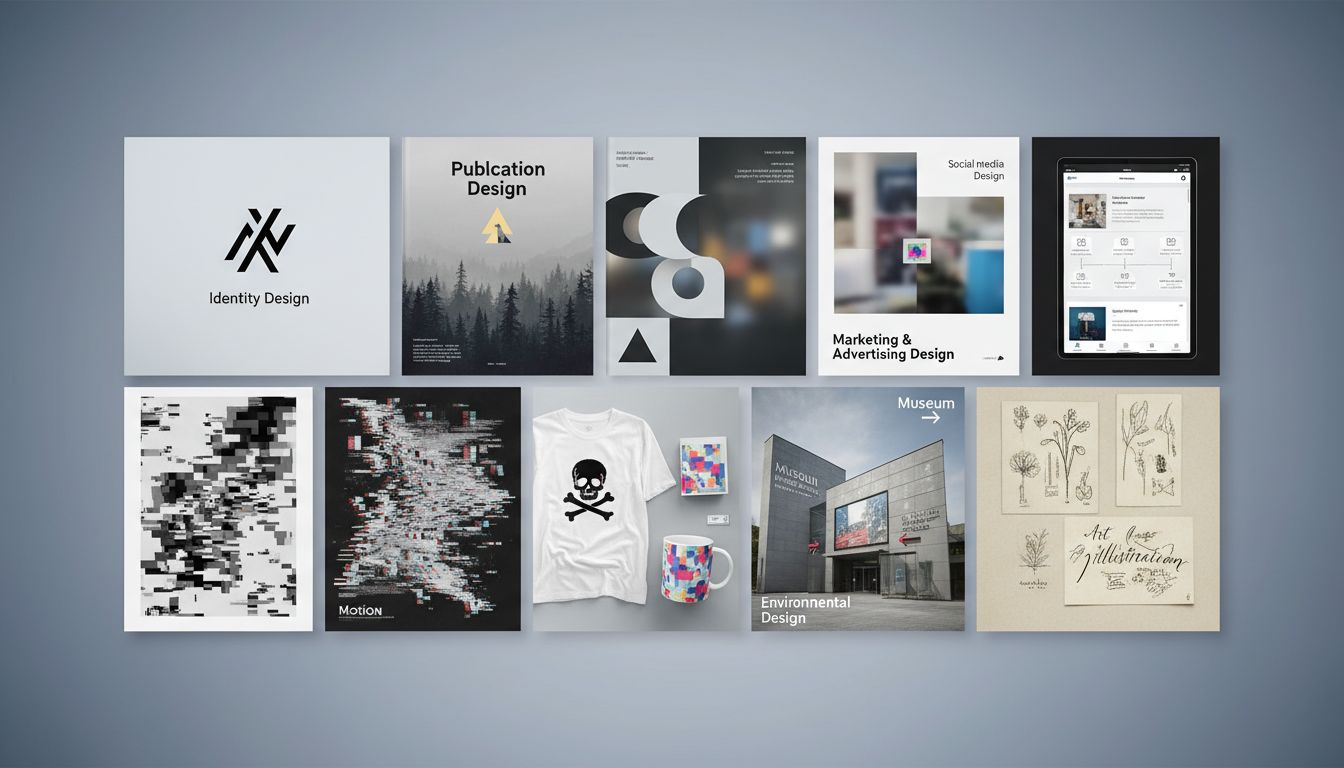
The 8 Types Of Graphic Design Explained With Examples
1. Visual Identity Graphic Design
Visual identity graphic design is the foundational layer of any brand. A brand is essentially a relationship between a business and its audience; brand identity is how the organization communicates its personality, tone, and essence, as well as memories, emotions, and experiences. Visual identity graphic designers collaborate with brand stakeholders to create assets like logos, typography, color palettes, and image libraries that represent the brand’s core identity.
Because this type of design dictates the visual rules for all other marketing materials, it requires a deep understanding of brand strategy, consumer psychology, and market research. Designers in this field often create comprehensive brand guidelines (or style guides) to ensure visual consistency across all touchpoints. If you are looking to build a compelling and memorable foundation for your business, partnering with specialized agencies like London Logo Designs can ensure your brand’s core visual identity is striking, scalable, and tailored to your target demographic.
Examples:
- Logo Design: The iconic Nike Swoosh or the bitten Apple logo.
- Brand Typography: Custom fonts created specifically for a brand, such as Netflix Sans.
- Corporate Letterheads and Business Cards: Standardized stationary that reflects the brand’s aesthetic.
2. Marketing & Advertising Graphic Design
When most people think of graphic design, they think of marketing and advertising. Companies depend on successful marketing efforts to tap into their target audience’s decision-making process. Great marketing engages people based on their wants, needs, awareness, and satisfaction about a product, service, or brand. Because visual content is vastly more engaging than text alone, organizations rely on marketing graphic design to promote and communicate their offerings.
Marketing designers need excellent communication, problem-solving, and time-management skills. They must be proficient in several graphic design, layout, and presentation software applications, and they must possess a deep understanding of production for print and digital environments. This specific niche is highly lead-oriented, focusing on calls-to-action (CTAs), conversion rate optimization (CRO), and direct consumer engagement.
Examples:
- Social Media Ad Creatives: Eye-catching graphics used for Facebook, Instagram, or LinkedIn advertising campaigns.
- Infographics: Visual representations of data designed to be easily digestible and highly shareable.
- Brochures and Flyers: Printed promotional materials used at trade shows or direct mail campaigns.
3. User Interface (UI) Graphic Design
User interface (UI) design is the process of designing interfaces to make them easy to use and provide a highly user-friendly experience. A UI includes all the things a user interacts with—the screen, keyboard, and mouse—but in the context of graphic design, UI design focuses on the user’s visual experience and the design of on-screen graphic elements like buttons, menus, micro-interactions, and more. It is a delicate balance of aesthetic appeal and technical functionality.
UI designers work closely with User Experience (UX) designers (who determine how the app works) and UI developers (who write the code to make it work). They must possess a strong understanding of responsive design, accessibility standards, and intuitive navigation structures. In today’s digital-first economy, excellent UI design is non-negotiable for lead generation, as a frustrating website will instantly drive potential customers to competitors.
Examples:
- Mobile App Interfaces: The intuitive layout and navigation buttons of apps like Uber or Spotify.
- Web Design: The visual layout, color scheme, and interactive elements of an e-commerce platform.
- Dashboard Design: The visual organization of complex data in SaaS (Software as a Service) platforms.
4. Publication Graphic Design
Publications are long-form pieces that communicate with an audience through public distribution. Historically, this meant print mediums, but publication design has experienced a massive digital evolution. Publication designers work with editors and publishers to create layouts with carefully selected typography and accompanying artwork, which includes photography, graphics, and illustrations.
This type of design requires excellent organizational skills, a profound understanding of grid systems, and a mastery of typography. The goal is to make long-form reading visually appealing and easy to consume, guiding the reader’s eye seamlessly from one page to the next. For businesses, high-quality publication design builds immense authority and trust, serving as a powerful tool for inbound marketing and lead nurturing.
Examples:
- Magazines and Newspapers: The complex, grid-based layouts of publications like Vogue or The New York Times.
- Annual Reports: Corporate documents designed to share financial data and company achievements in a visually engaging manner.
- eBooks and Whitepapers: Digital lead magnets used by B2B companies to capture email addresses and generate leads.
5. Packaging Graphic Design
Most products require some form of packaging to protect them and prepare them for storage, distribution, and sale. However, packaging design also communicates directly to consumers, making it an extremely valuable marketing tool. Every box, bottle, bag, can, or container is a chance to tell the story of a brand. Packaging designers create concepts, develop mockups, and create the print-ready files for a product.
This discipline requires an expert understanding of print processes and a keen awareness of industrial design and manufacturing. Packaging designers must constantly track trends, competitor packaging, and consumer psychology. A well-designed package creates a memorable “unboxing” experience, which can lead to user-generated content on social media, acting as free organic marketing and lead generation for the brand.
Examples:
- Food and Beverage Labels: The intricate typography and imagery on a craft beer can or organic coffee bag.
- Technology Packaging: The minimalist, sleek, and highly engineered boxes used for smartphones and laptops.
- Cosmetics Packaging: Luxurious and tactile containers designed to convey beauty and elegance.
6. Motion Graphic Design
Simply put, motion graphics are graphics that are in motion. This can include animation, audio, typography, imagery, video, and other effects that are used in online media, television, and film. The medium’s popularity has skyrocketed in recent years as technology has improved and video content has become the dominant force on social media platforms.
Motion graphics designers begin by developing storyboards and then bring their concepts to life using animation and video editing software. For businesses, motion graphics are incredibly effective at explaining complex products, retaining viewer attention, and driving conversions. A well-crafted explainer video can increase landing page conversion rates by up to 80%, making this an essential design type for modern lead generation.
Examples:
- Explainer Videos: Short, animated videos used on website landing pages to explain a product or service.
- Animated Logos: A brand’s visual identity brought to life through subtle animations for video intros or website headers.
- Social Media GIFs: Engaging, looping animations designed to capture attention in busy social media feeds.
7. Environmental Graphic Design
Environmental graphic design visually connects people to places to improve their overall experience by making spaces more memorable, interesting, informative, or easier to navigate. It is a multidisciplinary practice that merges graphic, architectural, interior, landscape, and industrial design. Designers in this field collaborate closely with architects and builders to integrate design seamlessly into physical environments.
Wayfinding is a specific type of environmental graphic design that consists of strategic signage, landmarks, and visual cues that help people identify where they are and where they need to go. For brick-and-mortar businesses, retail stores, and corporate offices, environmental design translates brand identity into a physical, immersive experience, building deep consumer trust and loyalty.
Examples:
- Retail Store Interiors: The strategic placement of branded imagery, colors, and signage within a boutique.
- Stadium Branding: Massive visual installations that promote team identity and sponsor messaging.
- Office Branding: Wall murals and glass decals that communicate company culture to employees and visiting clients.
8. Art and Illustration for Graphic Design
While graphic design and illustration are technically distinct disciplines, they are frequently intertwined. Graphic design focuses on communication and problem-solving, whereas graphic art and illustration focus on creating original artwork. However, graphic artists and illustrators collaborate heavily with graphic designers to create custom visual assets for commercial use.
Custom illustrations help brands stand out in a sea of stock photography. They inject personality, warmth, and uniqueness into a brand’s visual identity. Whether it is a mascot that becomes the face of a company or intricate patterns used across packaging, art and illustration elevate graphic design from purely functional to emotionally resonant.
Examples:
- Custom Website Illustrations: Unique, stylized drawings used to explain services or enhance blog content.
- Apparel Design: Original artwork created specifically for t-shirts, tote bags, or hats.
- Graphic Novels and Comic Books: Sequential art that tells a narrative story, often used in creative content marketing.
The Impact of Effective Graphic Design on Lead Generation
Understanding The 8 Types Of Graphic Design Explained With Examples is only the first step; applying them strategically is where business growth happens. High-quality graphic design is intrinsically linked to lead generation and sales. When a potential client interacts with your brand, their first impression is almost entirely visual. If your UI design is clunky, your marketing graphics look outdated, or your visual identity lacks cohesion, trust is instantly broken.
Conversely, a cohesive design strategy acts as a lead magnet. Professionally designed whitepapers (Publication Design) capture email addresses. Engaging social media ads (Marketing Design) drive traffic to your landing pages. Intuitive website layouts (UI Design) keep visitors engaged long enough to convert. By investing in the right type of graphic design for the right medium, businesses can drastically reduce their cost-per-acquisition and significantly boost their return on investment (ROI).
Frequently Asked Questions
1. What is the most common type of graphic design?
Marketing and advertising graphic design is widely considered the most common type. Because businesses constantly need to promote their products and services to generate leads and drive sales, there is a perpetual demand for social media graphics, digital ads, flyers, and promotional materials.
2. Do graphic designers specialize in one type or multiple?
While many designers start as generalists, most eventually specialize in one or two specific types of graphic design. For example, a designer might specialize in Visual Identity and UI design, while another might focus exclusively on Motion Graphics. Specialization allows designers to master the specific software, trends, and psychological principles of their niche.
3. How does visual identity differ from marketing design?
Visual identity design establishes the foundational rules of a brand—such as the logo, color palette, and typography. Marketing design uses those established rules to create promotional materials. Visual identity is the “who” of the brand, while marketing design is the “what we are selling today.”
4. What software is used across these different types of graphic design?
The Adobe Creative Cloud remains the industry standard. Visual identity and illustration heavily utilize Adobe Illustrator (vector graphics). Publication and packaging rely on Adobe InDesign. Marketing and UI often use Adobe Photoshop, while UI/UX designers frequently use Figma or Adobe XD. Motion graphic designers primarily use Adobe After Effects.
5. How can I determine which type of graphic design my business needs?
Identify your current business goal. If you are launching a new company, you need Visual Identity design. If you want to increase online sales, you need Marketing and UI design. If you are launching a physical product, Packaging design is essential. Aligning your business objectives with the specific design discipline ensures maximum ROI and effective lead generation.
Conclusion
The world of graphic design is vast, dynamic, and absolutely critical to the success of modern businesses. By thoroughly exploring The 8 Types Of Graphic Design Explained With Examples, it becomes clear that design is not a one-size-fits-all solution. From the foundational elements of visual identity to the immersive experiences of environmental design, each discipline serves a specific strategic purpose.
To effectively capture attention, build brand authority, and generate high-quality leads, businesses must leverage the right type of design at the right time. Whether you need a sleek user interface to retain app users, compelling packaging to win shelf space, or a robust visual identity to launch a startup, understanding these distinct categories empowers you to make informed creative decisions. Investing in specialized, professional graphic design is not merely an aesthetic choice—it is a vital business strategy that drives tangible growth, fosters customer loyalty, and establishes long-term market authority.