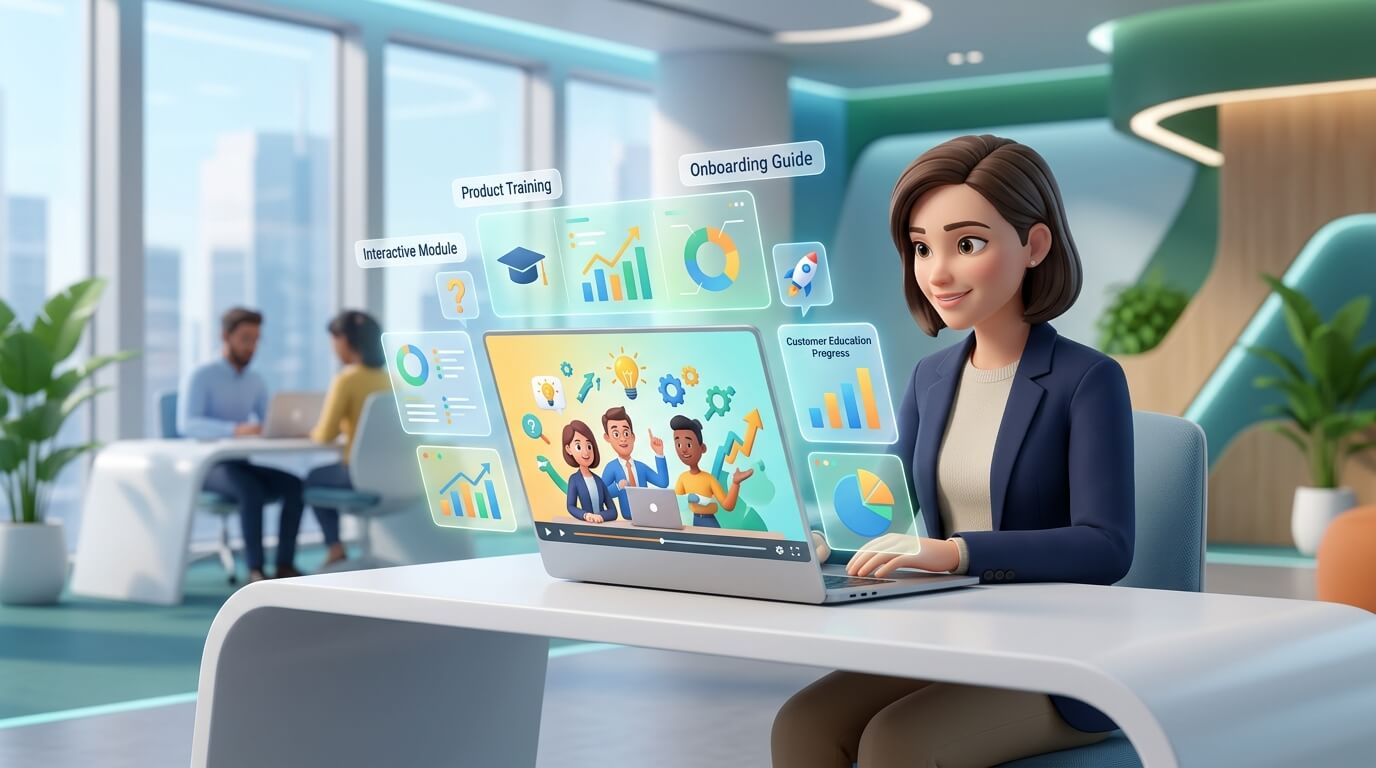
Customer education has become an essential part of modern business success. Today’s customers do not simply expect companies to provide products or services; they expect guidance, support, and valuable information that helps them make the most out of their purchases. Whether a customer is learning how to use a software platform, understanding a healthcare service, exploring a financial product, or operating a new device, the quality of education they receive directly affects their overall experience.
In the past, businesses mainly depended on user manuals, written guides, training documents, and customer support teams to educate their audiences. While these resources are still useful, they often fail to capture attention in a world where people prefer quick, engaging, and easy-to-understand content. Long pages of text can feel overwhelming, especially when customers need to understand complicated processes or technical concepts.
Animated videos have emerged as one of the most effective solutions for improving customer education. By combining visuals, storytelling, motion, and audio, animation transforms complex information into simple and engaging learning experiences. Instead of forcing customers to interpret lengthy explanations, animated videos allow them to see exactly how a product works, how a process should be completed, or how a solution can solve their problems.
Businesses across different industries are now using animated customer education videos to improve onboarding, explain products, reduce customer confusion, and increase engagement. From technology companies and healthcare organizations to financial institutions and educational platforms, animation has become a powerful communication tool that makes learning more accessible.
The effectiveness of animated videos comes from their ability to connect with audiences on both an intellectual and emotional level. Customers are more likely to understand and remember information when they can visualize it. A well-designed animation does not just provide instructions; it creates an experience that guides customers through information in a clear and memorable way.
As competition continues to increase and customer expectations continue to evolve, businesses that invest in educational animation gain a significant advantage. These videos help customers feel more confident, improve product adoption, and create stronger relationships between brands and their audiences.
Why Customer Education Is Important for Business Growth
Customer education plays a major role in how customers interact with a brand after making a purchase. A customer who understands a product’s features and benefits is more likely to use it successfully, while a customer who feels confused may become frustrated and lose interest.
Many businesses focus heavily on attracting new customers but overlook the importance of educating existing ones. However, acquiring a customer is only the beginning of the relationship. The real challenge is ensuring that customers receive enough guidance to achieve their desired results.
When customers understand how a product works, they experience fewer challenges and require less assistance. This improves satisfaction and creates a more positive relationship with the brand. For example, a software company may provide an advanced platform with powerful features, but if users do not understand how to use those features, they may never experience the full value of the product.
Customer education solves this problem by giving users the knowledge they need at the right time. It helps them overcome learning barriers and encourages them to explore more features. As customers become more confident, they are more likely to continue using the product and recommend it to others.
Another important benefit of customer education is the reduction of support costs. Customer service teams often spend a significant amount of time answering repeated questions. Many of these questions can be addressed through educational resources such as animated videos. When customers have access to clear explanations, they can find solutions independently without waiting for assistance.
This does not mean customer support becomes less important. Instead, educational content allows support teams to focus on more complex issues while customers receive immediate answers for common problems.
Why Animated Videos Are Effective for Customer Education
Animation Simplifies Complex Information
One of the biggest reasons businesses use animated videos for customer education is their ability to simplify complicated information. Many products and services involve processes, systems, or concepts that are difficult to explain through written content alone.
For example, explaining how a software application works through a detailed document may require several pages of instructions. Customers may struggle to understand technical terms or imagine how different steps connect. An animated video can demonstrate the same process visually, showing each action clearly and guiding users through the experience.
Animation allows creators to control every part of the explanation. They can highlight important elements, remove unnecessary distractions, and create visual examples that make complicated ideas easier to understand. This is particularly useful for industries where customers may not have specialized knowledge.
A financial company explaining investment options, for instance, can use animation to simplify financial concepts through characters, illustrations, and storytelling. Instead of presenting customers with difficult terminology, the company can show how different choices work in real-life situations.
Similarly, healthcare organizations can use animation to explain medical procedures, treatments, and health information in a way that feels less intimidating. Patients often feel anxious when they do not understand what will happen during a procedure. Animated videos provide a visual explanation that creates clarity and confidence.
The ability to simplify information is what makes animation such a valuable educational tool. It turns complicated subjects into approachable experiences that customers can easily follow.
Animated Videos Improve Learning and Information Retention
People process visual information differently from written information. While text requires customers to imagine concepts in their minds, animation provides a direct visual representation of how something works.
When customers watch an animated educational video, they receive information through multiple channels. They hear explanations through narration while simultaneously seeing demonstrations through visuals. This combination strengthens understanding and improves memory.
For example, a customer reading instructions about setting up a product may forget some steps or misunderstand certain details. However, when they watch an animation showing the exact setup process, the information becomes easier to follow and remember.
Visual storytelling creates stronger connections in the brain. Customers are more likely to remember information that is presented through meaningful images, movement, and examples. This is why animated videos are especially effective for teaching processes that involve multiple steps.
Businesses benefit from this improved retention because educated customers are more likely to use products correctly. They make fewer mistakes, experience fewer difficulties, and gain greater value from their purchases.
The educational impact of animation is also valuable for long-term customer relationships. When customers remember how a company helped them understand something, they develop greater trust in that brand.
Animation Creates More Engaging Customer Experiences
One of the biggest challenges businesses face today is maintaining customer attention. People are constantly surrounded by digital content, advertisements, and information. Traditional educational materials often struggle to compete for attention because they may feel boring or difficult to consume.
Animated videos create a more engaging experience by combining movement, storytelling, sound, and visual creativity. Instead of presenting information as a collection of instructions, animation transforms learning into a journey.
A customer watching an animated video feels more involved because the content guides them through a structured story. Characters can represent common customer problems, while visuals can demonstrate solutions in an easy-to-follow way.
For example, an online banking company could create an animated story about a customer learning how to use a new mobile banking feature. Instead of simply explaining the steps, the video could show the customer facing a challenge and discovering how the feature makes their life easier.
This storytelling approach makes educational content more relatable. Customers do not feel like they are reading instructions; they feel like they are watching a solution being presented to them.
Engagement is especially important during the onboarding stage. New customers often feel uncertain when they first start using a product. A friendly animated introduction can make the experience smoother and more enjoyable.
The Role of Animated Videos in Customer Onboarding
Customer onboarding is one of the most important stages of the customer journey. It is the first opportunity a company has to teach customers how to use its product and create a positive experience.
A poor onboarding process can lead to confusion, frustration, and even customer abandonment. If users cannot understand how to begin using a product, they may decide that it is too complicated or does not meet their needs.
Animated onboarding videos solve this problem by introducing information in a simple and structured way. Instead of overwhelming customers with every detail immediately, businesses can gradually introduce important features and processes.
A good onboarding animation welcomes customers, explains the basic functions of a product, and provides clear instructions for getting started. It creates confidence by showing users that they can successfully use the product.
For software companies, onboarding animations can demonstrate account creation, dashboard navigation, and important features. For consumer products, they can explain setup instructions and basic usage. For service-based businesses, they can introduce customers to the process and explain what they can expect.
The biggest advantage of animated onboarding is that customers can access the information whenever they need it. They do not have to wait for a training session or contact support. They can simply watch the video and continue their journey.
A strong onboarding experience improves customer satisfaction from the beginning and increases the chances of long-term retention.
How Animated Videos Improve Product Adoption
Product adoption is one of the biggest challenges businesses face after acquiring customers. Many companies invest significant time and resources into developing advanced products with valuable features, but customers often fail to use those features because they do not fully understand them.
A customer may purchase a software platform, subscription service, or digital tool but only use the most basic functions. This usually happens because they are unaware of additional capabilities or they find the learning process too complicated. Animated videos help solve this problem by introducing customers to product features in a simple and engaging way.
Instead of presenting customers with technical descriptions, animated videos demonstrate how features work in real situations. They show customers how a specific function can solve problems, improve efficiency, or make their experience better. This approach focuses on benefits rather than complicated explanations.
For example, a project management software company may have features for automation, reporting, and team collaboration. Many users may ignore these tools because they do not understand their value. An animated video can demonstrate how a team uses these features to save time and improve workflow.
By making features easier to understand, animation encourages customers to explore more of a product. When users discover additional value, they become more engaged and are more likely to continue using the service.
Product education through animation also helps businesses introduce updates more effectively. Whenever a company launches a new feature, an animated announcement or tutorial can quickly explain what has changed and how customers can benefit from it.
This continuous education keeps customers informed and strengthens their relationship with the brand.
Types of Animated Videos That Improve Customer Education
Different businesses require different educational approaches. The type of animated video used depends on the customer’s needs, the complexity of the product, and the stage of the customer journey.
While some animations focus on introducing a product to new users, others are designed to provide ongoing support and guidance. Each type serves a specific purpose in helping customers understand and interact with a brand.
Animated Explainer Videos
Animated explainer videos are among the most popular forms of educational animation. These videos are designed to introduce a product, service, or concept in a simple and engaging way.
The main purpose of an explainer video is to answer important customer questions. What is the product? How does it work? Why should customers use it? What problems does it solve?
Instead of overwhelming viewers with technical information, explainer videos focus on the customer’s challenges and present the product as a solution.
For example, a technology company launching a new platform can use animation to explain how the system works and how it helps businesses improve their operations. A healthcare organization can use an explainer video to educate patients about a new service or treatment.
The storytelling approach used in animated explainers makes information easier to understand. Customers can relate to characters, situations, and examples, which creates a stronger connection with the content.
Animated Tutorial Videos
Tutorial videos are designed to teach customers how to complete specific actions. They provide step-by-step instructions that guide users through a process.
Many customers prefer visual tutorials because they can see exactly what needs to be done. Written instructions often require users to interpret information themselves, while animation demonstrates the process clearly.
For example, a software company can create a tutorial showing customers how to create an account, customize settings, or use a specific feature. An online store can create a tutorial explaining how customers can track orders or manage returns.
Animated tutorials are especially valuable because they can simplify even complicated processes. Visual elements such as arrows, highlights, and demonstrations help customers understand each step without confusion.
These videos also allow customers to learn at their own pace. They can pause, replay, and review sections whenever they need additional guidance.
Animated Product Demonstration Videos
Product demonstration videos help customers understand how a product works before or after purchase. They are particularly useful for products that involve multiple functions or require a learning period.
A demonstration animation can show the complete customer experience, from setup to regular use. This gives customers a clear understanding of what to expect.
For physical products, animation can demonstrate assembly, operation, or maintenance. For digital products, it can show navigation, features, and workflows.
One advantage of animated demonstrations is creative flexibility. Businesses can show internal processes, invisible mechanisms, or situations that would be difficult to capture with traditional video.
For example, a company producing medical equipment can use animation to show how a device works internally. A technology company can visualize data movement within a software system.
This makes complex products much easier for customers to understand.
Animated Customer Support Videos
Customer support animations help businesses provide quick solutions to common problems. Instead of requiring customers to contact support teams for every question, companies can create a library of educational videos that customers can access anytime.
These videos are especially useful for troubleshooting, account management, and frequently asked questions.
For example, an internet service provider can create an animated video explaining how customers can reset their connection. A banking company can create a video showing how to activate security features.
Support animations improve customer satisfaction because they provide immediate answers. Customers no longer have to wait for a response when dealing with simple issues.
At the same time, customer service teams can focus on more complex problems that require personal assistance.
Industries That Benefit From Animated Customer Education Videos
Technology and Software Businesses
The technology industry has become one of the biggest users of animated educational content. Software products often involve complex systems, multiple features, and frequent updates, making customer education essential.
For software companies, customer success depends heavily on how well users understand the product. Even a powerful platform can fail if customers do not know how to use it properly.
Animated videos help technology companies explain software features, demonstrate workflows, and guide users through onboarding.
For example, a cloud-based software company can create animations explaining account setup, security features, integrations, and automation tools. These videos allow users to understand the platform without reading complicated documentation.
Because technology changes quickly, animation also provides a flexible way to communicate updates. Companies can quickly create new videos whenever they introduce improvements or new features.
Healthcare and Wellness Organizations
Healthcare is another industry where customer education plays a critical role. Patients often need clear explanations about medical procedures, treatments, and health-related decisions.
However, medical information can sometimes be difficult to understand because of complex terminology and technical concepts.
Animated videos help healthcare providers communicate information in a more approachable way. They can visually explain procedures, demonstrate how treatments work, and provide guidance for patients.
For example, before a medical procedure, patients can watch an animation explaining the process and what they should expect. This reduces uncertainty and helps patients feel more prepared.
Healthcare animations are also valuable for public education campaigns. Organizations can use them to spread awareness about health conditions, prevention methods, and healthy lifestyle choices.
Banking and Financial Services
Financial topics are often considered complicated because they involve technical terms, regulations, and detailed processes.
Animated videos make financial education more accessible by presenting information in a simple and visual format.
Banks and financial institutions use animation to explain digital banking services, investment options, insurance policies, and security practices.
For example, a bank can create an animated video explaining how customers can protect themselves from online fraud. An investment company can use animation to explain basic financial concepts to beginners.
By making financial information easier to understand, animation helps customers make more informed decisions and builds trust between financial institutions and their audiences.
Education and Training Platforms
Educational organizations naturally benefit from animation because visual learning improves understanding and engagement.
Online learning platforms use animated videos to explain lessons, introduce courses, and make difficult topics easier to understand.
Animation allows educators to present information creatively. Concepts that may seem boring in traditional formats can become more interesting when explained through visual storytelling.
Corporate training programs also use animated videos to educate employees and customers about processes, policies, and skills.
This makes training more consistent and accessible, especially for organizations with large audiences.
Best Practices for Creating Effective Customer Education Animations
Creating an animated educational video requires more than attractive visuals. The most successful animations are designed with a clear understanding of customer needs.
The first step is identifying the exact purpose of the video. Businesses should know what customers need to learn and what action they should take after watching. A focused goal prevents unnecessary information and keeps the content clear.
The script is another important element. A strong educational animation begins with a well-written script that explains information naturally. The language should be simple, conversational, and focused on helping customers rather than promoting the company.
Visual design should also support learning. The purpose of animation is not only to look impressive but to make information easier to understand. Clear graphics, smooth transitions, and organized visuals help customers follow the explanation.
The length of the video also matters. Customers prefer content that respects their time. A short, focused animation is often more effective than a long video filled with unnecessary details.
Finally, businesses should regularly update educational videos to ensure the information remains accurate. Products change, features improve, and customer needs evolve. Keeping content updated ensures that educational resources continue providing value.
The Future of Animated Videos in Customer Education
The future of customer education will continue to become more visual, interactive, and personalized. As technology advances, businesses will have even more opportunities to create engaging learning experiences.
Artificial intelligence is already influencing how educational content is created and delivered. Companies can use AI-powered tools to personalize learning experiences based on customer behavior and preferences.
Interactive animations are also becoming more popular. Instead of simply watching a video, customers may be able to explore features, make choices, and participate in guided experiences.
Three-dimensional animation, augmented reality, and virtual experiences may further improve customer education by allowing users to interact with products before making decisions.
As customers continue to prefer quick and engaging information, animated videos will remain an important tool for businesses that want to educate, support, and build stronger relationships with their audiences.
Conclusion
Animated videos have transformed the way businesses educate their customers. They simplify complex information, improve engagement, increase product understanding, and create memorable learning experiences. From onboarding new users to explaining advanced features and providing customer support, animation helps businesses communicate more effectively.
As customer expectations continue to grow, companies that invest in high-quality educational animations can create stronger connections with their audiences. These videos are not only valuable marketing tools but also powerful resources for improving customer satisfaction and long-term loyalty.
By combining storytelling, visuals, and clear explanations, animated videos provide customers with the knowledge they need to succeed while helping businesses create better overall experiences.
Frequently Asked Questions
Q1. Why are animated videos useful for customer education?
Animated videos make complex information easier to understand by combining visuals, storytelling, and clear explanations. They help customers learn faster and remember important information.
Q2. What types of businesses can use animated customer education videos?
Almost every industry can benefit from educational animation, including technology, healthcare, finance, education, manufacturing, retail, and professional services.
Q3. How do animated videos reduce customer support costs?
Educational animations answer common questions and provide solutions for frequent problems, allowing customers to find answers without contacting support teams.
Q4. How long should a customer education animation be?
The ideal length depends on the topic, but most educational animations work best when they are focused, clear, and long enough to explain one specific concept effectively.
Q5. Can animated videos improve customer loyalty?
Yes. When customers feel supported and understand how to use a product successfully, they are more likely to remain loyal and develop a stronger relationship with the brand.