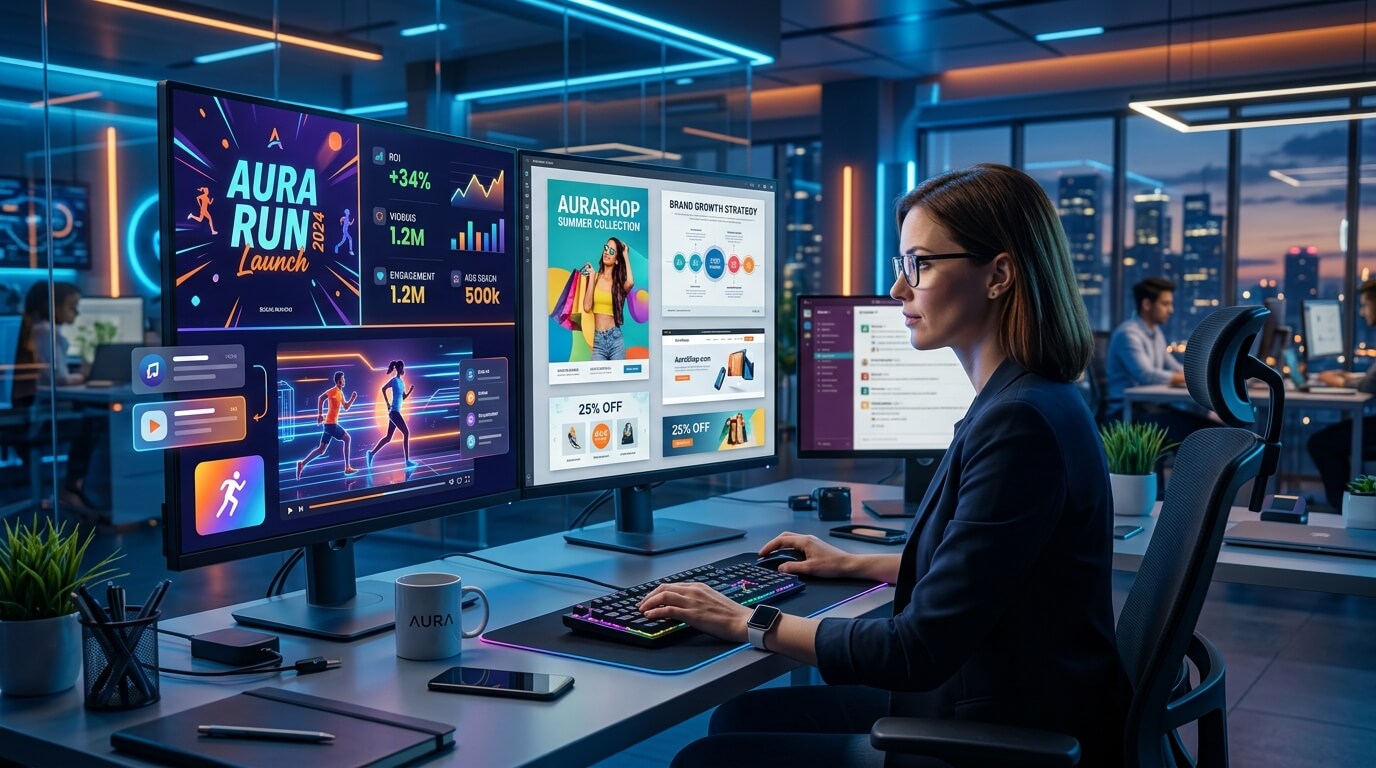
Visual content has become the foundation of modern digital marketing. Whether a customer is scrolling through social media, browsing a website, opening an email, or watching online advertisements, visuals are often the first thing they notice. A strong visual can communicate a message in seconds, build trust, and influence purchasing decisions long before a customer reads a single line of text. As businesses compete for attention in increasingly crowded digital spaces, choosing the right type of visual content has become more important than ever.
Among the many forms of visual marketing, animation and static graphics remain two of the most widely used options. While both serve the purpose of communicating information and strengthening a brand’s identity, they do so in very different ways. Static graphics rely on powerful imagery, typography, and layout to deliver a message instantly, whereas animation introduces movement, transitions, and storytelling that can hold a viewer’s attention for a longer period. Both formats have unique advantages, and neither is universally better than the other. The right choice depends on your marketing objectives, target audience, platform, budget, and the type of message you want to communicate.
Many businesses assume that animation is always the superior option simply because it is more dynamic. Others believe static graphics are sufficient because they are quicker and more affordable to produce. In reality, successful marketing strategies rarely rely on only one format. Instead, they use animation and static graphics strategically, allowing each to complement the other. Understanding when to use each approach can improve engagement, strengthen brand recognition, and increase conversions across every stage of the customer journey.
This guide explores the strengths, limitations, and practical applications of animation and static graphics in marketing. Whether you are promoting a startup, managing an established brand, or planning your next advertising campaign, understanding these two visual approaches will help you create content that connects more effectively with your audience.
Understanding Animation in Marketi ng
Animation is much more than cartoons or entertainment. In marketing, animation refers to any visual content that incorporates movement to communicate information or tell a story. This includes motion graphics, animated explainer videos, whiteboard animations, kinetic typography, product demonstrations, GIFs, logo animations, and social media advertisements. By combining movement with sound, color, and storytelling, animation creates an experience that captures attention more effectively than still images in many situations.
One of the biggest strengths of animation is its ability to simplify complex information. Instead of asking customers to read lengthy paragraphs explaining how a product works, businesses can demonstrate the process visually through animated sequences. This makes complicated ideas easier to understand and significantly improves information retention. Software companies, healthcare organizations, educational institutions, and technology brands frequently use animation because it transforms technical concepts into engaging visual stories that are easier for audiences to follow.
Animation also creates emotional engagement by guiding viewers through a carefully structured narrative. Every movement, transition, and visual effect directs the audience’s attention toward the most important information. Rather than presenting everything at once, animation gradually reveals key points, making the viewing experience feel more natural and memorable. This storytelling capability is one of the primary reasons why animated marketing campaigns often generate higher engagement across digital platforms.
Understanding Static Graphics in Marketing
Static graphics remain one of the most important visual assets in marketing despite the growing popularity of animated content. A static graphic is any visual that does not include movement. Examples include social media posts, website banners, brochures, posters, infographics, product photography, advertisements, digital illustrations, presentations, and branded graphics. These visuals rely entirely on composition, typography, colors, imagery, and layout to communicate their message within a single frame.
One of the greatest advantages of static graphics is their ability to deliver information instantly. Unlike an animation that unfolds over several seconds, a well-designed graphic communicates its message the moment someone sees it. This makes static visuals particularly effective for promotions, announcements, pricing information, event advertisements, and product highlights where viewers need immediate access to key details.
Static graphics are also easier to produce, edit, and distribute across multiple marketing channels. Businesses can quickly adapt a design for different social media platforms, websites, email campaigns, digital advertisements, or printed materials without significant production costs. This flexibility makes static graphics an essential part of every marketing strategy, regardless of industry or company size. Even brands that heavily invest in animation continue to rely on static graphics for daily communication and brand consistency.
The Fundamental Difference Between Animation and Static Graphics
Although both animation and static graphics are forms of visual communication, they differ significantly in how they deliver information. Static graphics present the entire message within a single image, allowing viewers to understand the content almost instantly. Every element is visible at once, giving users the freedom to scan the information in whatever order they choose. This immediate accessibility makes static graphics particularly effective when the goal is to communicate straightforward messages quickly.
Animation, on the other hand, controls the viewing experience through movement and timing. Instead of revealing everything simultaneously, information is introduced gradually through transitions, motion effects, character actions, or text animations. This allows marketers to guide the viewer’s attention exactly where they want it to go. Rather than simply presenting information, animation creates a sequence that builds interest and keeps audiences engaged from beginning to end.
This distinction becomes especially important when deciding which format to use. If the objective is to explain a complex process, demonstrate product functionality, or tell a compelling story, animation usually performs better because it leads viewers through the information step by step. However, when speed and clarity are priorities, static graphics often provide a more efficient solution because audiences can absorb the message within seconds without waiting for a video to play.
Capturing Audience Attention
In today’s digital environment, consumers encounter thousands of marketing messages every day. Social media feeds, websites, streaming platforms, and online advertisements compete constantly for limited attention spans. Because users scroll rapidly through content, brands have only a few seconds to make a strong first impression. This is one area where animation often provides a noticeable advantage.
The human brain is naturally attracted to movement. From an evolutionary perspective, motion signals that something important is happening, making people instinctively pay attention. Animated advertisements take advantage of this psychological tendency by introducing movement that interrupts scrolling behavior and encourages users to pause. Even subtle animations such as moving text, animated icons, or product transitions can significantly increase engagement compared to completely static visuals.
However, this does not mean static graphics are ineffective. A professionally designed graphic with striking photography, bold typography, and strong color contrast can stop users just as effectively when executed correctly. Many successful advertising campaigns rely entirely on static visuals because they communicate their message instantly without requiring viewers to spend additional time watching an animation. The effectiveness ultimately depends on creative quality rather than movement alone.
Animation vs Static Graphics for Marketing
Which Format Delivers Better Engagement?
One of the biggest reasons businesses invest heavily in visual content is to improve audience engagement. Engagement is more than simply collecting likes or views—it reflects how people interact with your content, how long they stay with it, and whether they are motivated to take the next step. Both animation and static graphics can generate impressive engagement, but they achieve this in different ways.
Animation naturally attracts attention because movement stands out in crowded digital environments. When users scroll through platforms like Instagram, Facebook, LinkedIn, or TikTok, moving visuals interrupt the scrolling experience and encourage people to stop and watch. Motion graphics, animated text, product demonstrations, and short explainer videos can keep viewers engaged for several seconds longer than static visuals. Those additional seconds are valuable because they provide brands with more opportunities to communicate their message, showcase their products, and encourage action. Animation also allows marketers to build anticipation by revealing information gradually instead of presenting everything at once, making the viewing experience more interactive and memorable.
Static graphics, however, excel in situations where audiences need immediate access to information. A promotional banner announcing a discount, a product image with pricing, or an infographic highlighting important statistics can be understood within moments. Users do not have to wait for an animation to finish before receiving the key message. This speed makes static graphics highly effective for campaigns that rely on instant communication. The strongest marketing strategies recognize that engagement is influenced not only by movement but also by relevance, creativity, and the quality of the visual design. A compelling static graphic often performs better than a poorly executed animation because audiences respond to valuable content regardless of the format.
Storytelling and Emotional Connection
Marketing is no longer just about selling products or services. Today’s consumers want to connect with brands that understand their needs, solve their problems, and share meaningful stories. Storytelling has become one of the most effective ways to build these emotional connections, and animation provides unique opportunities in this area.
Animation allows businesses to take viewers on a journey. Instead of presenting isolated facts, marketers can introduce a relatable problem, demonstrate how a product or service provides a solution, and conclude with a satisfying outcome. Characters, facial expressions, movement, sound effects, transitions, and music all work together to create emotional experiences that resonate with viewers. This ability to evoke emotion makes animation especially effective for nonprofit organizations, healthcare providers, educational institutions, technology companies, and brands that want to inspire or entertain their audiences. A well-crafted animated story can leave a lasting impression that extends beyond the immediate marketing campaign.
Static graphics can also communicate emotion, although they do so differently. A powerful photograph, carefully chosen colors, expressive typography, or thoughtful composition can create feelings of trust, excitement, luxury, or nostalgia. Many global brands rely heavily on static imagery because a single compelling visual can tell a story without movement. Fashion brands often use high-quality photography to communicate elegance, while travel companies inspire adventure through breathtaking landscapes. Although static graphics may not provide the sequential storytelling capabilities of animation, they remain highly effective when emotional impact can be captured within a single image.
Explaining Complex Products and Services
Some businesses sell products or services that are relatively easy to understand, while others require extensive explanation before customers feel confident making a purchase. The complexity of your offering should play an important role when deciding between animation and static graphics.
Animation is particularly valuable for explaining products that involve multiple steps, technical processes, or abstract concepts. Software companies frequently use animated explainer videos to demonstrate how their platforms function because showing the process visually is far more effective than describing it through paragraphs of text. Healthcare organizations use animation to explain medical procedures, insurance providers simplify policy information with motion graphics, and financial institutions rely on animated visuals to clarify investments, loans, and budgeting concepts. Animation transforms information into a guided experience, allowing audiences to absorb knowledge gradually without becoming overwhelmed.
Static graphics are still useful for educational purposes, particularly when information needs to be referenced repeatedly. Infographics, comparison charts, diagrams, and illustrated guides allow users to review important information at their own pace. Rather than watching a video from beginning to end, customers can quickly locate the exact information they need. For businesses producing educational content, combining animated explainers with supporting static graphics often provides the most effective learning experience.
Cost and Production Time
Budget considerations influence nearly every marketing decision, and visual content is no exception. While animation often delivers higher engagement, it generally requires greater investment in both time and resources compared to static graphics.
Creating a professional animation involves several stages, including concept development, scriptwriting, storyboarding, illustration, voiceover recording, motion design, editing, sound design, and multiple rounds of revisions. Depending on the project’s complexity, production can take several weeks or even months. This extended timeline makes animation more suitable for long-term campaigns, product launches, evergreen educational content, or brand videos that will continue generating value over time.
Static graphics require a much simpler production process. Designers can create high-quality banners, advertisements, social media posts, brochures, and promotional materials within a relatively short period. Since revisions are generally easier to implement, businesses can respond quickly to changing campaigns, seasonal promotions, or industry trends. For organizations working with limited budgets or tight deadlines, static graphics provide an efficient and cost-effective solution while still maintaining a professional appearance.
Although animation often involves higher upfront costs, businesses should also consider long-term return on investment. An animated explainer video may continue attracting customers for years, making the initial investment worthwhile if it consistently generates leads and conversions.
Performance Across Different Marketing Channels
Every marketing platform has unique user behaviors, technical requirements, and content preferences. Understanding how animation and static graphics perform on each platform helps businesses maximize their marketing effectiveness.
On social media, animation frequently attracts higher engagement because movement naturally captures attention within fast-moving feeds. Short animated advertisements, motion graphics, and product demonstrations perform particularly well on platforms where users consume visual content rapidly. However, static graphics remain highly effective for announcements, inspirational quotes, product photography, customer testimonials, and promotional offers. Many brands alternate between animated and static content to maintain variety and keep audiences interested.
On websites, both formats play important roles. Static graphics contribute to fast loading speeds, improve visual organization, and support written content. Animation can enhance user experience by demonstrating products, explaining services, or adding subtle interactive elements that guide visitors through the site. Excessive animation, however, may slow page performance or distract users from important information. Careful optimization ensures animation enhances rather than hinders the browsing experience.
Email marketing benefits from both approaches as well. Static banners communicate promotions clearly, while small animated GIFs draw attention to important calls to action without overwhelming subscribers. In digital advertising, animation often achieves higher click-through rates because movement differentiates advertisements from surrounding content. Nevertheless, static display ads continue to perform well when messages need to be communicated instantly.
Brand Identity and Consistency
A successful brand is instantly recognizable regardless of where customers encounter it. Visual consistency plays a major role in building this recognition, making it essential that animation and static graphics reflect the same brand identity.
Static graphics establish the foundation of a company’s visual language. Logos, typography, color palettes, photography styles, icons, and layouts create a consistent appearance that customers associate with the brand. These elements appear across websites, social media profiles, packaging, business cards, brochures, and advertisements, reinforcing familiarity with every interaction.
Animation builds upon these established visual assets by bringing them to life. Animated logos, transitions, icons, and illustrations should follow the same design principles used in static graphics. When animation aligns with existing brand guidelines, it strengthens rather than replaces the company’s visual identity. Businesses that maintain consistency across both formats create stronger recognition, improve customer trust, and present a more professional image.
When Static Graphics Are the Better Choice
Although animation often receives significant attention, there are many situations where static graphics are the more practical and effective option. Businesses announcing flash sales, displaying pricing information, promoting events, or sharing customer testimonials usually benefit from the speed and simplicity of static visuals. Viewers can understand the message immediately without investing additional time.
Static graphics are also ideal for printed materials, billboards, brochures, magazine advertisements, business presentations, packaging, and website content that requires quick scanning. Brands with limited budgets can produce a larger volume of quality content using static designs while maintaining visual consistency across multiple marketing channels.
In industries where professionalism, trust, and clarity are priorities, such as law firms, accounting services, healthcare providers, and financial institutions, static graphics often communicate authority more effectively than highly animated content. Their clean presentation allows important information to remain the primary focus.
When Animation Is the Better Choice
Animation becomes the stronger option whenever businesses need to demonstrate processes, simplify complicated topics, or create memorable brand experiences. Product launches, software demonstrations, educational content, onboarding tutorials, crowdfunding campaigns, and social media advertisements often achieve better results through animation because movement helps maintain audience attention while explaining key concepts.
Brands targeting younger digital audiences also benefit from animation because modern consumers increasingly expect dynamic content across online platforms. Motion graphics, animated infographics, and short promotional videos create more immersive experiences that encourage sharing and increase brand visibility. Companies introducing innovative technologies or complex services often discover that animation significantly reduces customer confusion while improving purchase confidence.
Combining Animation and Static Graphics for Better Marketing Results
The most successful marketing campaigns rarely depend exclusively on one visual format. Instead, they integrate animation and static graphics strategically, allowing each to support the other’s strengths. A business might use an animated video to introduce a new product, follow it with static social media graphics highlighting key features, publish an infographic summarizing benefits, and reinforce the campaign through animated advertisements and email banners.
This integrated approach provides flexibility across multiple customer touchpoints. Different audience segments consume content differently. Some prefer watching videos, while others quickly scan images for information. Offering both formats ensures that marketing messages remain accessible to a wider audience without sacrificing engagement or clarity.
Rather than asking whether animation or static graphics are better, marketers should ask which format best supports each stage of the customer journey. Awareness campaigns may benefit from animation, while decision-making stages often rely on informative static graphics. Combining both creates a balanced strategy that maximizes visibility, understanding, and conversions.
Conclusion
Animation and static graphics each play an essential role in modern marketing, and neither should be viewed as a complete replacement for the other. Animation excels at capturing attention, simplifying complex ideas, telling engaging stories, and creating memorable customer experiences. Its ability to combine movement, sound, and narrative makes it an excellent choice for product demonstrations, explainer videos, social media campaigns, and educational content. Static graphics, meanwhile, remain indispensable for delivering information quickly, maintaining brand consistency, supporting websites, creating printed materials, and producing cost-effective marketing assets that communicate messages instantly.
The most effective marketing strategies recognize that visual communication is not about choosing one format over another. Instead, it is about selecting the right tool for the right objective. By understanding the strengths and limitations of both animation and static graphics, businesses can build campaigns that capture attention, strengthen brand recognition, educate customers, and drive meaningful business results. In today’s competitive digital landscape, the smartest approach is often a thoughtful combination of both, ensuring every marketing message is delivered in the most impactful way possible.
Frequently Asked Questions
Q1. Is animation better than static graphics for marketing?
Animation often generates higher engagement because movement attracts attention, but static graphics are better for delivering quick, clear information. The best choice depends on your campaign goals.
Q2. Are static graphics still effective in digital marketing?
Yes. Static graphics remain highly effective for social media posts, advertisements, infographics, email campaigns, websites, and promotional materials because they communicate messages instantly.
Q3. Which is more affordable to produce?
Static graphics are generally more affordable and faster to create. Animation requires additional planning, design, editing, and production time, making it more expensive.
Q4. Can businesses use both animation and static graphics together?
Absolutely. Combining both formats creates a balanced marketing strategy where animation captures attention and explains concepts, while static graphics reinforce messages and maintain brand consistency.
Q5. Which industries benefit most from animation?
Technology companies, healthcare providers, educational organizations, SaaS businesses, manufacturing companies, and startups often benefit greatly from animation because it helps explain complex products and services in a clear, engaging way.