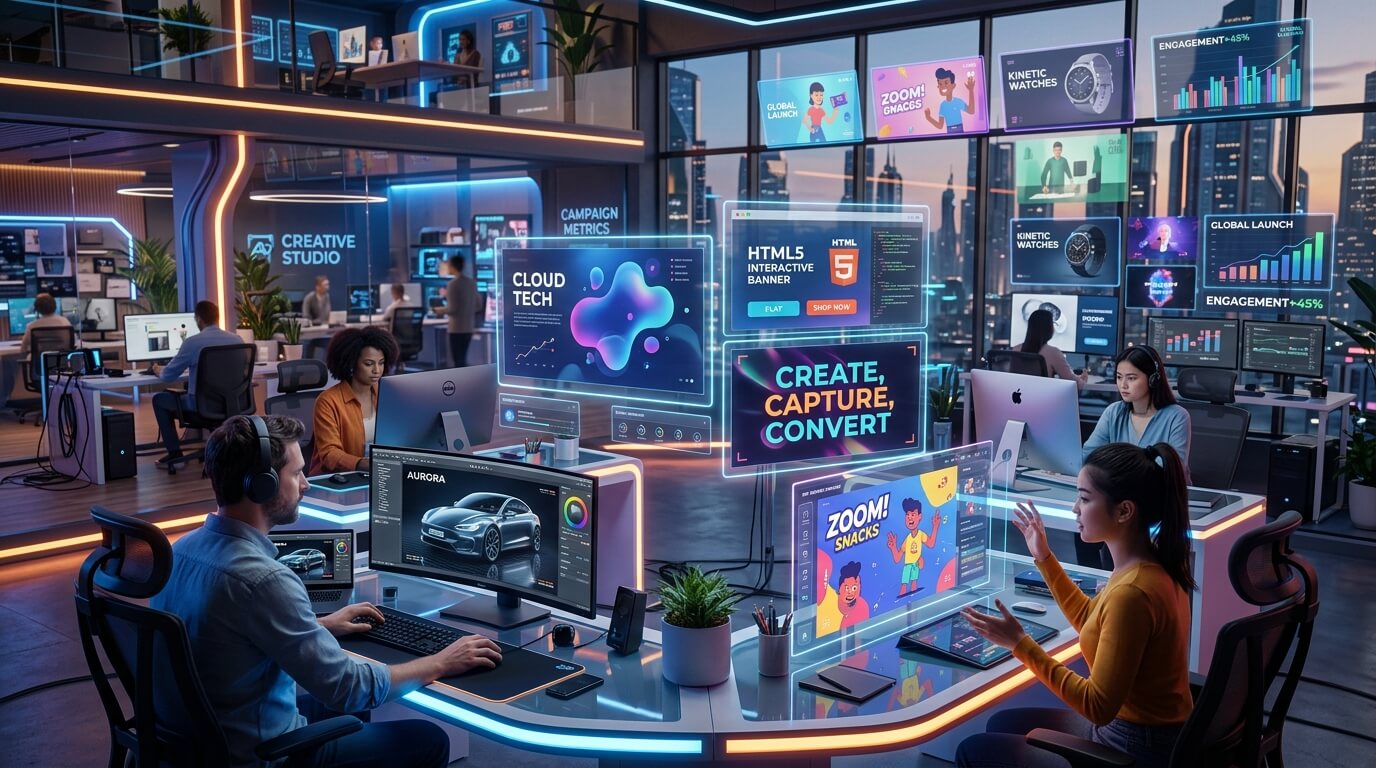
Digital advertising has become more competitive than ever before. Every day, consumers are exposed to thousands of ads across social media, search engines, websites, streaming platforms, and mobile applications. With so much content competing for attention, brands need creative approaches that capture interest within seconds. This is where animation has become one of the most powerful tools in modern marketing.
Unlike static visuals, animated advertisements create movement, emotion, and storytelling opportunities that naturally attract the human eye. Whether it is a short social media advertisement, an engaging product explainer, or a display banner, animation helps businesses communicate complex ideas in a simple and memorable way. However, creating an effective animated advertisement is not only about great design. Choosing the right animation format is equally important because every platform, campaign objective, and audience requires different technical specifications and creative approaches.
The digital advertising landscape includes numerous animation formats, ranging from traditional 2D animation to interactive HTML5 ads, lightweight GIFs, motion graphics, and cinematic 3D experiences. Each format offers unique advantages depending on the campaign’s goals, budget, target audience, and distribution platform.
This guide explores the best animation formats for digital advertising, explains where each format performs best, compares their strengths, and helps marketers choose the ideal solution for maximizing engagement, conversions, and return on investment.
Why Animation Matters in Digital Advertising
Animation has transformed the way brands communicate online. Instead of relying solely on text or images, animated content combines movement, sound, colors, typography, and storytelling to create memorable experiences.
Modern consumers scroll through content quickly. Studies consistently show that motion naturally captures attention faster than static visuals because the human brain is wired to notice movement. Even subtle animations can significantly improve engagement rates.
Animation also simplifies communication. Businesses can explain products, demonstrate software, showcase services, and highlight brand values within seconds without overwhelming viewers with lengthy descriptions.
Another reason animation performs so well is its flexibility. A single animation can often be adapted for multiple advertising channels including YouTube, Instagram, TikTok, LinkedIn, Facebook, websites, email campaigns, and digital display networks.
Understanding Animation Formats
Animation formats refer to both the creative style and the technical format used to deliver animated advertisements. The creative format defines how the animation looks and feels, while the technical format determines how it is delivered across digital platforms.
Both aspects influence loading speed, user experience, compatibility, production cost, and advertising performance. Choosing the wrong format may result in slower loading times, poor quality, reduced reach, or lower engagement.
Comparison of Popular Animation Formats
| Animation Format | Best For | Production Cost | Engagement Level | Loading Speed |
| 2D Animation | Brand storytelling, explainers | Moderate | High | Fast |
| Motion Graphics | Product promotions, B2B marketing | Moderate | High | Fast |
| GIF Animation | Email, banners, social posts | Low | Medium | Very Fast |
| HTML5 Animation | Interactive display advertising | Moderate | Very High | Fast |
| 3D Animation | Premium products, technology, automotive | High | Very High | Moderate |
| Whiteboard Animation | Educational advertising | Low to Moderate | Medium | Fast |
| Kinetic Typography | Promotional campaigns | Low | High | Very Fast |
| Animated Infographics | Data visualization | Moderate | High | Fast |
2D Animation
Why It Remains the Most Popular Advertising Format
2D animation continues to dominate digital advertising because it balances creativity, affordability, and storytelling. Brands of every size use it to create promotional videos, social media campaigns, product explainers, educational advertisements, and customer onboarding content.
Unlike highly realistic animations, 2D graphics allow audiences to focus on the message instead of visual complexity. Characters, icons, and illustrations can represent almost any industry, making this format extremely versatile.
Businesses appreciate 2D animation because it offers excellent production value without requiring the substantial budgets associated with advanced 3D projects. Marketing teams can quickly update branding, colors, messaging, and visuals whenever campaigns evolve.
Another major advantage is platform compatibility. Whether viewed on smartphones, desktops, or tablets, 2D advertisements maintain consistent quality while keeping file sizes manageable for faster loading.
Motion Graphics
Perfect for Business and Product Marketing
Motion graphics focus on animated shapes, icons, charts, text, and illustrations instead of character-based storytelling. They are especially effective for explaining products, highlighting features, presenting statistics, and simplifying technical concepts.
Software companies frequently use motion graphics to demonstrate dashboards, workflows, and user interfaces. Financial institutions rely on animated charts to explain investment opportunities. Healthcare organizations use them to simplify complex medical information.
Motion graphics are particularly effective in B2B marketing because decision-makers often value clarity over entertainment. Animated icons, clean transitions, and modern typography deliver professional presentations while keeping viewers engaged.
Since motion graphics emphasize information rather than elaborate scenes, production timelines are generally shorter, making them ideal for businesses that regularly launch new marketing campaigns.
GIF Animation
Small File Size with Big Marketing Impact
GIF animations remain one of the simplest yet most effective digital advertising formats. Although technically limited compared to full-motion videos, GIFs excel in situations where lightweight, quickly loading visuals are required.
Email marketing campaigns frequently use GIFs to showcase product rotations, limited-time promotions, or feature highlights. Because many email clients support GIF playback, they can dramatically improve click-through rates without requiring users to press play.
Social media marketers also use GIFs to create attention-grabbing announcements, reaction posts, and promotional teasers.
The greatest advantage of GIFs is speed. They load almost instantly, making them suitable for mobile users with slower internet connections.
However, because GIFs lack audio and have color limitations, they work best for short visual messages rather than detailed storytelling.
HTML5 Animation
The Modern Standard for Interactive Advertising
HTML5 has largely replaced older technologies for creating interactive online advertisements. Unlike traditional banner ads, HTML5 advertisements support responsive design, animations, clickable elements, transitions, and interactive experiences.
Advertising platforms increasingly recommend HTML5 because it performs well across modern browsers and mobile devices without requiring additional plugins.
Interactive product showcases, animated banners, mini-games, expandable advertisements, and dynamic calls-to-action all become possible with HTML5.
One major advantage is responsiveness. HTML5 advertisements automatically adjust to different screen sizes while maintaining smooth animations and user-friendly interactions.
For brands running display advertising campaigns through major advertising networks, HTML5 has become one of the most effective technical formats available.
3D Animation
Creating Premium Brand Experiences
3D animation provides unmatched realism for digital advertising. Luxury brands, automotive manufacturers, architecture firms, gaming companies, and technology businesses frequently use 3D visuals to showcase products from every angle.
Instead of relying solely on photography, advertisers can build fully digital environments that highlight intricate product details impossible to capture through traditional filming.
Modern rendering software creates realistic lighting, textures, reflections, and camera movements that enhance perceived product quality.
Although production costs are significantly higher than 2D animation, the results often justify the investment for premium campaigns where visual excellence directly influences purchasing decisions.
As hardware capabilities continue improving, 3D advertisements are becoming increasingly common across websites, streaming services, and social media platforms.
Whiteboard Animation
Educational Advertising Made Simple
Whiteboard animation uses hand-drawn illustrations appearing in real time to explain concepts step by step.
Educational institutions, online learning platforms, consulting firms, and healthcare organizations often use this format because it encourages viewers to follow the information naturally as drawings develop.
Rather than overwhelming audiences with flashy visuals, whiteboard animation emphasizes clarity and logical progression.
This makes it particularly useful for explaining services, demonstrating processes, introducing business solutions, or educating potential customers before asking for conversions.
While it may not appear as visually sophisticated as 3D animation, whiteboard videos often achieve excellent completion rates because viewers become curious about what will be drawn next.
Kinetic Typography
Let Words Become the Animation
Kinetic typography transforms text into moving visual elements. Instead of static captions, words animate across the screen with carefully timed motion, scaling, rotation, and transitions.
This format performs exceptionally well on platforms where users frequently watch videos without sound.
Brands use animated typography to emphasize slogans, promotional offers, customer testimonials, statistics, and key messages.
Because typography animations require fewer visual assets, they are often produced faster than character-based animations while still delivering highly engaging advertisements.
Many modern social media campaigns combine kinetic typography with background footage, creating energetic promotional videos optimized for mobile viewing.
Animated Infographics
Turning Data into Engaging Stories
Businesses increasingly rely on data-driven marketing. However, presenting numbers effectively remains challenging.
Animated infographics solve this problem by transforming statistics into visually engaging stories.
Instead of showing static charts, animation gradually reveals trends, comparisons, percentages, and key insights.
This helps audiences absorb information more naturally while maintaining interest throughout the presentation.
Industries including finance, healthcare, education, manufacturing, and technology frequently use animated infographics to build credibility and simplify complex information.
Video-Based Animation Formats
MP4 and WebM for Maximum Reach
Beyond creative style, marketers must also choose appropriate video file formats.
MP4 remains the industry standard because it balances excellent quality with relatively small file sizes. Nearly every advertising platform supports MP4 playback, making it the safest option for digital campaigns.
WebM has gained popularity because it offers impressive compression while maintaining high visual quality, especially on modern web browsers.
Choosing efficient video formats improves page loading speed, reduces buffering, and creates smoother viewing experiences across devices.
Choosing the Right Animation Format
Match Your Campaign Goals
Different marketing objectives require different animation approaches.
If your goal is educating customers, whiteboard animation or motion graphics may deliver the strongest results.
For premium product launches, 3D animation creates impressive visual impact.
For social media promotions, short 2D animations and kinetic typography often generate higher engagement because they communicate messages quickly.
Email campaigns frequently benefit from GIF animations due to their compatibility and lightweight design.
Interactive product demonstrations perform exceptionally well with HTML5 animation.
Instead of selecting formats based purely on trends, marketers should evaluate audience behavior, platform requirements, production timelines, available budgets, and campaign objectives.
Platform-Specific Considerations
Social Media Advertising
Social media platforms reward short, visually engaging animations that communicate value within the first few seconds.
Vertical videos, animated captions, motion graphics, and fast-paced transitions generally perform better because mobile users consume content rapidly.
Animations designed for Instagram Reels, TikTok, YouTube Shorts, Facebook Stories, and LinkedIn feeds should prioritize immediate visual impact.
Display Advertising
Display advertisements require lightweight animations that load instantly without affecting website performance.
HTML5 banners and optimized GIFs remain excellent choices because they support smooth animation while maintaining fast loading speeds.
Interactive display ads often achieve better engagement than static banners by encouraging user participation.
Website Advertising
Website animations should enhance the user experience rather than distract visitors.
Subtle motion graphics, animated icons, product demonstrations, and interactive illustrations create modern experiences without overwhelming users.
Performance optimization remains essential because slow-loading animations negatively affect SEO and conversion rates.
Best Practices for Animation in Digital Advertising
Successful animated advertisements begin with a clear objective. Every scene should support the campaign’s primary message rather than adding unnecessary visual effects. Simplicity often outperforms complexity because viewers have only a few seconds to understand the advertisement before deciding whether to continue watching.
Maintaining consistent branding throughout the animation is equally important. Colors, typography, logos, and overall visual style should align with the company’s identity so audiences instantly recognize the brand across different platforms.
Animation timing also plays a critical role. Fast-paced transitions can create excitement for entertainment or retail campaigns, while slower, more deliberate pacing may be better suited for educational or B2B content. Regardless of style, every movement should feel purposeful and guide viewers toward the intended call to action.
Optimizing file size ensures smooth playback, especially for mobile users. Compressed yet high-quality video formats improve loading speed and reduce abandonment rates. Testing animations across multiple devices and browsers before launch helps identify technical issues that could affect campaign performance.
Finally, advertisers should measure key performance indicators such as view-through rates, click-through rates, engagement, conversions, and watch time. Analyzing these metrics allows marketers to refine future campaigns and choose animation formats that consistently deliver the best results.
Future Trends in Animation Advertising
Animation technology continues to evolve rapidly. Artificial intelligence is streamlining production workflows by assisting with scripting, voice generation, character rigging, and motion design, making professional-quality animation more accessible to businesses of all sizes.
Interactive experiences are also becoming more common. Consumers increasingly expect advertisements that respond to their actions, whether through clickable elements, personalized content, or immersive web experiences powered by HTML5 and WebGL technologies.
Augmented reality and virtual reality are opening new possibilities for animated advertising, particularly in retail, real estate, automotive, and e-commerce industries. Customers can now visualize products in their own environments or explore virtual showrooms before making purchasing decisions.
Another emerging trend is personalized animation. Rather than showing identical advertisements to every viewer, brands are creating dynamic animated content that adapts based on user behavior, demographics, or browsing history. This level of customization helps improve relevance and increases the likelihood of engagement and conversion.
As internet speeds improve and consumer expectations continue to rise, animation will remain one of the most influential tools in digital advertising, offering brands endless opportunities to communicate creatively and effectively.
Conclusion
Animation has become an essential component of successful digital advertising because it captures attention, simplifies complex ideas, strengthens brand recognition, and encourages higher engagement across virtually every online platform. From affordable GIFs and versatile 2D animation to sophisticated 3D visuals and interactive HTML5 experiences, each format offers unique strengths for different marketing goals.
The best animation format is not necessarily the most advanced or expensive—it is the one that aligns with your audience, campaign objectives, budget, and distribution channels. By understanding the advantages of each format and following best practices for optimization and storytelling, businesses can create advertising campaigns that stand out in crowded digital spaces and deliver measurable results.
Frequently Asked Questions
Q1. Which animation format is best for social media advertising?
Short 2D animations, motion graphics, and kinetic typography generally perform best because they quickly capture attention and are optimized for mobile viewing.
Q2. Is HTML5 better than GIF for digital ads?
HTML5 offers interactive features, better responsiveness, and richer animations, while GIFs are simpler, smaller, and ideal for email campaigns and lightweight banner ads.
Q3. When should businesses use 3D animation?
3D animation is ideal for premium product launches, automotive marketing, technology demonstrations, architecture, gaming, and luxury brands where visual realism adds significant value.
Q4. What video format works best for animated advertisements?
MP4 is the most widely supported and reliable format because it delivers high-quality visuals with efficient compression across nearly all digital platforms.
Q5. How do I choose the right animation format for my campaign?
Start by identifying your campaign goals, target audience, budget, preferred advertising platforms, and technical requirements. Matching these factors with the strengths of each animation format will help you achieve the best results