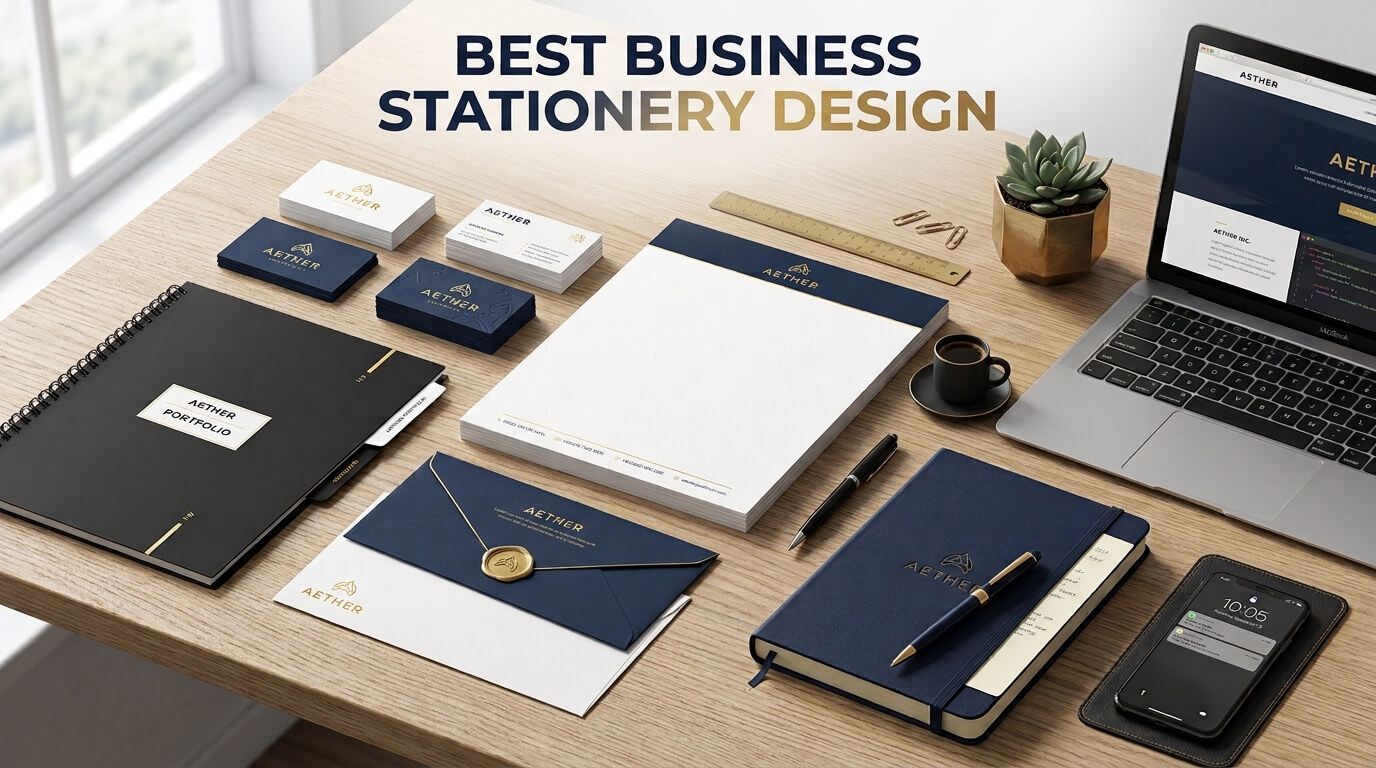
In a world where digital communication dominates daily business interactions, many people assume printed stationery has lost its importance. Yet, the opposite is often true. Business stationery remains one of the strongest visual representations of a company’s professionalism, credibility, and attention to detail. Whether it’s a business card exchanged during a networking event, a branded letterhead accompanying an official proposal, or custom envelopes used for premium client communications, stationery continues to leave a lasting impression.
Modern businesses are no longer satisfied with generic templates or plain corporate designs. They are investing in creative, strategic, and visually engaging stationery that reflects their brand personality while maintaining professionalism. Today’s business stationery combines branding, design psychology, premium materials, sustainability, and innovative printing techniques to create memorable experiences for customers, partners, and investors.
As branding becomes increasingly competitive, business stationery has evolved beyond simply displaying a logo and contact information. Every design element—from typography and paper texture to color palettes and finishing techniques—works together to communicate trust, innovation, and quality.
This guide explores the best business stationery design trends shaping modern branding. Whether you own a startup, manage a growing enterprise, or plan to refresh your company’s visual identity, understanding these trends will help you create stationery that stands out while reinforcing your brand image.
Why Business Stationery Still Matters
Many organizations focus heavily on websites, social media, and digital marketing while overlooking traditional branding materials. However, professionally designed stationery still plays a significant role in building relationships.
Every printed item becomes a physical representation of your business. Unlike digital advertisements that disappear with a click, quality stationery remains on desks, in offices, and inside customer files for months or even years.
Business stationery also creates consistency across every customer interaction. When your business cards, invoices, letterheads, envelopes, presentation folders, notebooks, and packaging all share a unified design language, they strengthen brand recognition.
Well-designed stationery communicates professionalism before anyone even reads the content. Clean layouts, balanced typography, and premium materials immediately suggest reliability and competence.
Essential Business Stationery Components
Before discussing design trends, it’s important to understand the primary elements included in a professional stationery package.
| Stationery Item | Primary Purpose | Design Focus |
| Business Card | Networking and introductions | Brand identity and readability |
| Letterhead | Official correspondence | Professional branding |
| Envelope | Mail presentation | Brand recognition |
| Invoice Template | Financial communication | Clean organization |
| Presentation Folder | Meetings and proposals | Premium appearance |
| Notepad | Internal and client use | Practical branding |
| Thank You Card | Customer relationships | Personal connection |
| Email Signature Design | Digital consistency | Unified branding |
A consistent approach across every stationery item creates a cohesive visual identity that customers recognize instantly.
The Evolution of Business Stationery Design
Business stationery has undergone remarkable changes over the past decade. Earlier designs often relied on rigid layouts, oversized logos, and excessive decorative elements. Modern businesses now prioritize clean aesthetics, strategic whitespace, and purposeful branding.
Today’s designers focus on user experience as much as visual appeal. Information must be easy to locate, logos should feel balanced rather than overwhelming, and typography must remain readable across different print sizes.
The evolution also reflects changing customer expectations. Clients increasingly appreciate simplicity, authenticity, and environmentally responsible materials, influencing nearly every aspect of contemporary stationery design.
Minimalist Design Continues to Dominate
Less Creates More Impact
Minimalism remains one of the strongest trends because it emphasizes clarity rather than decoration. Instead of filling every corner with graphics, modern stationery uses generous whitespace to direct attention toward important information.
A simple layout makes contact details easier to find while giving the overall design a sophisticated appearance. Minimalist stationery also ages well, reducing the need for frequent redesigns.
Strategic Use of White Space
White space is no longer considered empty space. It improves readability, creates visual balance, and enhances the perceived value of printed materials.
Luxury brands have long embraced this concept, and businesses across industries are now adopting similar design principles. Spacious layouts communicate confidence because they avoid unnecessary clutter.
Bold Typography Takes Center Stage
Typography has become one of the most influential elements in stationery design.
Instead of relying solely on logos for visual impact, businesses are using carefully selected typefaces to express personality. Elegant serif fonts communicate tradition and sophistication, while modern sans-serif fonts reflect innovation and simplicity.
Oversized company names, bold headlines, and distinctive font pairings help create memorable stationery without overwhelming the design.
Typography also improves brand consistency by maintaining the same visual voice across printed and digital platforms.
Sustainable Stationery Design Is Becoming the Standard
Environmental awareness has transformed business printing.
Customers increasingly appreciate brands that demonstrate sustainability through responsible material choices. Companies are replacing traditional paper with recycled, FSC-certified, bamboo-based, and cotton papers that reduce environmental impact without sacrificing quality.
Soy-based inks, biodegradable packaging, and eco-friendly printing processes further support environmentally responsible branding.
Interestingly, sustainable stationery often feels more premium because textured recycled papers provide unique tactile experiences that standard glossy paper cannot replicate.
Rather than appearing rustic or unfinished, modern eco-friendly stationery combines refined design with responsible production methods.
Premium Paper Textures Create Memorable Experiences
Digital communication lacks physical interaction, making texture one of the biggest advantages of printed stationery.
Businesses now select paper not only for durability but also for how it feels in someone’s hands.
Cotton paper conveys elegance.
Linen finishes suggest sophistication.
Soft-touch coatings create luxury.
Heavy cardstock communicates durability.
These subtle tactile experiences influence how customers perceive a company before they even begin reading the printed information.
Premium paper also improves print quality, allowing colors and typography to appear richer and more refined.
Custom Illustrations Build Brand Personality
Stock graphics are gradually disappearing from premium stationery design.
Instead, businesses are investing in custom illustrations that communicate their unique identity.
Illustrated skyline backgrounds, hand-drawn icons, architectural sketches, product illustrations, and artistic patterns add personality while maintaining professionalism.
Custom artwork helps businesses differentiate themselves in industries where many competitors share similar visual identities.
Unlike generic graphics, original illustrations create stronger emotional connections with customers.
Monochromatic Color Schemes Are Growing in Popularity
While colorful branding remains valuable, many companies are simplifying their palettes.
Monochromatic stationery uses varying shades of one primary color to create depth without excessive visual noise.
This approach looks elegant while making logos, typography, and layout more cohesive.
Black-and-white designs continue to perform exceptionally well because they emphasize structure, readability, and timeless sophistication.
Many luxury brands intentionally limit their color usage to reinforce exclusivity.
Metallic Foil Adds Premium Appeal
Foil stamping continues to be one of the most requested finishing techniques for executive stationery. Gold, silver, rose gold, copper, and holographic foils create subtle highlights that elevate otherwise simple designs.
Rather than covering entire layouts, modern designers use foil selectively for logos, borders, company names, or decorative accents.
This restrained application feels refined rather than excessive. When combined with minimalist layouts, metallic finishes create impressive visual contrast.
Embossing and Debossing Are Making a Comeback
Texture isn’t limited to paper alone.
Embossing raises selected design elements above the paper surface, while debossing presses them inward. These techniques introduce dimension without relying on additional colors.
Logos become more memorable because clients can both see and feel them. Many premium brands combine embossing with foil stamping for an elegant layered appearance.
Although these finishing methods increase production costs, they significantly enhance perceived value.
Geometric Patterns Add Modern Structure
Geometric design has become increasingly popular across corporate branding.
Simple lines, circles, triangles, and repeating patterns create organized visual interest without distracting from important content.
Geometric elements also complement minimalist branding because they maintain clean aesthetics while preventing layouts from feeling empty.
Businesses in technology, architecture, finance, and consulting particularly benefit from structured geometric compositions.
Personalized Stationery Enhances Customer Relationships
Mass-produced communication often feels impersonal.
Businesses now incorporate personalization into their stationery strategy through customized thank-you cards, handwritten notes, personalized presentation folders, and individually branded proposal documents.
Personalization demonstrates attention to detail and strengthens customer loyalty.
Even simple additions like printed recipient names or customized welcome packages create memorable client experiences.
QR Codes Blend Print with Digital Experiences
Business stationery no longer exists separately from digital marketing.
Modern designs increasingly include strategically placed QR codes that connect customers to websites, portfolios, appointment booking pages, product catalogs, or social media profiles.
The key is subtle integration.
QR codes should complement the overall design rather than dominate it. When executed correctly, they transform traditional stationery into interactive marketing tools.
Transparent Design Elements Offer Contemporary Style
Transparent business cards, vellum overlays, translucent envelopes, and semi-transparent folders have become increasingly popular among creative industries. These materials immediately attract attention because they differ from conventional paper products.
Transparency introduces depth and layering while maintaining a sophisticated appearance. Although more expensive, transparent stationery leaves memorable first impressions during networking events.
Brand Storytelling Through Design
Modern stationery no longer focuses solely on displaying contact information.
Instead, it reflects a company’s story, values, and personality. Photography, illustrations, typography, color psychology, and material choices all contribute to communicating the brand narrative.
For example, a sustainable business may use recycled kraft paper with earthy colors, while a technology startup may choose crisp white paper with bold geometric accents and minimalist typography. Every design decision supports the overall brand message.
Consistency Across Print and Digital Branding
Today’s customers interact with businesses across multiple channels.
Your website, email signature, social media graphics, presentations, printed stationery, and packaging should all feel connected.
Consistent typography, colors, spacing, imagery, and logo placement reinforce recognition.
This unified branding creates familiarity, making customers more likely to remember your business.
Consistency also demonstrates professionalism because every communication appears intentional rather than fragmented.
Luxury Simplicity Is Replacing Excessive Decoration
One of the most noticeable trends involves removing unnecessary visual elements. Rather than filling stationery with gradients, clip art, decorative borders, and multiple fonts, businesses now embrace restrained elegance.
Luxury branding often relies on a limited color palette, refined typography, premium materials, and carefully balanced layouts. This simplicity communicates confidence because the design doesn’t rely on excessive decoration to capture attention.
Future Trends in Business Stationery Design
Business stationery will continue evolving alongside technology and changing customer expectations. Artificial intelligence may assist with personalized print layouts, while augmented reality could make printed materials interactive through smartphone applications.
Smart packaging and NFC-enabled business cards are already beginning to replace traditional contact-sharing methods in certain industries.
At the same time, sustainability will likely become even more important. Businesses will continue searching for environmentally responsible printing techniques, biodegradable materials, and recyclable packaging solutions. Despite these innovations, the core purpose of business stationery will remain unchanged: creating meaningful, memorable, and professional brand experiences through thoughtful design.
Conclusion
Business stationery remains far more than a collection of printed materials. It is an extension of your brand identity, a reflection of your professionalism, and often the first tangible interaction customers have with your company. From minimalist layouts and premium paper textures to sustainable materials, custom illustrations, and digital integrations like QR codes, today’s stationery trends combine creativity with strategic branding.
The most successful stationery designs are those that balance visual appeal with functionality. They communicate trust, maintain consistency across every touchpoint, and leave a lasting impression long after the initial interaction. As businesses continue to compete in increasingly crowded markets, investing in well-designed stationery is not simply about aesthetics—it is about strengthening brand recognition, enhancing credibility, and building meaningful relationships with clients. By embracing modern design trends while staying true to your brand identity, your stationery can become a powerful marketing asset that supports your business for years to come.
Frequently Asked Questions
Q1. Why is business stationery still important in the digital age?
Business stationery creates a professional first impression, reinforces brand identity, and provides a tangible representation of your business that digital communication cannot replace.
Q2. What should every business stationery package include?
A complete stationery package typically includes business cards, letterheads, envelopes, invoice templates, presentation folders, notepads, and digital email signatures.
Q3. Are minimalist stationery designs better than complex designs?
Minimalist designs are often more effective because they improve readability, highlight essential information, and create a timeless, professional appearance.
Q4. What printing finishes make business stationery look premium?
Foil stamping, embossing, debossing, soft-touch lamination, spot UV coating, and high-quality textured paper are popular finishing techniques that enhance the overall look and feel.
Q5. How often should a company update its stationery design?
Businesses should review their stationery whenever they undergo a rebrand, change their logo or contact information, or feel that their design no longer reflects current branding or market trends.