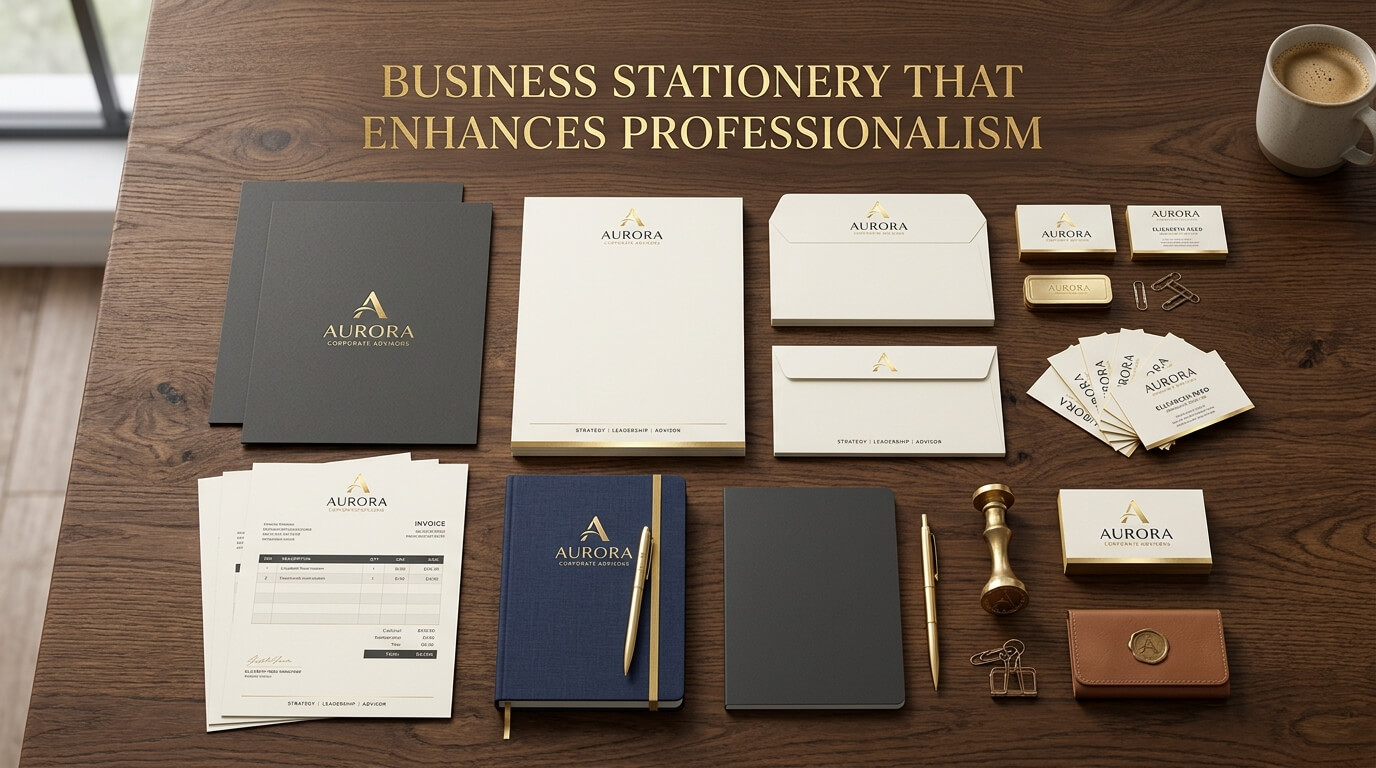
In today’s competitive business environment, professionalism is about much more than delivering quality products or services. Every interaction a business has with clients, partners, and stakeholders contributes to its reputation. While digital communication has become a significant part of business operations, physical branding materials continue to play an essential role in shaping perceptions. Among these, business stationery remains one of the most effective yet often overlooked tools for establishing trust, credibility, and brand identity.
Business stationery includes every printed material that represents a company in professional communication. From letterheads and business cards to envelopes, presentation folders, invoices, and notepads, these seemingly simple items communicate attention to detail, consistency, and commitment to quality. Well-designed stationery sends a subtle but powerful message that a business values professionalism in every aspect of its operations.
Whether you’re a startup looking to establish your identity or an established organization aiming to reinforce your brand image, investing in high-quality business stationery can significantly enhance your professional presence. This guide explores the importance of business stationery, the essential pieces every company should have, design considerations, and how these materials influence customer perception and long-term business success.
Why Business Stationery Still Matters in the Digital Age
Many businesses assume that digital communication has replaced the need for printed stationery. While emails, digital signatures, and online proposals have certainly become standard, printed business materials continue to provide value in ways that digital communication cannot fully replicate.
Receiving a professionally printed letter on branded letterhead creates a stronger impression than reading an email. Handing someone a premium business card during a networking event feels far more personal than exchanging contact information through a smartphone. Presentation folders during client meetings demonstrate preparation, organization, and professionalism that digital files alone often fail to convey.
Business stationery also creates consistency across all customer touchpoints. Every invoice, quotation, thank-you note, proposal, and official document reinforces your company’s identity. This consistency builds familiarity, and familiarity builds trust.
Physical materials also remain important in industries where formal documentation is expected, including legal services, finance, healthcare, consulting, education, and real estate. Even businesses that operate entirely online benefit from branded stationery when sending contracts, promotional packages, or welcome kits.
The Connection Between Professionalism and Business Stationery
Professionalism is often judged before a conversation even begins. The appearance of your documents, marketing materials, and communication tools immediately influences how others perceive your organization.
A poorly designed document with inconsistent fonts, low-quality printing, or missing branding elements may unintentionally suggest carelessness. In contrast, professionally designed stationery communicates stability, competence, and reliability.
Customers often associate visual quality with service quality. When your stationery looks polished and cohesive, clients naturally assume your business operates with the same level of excellence behind the scenes.
Professional stationery also demonstrates that your business has invested in its brand rather than relying on generic templates or inconsistent materials. This investment reflects confidence, attention to detail, and long-term commitment.
Essential Business Stationery Every Professional Company Needs
Every business has unique requirements, but certain stationery items remain universally valuable regardless of industry or company size.
Business Cards
Business cards remain one of the most recognizable pieces of business stationery. Despite advances in digital networking, exchanging business cards continues to be standard practice during conferences, meetings, exhibitions, and networking events.
An effective business card includes clear contact information, company branding, logo placement, professional typography, and sufficient white space to avoid clutter. Premium finishes such as matte lamination, embossing, foil stamping, or textured paper further enhance the perception of quality.
Because business cards are often the first physical interaction someone has with your brand, they should accurately reflect your company’s identity and professionalism.
Letterheads
Official correspondence still benefits greatly from branded letterheads. Whether sending contracts, invoices, recommendations, proposals, or legal documents, a professionally designed letterhead reinforces authenticity.
A good letterhead includes the company logo, address, contact information, website, and branding elements without overwhelming the page. It should remain clean enough for comfortable reading while maintaining visual consistency.
Letterheads are particularly valuable because they make even routine communication appear more official and trustworthy.
Branded Envelopes
Envelopes are frequently overlooked, yet they create the first impression before recipients even open the contents.
Professionally printed envelopes featuring your logo, return address, and brand colors demonstrate attention to detail. They also improve brand recognition while ensuring every piece of correspondence appears cohesive.
For businesses that regularly mail contracts, invoices, certificates, or promotional materials, branded envelopes contribute significantly to a polished presentation.
Notepads
Custom notepads serve both internal and external purposes. Employees use them during meetings, while clients appreciate receiving branded notepads as part of welcome packages or promotional giveaways.
Every page subtly reinforces brand awareness while offering practical value, making notepads both useful and effective marketing tools.
Presentation Folders
Presentation folders elevate proposals, contracts, company profiles, and sales materials during meetings.
Instead of handing loose documents to clients, organized folders demonstrate preparation and professionalism. They also protect documents while creating a memorable presentation experience.
Many companies include business cards, brochures, testimonials, and pricing sheets within presentation folders, creating a comprehensive and organized package.
Compliment Slips
Although relatively simple, compliment slips provide opportunities to personalize communication.
Including a handwritten message alongside deliveries, proposals, or gifts adds warmth and strengthens client relationships. These small gestures often leave lasting impressions because they feel genuine and thoughtful.
Essential Business Stationery and Their Professional Benefits
| Business Stationery | Primary Purpose | Professional Benefit |
| Business Cards | Networking | Creates memorable first impressions |
| Letterheads | Official correspondence | Enhances credibility and authenticity |
| Envelopes | Mailing documents | Reinforces branding before documents are opened |
| Presentation Folders | Organizing documents | Demonstrates professionalism during meetings |
| Notepads | Internal and promotional use | Improves daily brand visibility |
| Compliment Slips | Personalized communication | Builds stronger client relationships |
| Invoice Templates | Financial communication | Creates trust through consistency |
| Thank-You Cards | Customer appreciation | Encourages loyalty and positive experiences |
How Consistent Branding Strengthens Professionalism
One of the defining characteristics of professional businesses is consistency. Customers notice when logos, fonts, colors, messaging, and layouts remain uniform across every communication channel. A consistent brand identity makes a business look organized, reliable, and trustworthy. It also helps create a memorable impression, making it easier for customers to recognize your company whenever they receive a document or interact with your brand.
Business stationery provides an excellent opportunity to maintain this consistency. Every document should reflect the same visual identity, whether it is a quotation, invoice, letter, presentation folder, business card, or compliment slip. Using the same logo placement, typography, brand colors, and design elements across all stationery creates a cohesive look that strengthens your company’s professional image. It shows that your business pays attention to detail and values quality in every aspect of communication.
Consistency creates familiarity. Over time, customers begin recognizing your documents instantly, increasing brand recall and reinforcing trust. When people repeatedly see the same branding across different materials, they become more confident that they are dealing with a well-established and dependable business. This familiarity can also influence purchasing decisions, as customers are generally more comfortable working with brands they recognize.
Brand consistency also minimizes confusion. Clients know exactly who the communication is coming from because every piece of stationery follows the same visual standards. Whether they receive an invoice, proposal, or official letter, the consistent appearance reassures them that the document is authentic and professionally prepared. This not only enhances credibility but also strengthens your overall brand reputation, making your business appear more polished and reliable.
Choosing the Right Paper Quality
Paper quality significantly influences how your business is perceived.
Thin, low-quality paper may save money initially, but it often creates an impression of cheapness. In contrast, thicker paper stock communicates quality, durability, and professionalism.
Premium stationery paper typically feels smoother, prints more clearly, and lasts longer without damage.
Businesses should consider factors such as paper weight, finish, texture, brightness, and sustainability when selecting stationery materials. These choices influence both aesthetics and user experience.
Typography and Layout Considerations
Professional typography contributes greatly to readability and visual appeal.
Fonts should remain consistent across all stationery items. Most businesses select one primary font for headings and another complementary font for body text.
Layouts should prioritize clarity over decoration. Adequate margins, balanced spacing, and proper alignment make documents easier to read while conveying organization.
Avoid excessive graphics, multiple font styles, or crowded designs. Simplicity often communicates professionalism more effectively than complexity.
The Role of Color in Business Stationery
Color influences emotional perception more than many businesses realize.
Corporate blue often communicates trust and reliability. Black suggests sophistication and authority. Green represents sustainability and growth, while red conveys energy and confidence.
Rather than using numerous colors, businesses should limit their stationery palette to official brand colors.
Consistent color usage strengthens recognition while maintaining a polished appearance across every printed material.
Logo Placement and Brand Visibility
Your logo should remain visible without dominating the design.
Most professional stationery places logos in the top-left corner, centered at the top, or subtly incorporated into the header or footer.
The logo should always maintain adequate spacing and never appear stretched, pixelated, or oversized.
High-resolution vector files ensure sharp printing across various stationery items regardless of size.
Business Stationery for Client Meetings
Face-to-face meetings remain valuable despite digital communication becoming increasingly common.
Bringing professionally branded folders, proposal documents, note sheets, and business cards demonstrates preparation before discussions even begin.
Clients often associate organized presentations with organized businesses.
Even if presentations occur digitally, providing professionally printed supporting documents creates a more memorable experience and reinforces credibility.
The Importance of Professional Invoice Design
Invoices represent one of the most frequent customer touchpoints.
A professionally branded invoice reassures customers that financial transactions are legitimate, organized, and secure.
Invoices should include consistent branding, company information, payment details, invoice numbers, and clear formatting.
Well-designed invoices also reduce payment confusion because information is presented logically and professionally.
Thank-You Cards and Customer Appreciation
Customer relationships extend beyond completed transactions.
Sending handwritten thank-you cards or professionally printed appreciation notes demonstrates genuine gratitude.
These simple gestures humanize your business while encouraging repeat business and referrals.
Customers often remember thoughtful experiences more vividly than promotional advertisements.
Sustainable Business Stationery Options
Environmental responsibility has become increasingly important for businesses worldwide.
Many organizations now choose recycled paper, soy-based inks, biodegradable packaging, and responsibly sourced materials for their stationery.
Sustainable stationery communicates that a business values environmental stewardship alongside professionalism.
Customers increasingly appreciate brands that make environmentally conscious decisions without compromising quality.
Custom Stationery Versus Generic Templates
Generic stationery may appear economical initially, but custom-designed materials provide substantially greater value.
Custom stationery reflects your brand personality rather than resembling countless other businesses using identical templates.
Professional designers consider spacing, typography, printing techniques, branding consistency, and usability when creating custom stationery.
Although custom stationery requires a larger initial investment, it contributes to stronger brand recognition and a more polished business image over time.
Common Business Stationery Design Mistakes
Many businesses unintentionally reduce their professional image through avoidable design errors.
Using low-resolution logos, inconsistent fonts, excessive colors, poor alignment, spelling mistakes, or outdated contact information can negatively affect credibility.
Another common mistake is overcrowding documents with unnecessary graphics or text.
Professional stationery embraces simplicity, readability, and consistency while allowing important information to remain the primary focus.
Regularly reviewing stationery designs ensures all information remains accurate as businesses grow and evolve.
How Small Businesses Benefit from Professional Stationery
Some entrepreneurs believe professional stationery is only necessary for large corporations.
In reality, small businesses often benefit even more because professional branding helps establish credibility against larger competitors.
When potential customers compare multiple service providers, polished stationery may influence purchasing decisions by creating stronger first impressions.
Professional presentation helps smaller companies appear established, trustworthy, and capable regardless of their size.
Integrating Business Stationery with Digital Branding
Modern branding should seamlessly connect printed and digital experiences.
Business cards can include QR codes directing customers to websites or portfolios. Letterheads should feature website addresses and professional email domains. Presentation folders can reference social media platforms and online resources.
This integration ensures customers experience a unified brand regardless of whether interactions occur online or offline.
Businesses that successfully combine traditional stationery with digital communication often create stronger, more memorable customer experiences.
Investing in Professional Printing Services
Even exceptional designs can lose their impact if printed poorly.
Professional printing companies offer superior color accuracy, sharper images, premium paper options, and specialized finishes that standard office printers cannot achieve.
Finishing techniques such as embossing, foil stamping, spot UV coating, and soft-touch lamination further elevate perceived quality.
Choosing professional printing ensures your stationery accurately reflects the professionalism your business aims to communicate.
Conclusion
Business stationery remains one of the most valuable investments a company can make in its professional image. Every business card exchanged, letter mailed, proposal delivered, invoice sent, or thank-you note written contributes to how customers perceive your organization. High-quality stationery reflects consistency, attention to detail, credibility, and brand confidence—all qualities that inspire trust and strengthen business relationships.
In a marketplace where first impressions often determine opportunities, professionally designed stationery provides a lasting advantage. By combining thoughtful design, premium materials, consistent branding, and quality printing, businesses can transform everyday communication into meaningful brand experiences that leave a positive and memorable impression.
Frequently Asked Questions
Q1. Why is business stationery important for professionalism?
Business stationery creates a consistent brand image, improves credibility, and leaves a strong first impression on clients and partners.
Q2. What are the essential business stationery items?
Business cards, letterheads, envelopes, presentation folders, notepads, invoices, and thank-you cards are among the most essential items.
Q3. Does business stationery still matter in a digital world?
Yes. Printed stationery complements digital communication by adding credibility, personalization, and a tangible brand experience.
Q4. How often should business stationery be updated?
It should be updated whenever branding, logos, contact information, or company messaging changes to ensure consistency and accuracy.
Q5. Can small businesses benefit from professional stationery?
Absolutely. Professional stationery helps small businesses establish trust, compete with larger companies, and create a polished, memorable brand identity.