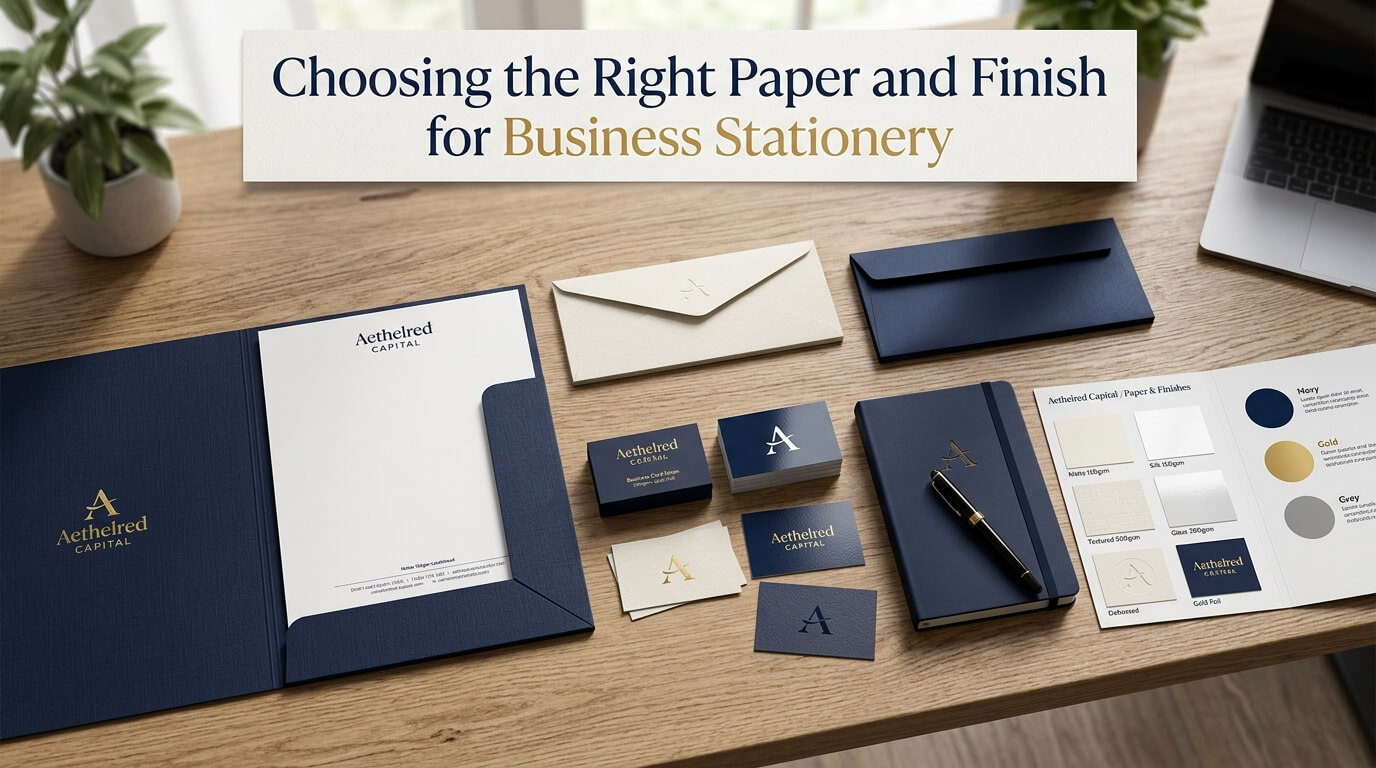
Business stationery represents far more than paper with a company logo. It reflects your brand identity, communicates professionalism, and creates lasting impressions during every interaction with customers, suppliers, investors, and business partners. Whether you are handing over a business card at a networking event, sending an official letter, or presenting a proposal in a branded folder, the quality of the paper and its finish influences how people perceive your company.
Many businesses invest significant time creating attractive logos, selecting corporate colors, and developing consistent branding, yet overlook one of the most important details—the materials used to print their stationery. Paper weight, texture, coating, brightness, and finish all contribute to how your documents look, feel, and perform. A premium design printed on poor-quality paper can lose its impact, while a simple design on high-quality stock often appears elegant and trustworthy.
Choosing the right paper and finish is not simply about selecting the most expensive option available. Every business has different needs depending on its industry, audience, budget, and intended use. A luxury real estate agency may benefit from thick textured paper with a soft-touch finish, while a law firm might prefer clean, smooth uncoated paper that conveys professionalism and readability. Likewise, a creative agency may embrace unique textures and specialty finishes that showcase innovation.
Understanding these choices helps businesses make informed decisions that strengthen branding, improve customer perception, and maximize the value of every printed item. This guide explains everything you need to know about selecting the ideal paper and finish for business stationery so every document reflects the quality and credibility of your brand.
Why Paper and Finish Matter in Business Stationery
Business stationery is often one of the first physical interactions customers have with a company. Unlike digital communications, printed materials create a tangible experience that engages multiple senses. The weight of a business card, the smoothness of a letterhead, or the texture of an envelope all influence how recipients perceive the business behind them.
People naturally associate heavier, higher-quality materials with professionalism, reliability, and attention to detail. When someone receives a well-crafted presentation folder or premium business card, they subconsciously assume the company values quality in its products and services as well. This psychological effect makes paper selection an important part of brand communication.
The finish applied to printed stationery adds another layer of impact. Glossy finishes create vibrant colors and eye-catching visuals, while matte finishes communicate sophistication and elegance. Textured papers introduce personality and uniqueness, helping brands stand out without overwhelming the design.
Consistency also plays a significant role. When every piece of stationery—from invoices and letterheads to envelopes and notepads—shares similar paper quality and finishing techniques, customers recognize a unified and dependable brand identity. This consistency strengthens trust and reinforces professionalism across every business interaction.
Well-chosen materials also improve functionality. Certain finishes resist fingerprints, moisture, and wear, helping documents maintain their appearance longer. Others provide better surfaces for writing or stamping, making them more practical for daily business use. Rather than being purely decorative, paper and finish selections contribute to both aesthetics and usability.
Businesses operating in competitive industries often look for ways to differentiate themselves. While competitors may focus primarily on pricing or marketing campaigns, premium stationery quietly communicates excellence during every customer interaction. These subtle details often influence purchasing decisions more than companies realize.
Understanding Paper Weight and Thickness
One of the most important aspects of choosing stationery paper is understanding weight and thickness. Although these terms are often used interchangeably, they describe different characteristics that affect both appearance and performance.
Paper weight refers to the density of the paper, while thickness describes how substantial it feels when held. Different countries use varying measurement systems, but GSM (grams per square meter) remains the most common international standard for comparing paper quality.
Higher GSM values generally indicate thicker, more durable paper, although manufacturing methods and paper composition can also influence the final feel.
Lightweight Paper
Paper ranging between 70 and 100 GSM is typically used for everyday office printing and internal documents. While affordable and practical for high-volume printing, it generally lacks the premium feel expected from customer-facing stationery.
Simple internal memos, drafts, and photocopies work well on lightweight paper because cost efficiency is more important than presentation.
Medium-Weight Paper
Paper between 100 and 170 GSM provides an excellent balance between durability and flexibility. Many professional letterheads, brochures, and branded notepads fall within this range because they feel noticeably more substantial without becoming overly rigid.
Medium-weight paper also performs well in office printers, making it suitable for businesses that print customized documents in-house.
Heavyweight Paper
Paper above 200 GSM creates an immediate impression of quality and durability. Business cards, presentation folders, certificates, premium invitations, and luxury promotional materials frequently use heavier stocks.
Thicker paper resists bending, maintains its shape, and gives recipients confidence in the quality of the business behind the document.
Many premium business cards now exceed 350 GSM because customers associate thicker cards with premium brands. While heavier materials cost more, they often deliver stronger long-term value by creating memorable first impressions.
Choosing the Right GSM for Different Applications
Different stationery products require different paper weights depending on how they are used.
| Business Stationery Item | Recommended Paper Weight (GSM) | Reason |
| Letterheads | 100–120 GSM | Professional appearance while remaining printer-friendly |
| Envelopes | 90–120 GSM | Durable enough for mailing without excessive weight |
| Notepads | 80–100 GSM | Easy writing and economical production |
| Presentation Folders | 300–350 GSM | Strong structure and premium feel |
| Business Cards | 300–450 GSM | Excellent durability and memorable first impressions |
| Certificates | 160–250 GSM | Premium appearance suitable for framing |
| Compliment Slips | 120–170 GSM | Elegant feel while maintaining flexibility |
Rather than selecting the highest GSM available, businesses should consider practical use. Extremely thick paper may not feed properly through office printers, while paper that is too thin may wrinkle, tear, or appear inexpensive.
Common Paper Types for Business Stationery
The type of paper chosen can dramatically influence both the appearance and functionality of printed materials. Each paper variety offers distinct advantages depending on branding objectives, printing techniques, and customer expectations.
Coated Paper
Coated paper features a smooth surface created through the application of special coatings during manufacturing. This coating fills tiny gaps within the paper fibers, creating a more uniform surface for ink.
Because ink sits closer to the surface rather than being absorbed deeply, coated paper produces sharper images, richer colors, and improved detail. Marketing materials that rely heavily on photography or vibrant graphics often benefit from coated paper.
Businesses in industries such as retail, hospitality, fashion, and creative services frequently choose coated paper for brochures, promotional materials, and premium stationery because it enhances visual appeal.
However, coated paper may be less suitable for handwritten notes since some inks take longer to dry.
Uncoated Paper
Uncoated paper has a natural surface without additional coatings. It absorbs ink more readily, creating a softer and more traditional appearance.
Many corporate letterheads, invoices, forms, and official correspondence use uncoated paper because it offers excellent readability and provides an ideal surface for handwriting, signatures, and stamps.
Professional service firms including law offices, accounting firms, consultants, and healthcare organizations often favor uncoated stationery because it conveys authenticity, seriousness, and professionalism.
Its understated appearance also complements minimalist branding styles.
Textured Paper
Textured paper introduces tactile interest by incorporating subtle patterns into the paper surface. Common textures include linen, felt, laid, hammered, and woven finishes.
The texture creates visual depth while adding a distinctive feel that recipients immediately notice.
Luxury brands, boutique businesses, wedding planners, architects, interior designers, and premium consultants often use textured paper to communicate exclusivity and craftsmanship.
Because textured paper interacts differently with ink, businesses should always request print samples before committing to large production runs.
Recycled Paper
Environmental sustainability has become an increasingly important consideration for businesses worldwide. Recycled paper allows organizations to reduce their environmental footprint while maintaining professional presentation.
Modern recycled papers have improved significantly compared to earlier generations. Many premium recycled stocks now offer brightness, smoothness, and durability comparable to virgin paper.
Using recycled materials also demonstrates corporate responsibility, which resonates strongly with environmentally conscious customers and business partners.
Many companies highlight their sustainability efforts directly on their stationery by noting the use of recycled or responsibly sourced paper.
Cotton Paper
Cotton paper represents one of the most luxurious options available for business stationery. Manufactured partly or entirely from cotton fibers rather than wood pulp, it offers exceptional durability and an elegant texture.
Unlike ordinary paper, cotton paper ages remarkably well and resists yellowing over time.
Law firms, financial institutions, luxury brands, universities, and executive offices frequently use cotton paper for certificates, formal correspondence, contracts, and premium letterheads.
Although cotton paper costs more than standard alternatives, its refined appearance and longevity often justify the investment for high-value communications.
Choosing the Right Finish
Paper finish refers to the final surface treatment that affects how printed materials look, feel, and perform. Even when two documents use identical paper, different finishes can produce dramatically different impressions.
Selecting the appropriate finish depends on your brand personality, printing requirements, intended audience, and practical use.
Gloss Finish
Gloss finishes create highly reflective surfaces that intensify color saturation and image sharpness. The smooth coating reflects light, making photographs and vibrant graphics appear more striking.
Businesses involved in fashion, entertainment, travel, food, and retail often choose gloss finishes because they enhance visual impact and create energetic marketing materials.
However, glossy surfaces can show fingerprints more easily and may produce glare under bright lighting.
Matte Finish
Matte finishes eliminate excessive shine while maintaining excellent color quality. Their smooth, non-reflective appearance creates an elegant and contemporary look suitable for professional brands.
Many businesses prefer matte finishes because they balance sophistication with practicality. They resist fingerprints better than gloss finishes and remain easy to read under different lighting conditions.
Premium business cards, presentation folders, corporate brochures, and executive reports frequently use matte finishes to communicate refinement without excessive visual distraction.
Silk Finish
Silk finishes provide a middle ground between gloss and matte. They offer subtle smoothness with mild reflectivity, creating an attractive balance of durability and elegance.
Silk-coated paper often delivers excellent print quality while maintaining a softer appearance than high-gloss alternatives.
Businesses seeking professional yet visually engaging stationery frequently consider silk finishes because they combine attractive color reproduction with comfortable readability.
Selecting Paper and Finish for Different Stationery Items
Choosing the right paper and finish becomes much easier when you consider the purpose of each stationery item. Every printed piece serves a different function, and the materials should support both usability and brand presentation. Rather than applying the same paper stock to every item, businesses can achieve better results by matching the paper characteristics to the specific application.
Business Cards
Business cards are often the first physical representation of your brand that someone receives. Because they are exchanged during meetings, networking events, and conferences, they should immediately communicate professionalism and quality.
A heavier cardstock, typically between 300 and 450 GSM, creates a premium impression and feels substantial in the hand. Customers naturally associate thicker cards with established and trustworthy businesses. While thinner cards may reduce printing costs, they are also more likely to bend, crease, or appear less memorable.
The finish should complement the company’s branding style. Matte finishes are a popular choice because they provide a refined appearance and resist fingerprints. Soft-touch finishes create a luxurious, velvety texture that leaves a lasting impression, particularly for luxury brands and creative agencies. Gloss finishes work well for businesses that rely on colorful imagery or vibrant branding, while textured papers can add personality without overwhelming the design.
Since business cards are handled frequently, durability is just as important as appearance. Selecting high-quality paper ensures the card maintains its shape and professional look long after it has been exchanged.
Letterheads
Letterheads remain an essential part of official business communication. Contracts, quotations, invoices, proposals, and formal correspondence all benefit from professionally printed letterheads that reinforce brand identity.
Unlike business cards, letterheads need to perform well in office printers and copiers. Paper between 100 and 120 GSM generally provides the ideal balance between quality and functionality. It feels noticeably superior to standard office paper while remaining compatible with most printing equipment.
An uncoated finish is usually the preferred choice because it allows smooth handwriting, quick ink absorption, and clean signatures. This is especially important when documents require handwritten notes, official stamps, or customer signatures.
Simple, high-quality paper often creates a stronger impression than heavily decorated designs. Clean typography combined with premium paper communicates confidence and professionalism without distracting from the document’s content.
Envelopes
Envelopes are frequently overlooked, yet they create the first impression before recipients even open the correspondence. A professionally designed envelope made from quality paper signals that the contents deserve attention.
Paper between 90 and 120 GSM generally provides enough strength for mailing while maintaining flexibility during processing. Matching the paper color and finish to the company’s letterhead helps create a consistent brand experience.
For most businesses, uncoated envelopes offer the greatest practicality because they accept handwriting, labels, and postal markings more effectively. Companies that prioritize luxury branding may choose textured or premium stocks for invitations, executive correspondence, or exclusive client communications.
Even something as simple as a well-crafted envelope can elevate the perceived value of the documents inside.
Presentation Folders
Presentation folders play an important role during client meetings, sales presentations, and corporate events. They organize documents while reinforcing the company’s image.
Since folders must support multiple sheets of paper without bending easily, heavier cardstock between 300 and 350 GSM is generally recommended. This provides the rigidity needed to maintain a polished appearance throughout repeated use.
Matte and silk finishes are commonly selected because they resist fingerprints while maintaining a sophisticated look. Businesses seeking a luxury appearance may also incorporate specialty finishes such as spot UV or embossing to highlight logos and important branding elements.
High-quality presentation folders demonstrate attention to detail and help transform ordinary proposals into memorable client presentations.
Compliment Slips and Notepads
Compliment slips and branded notepads contribute to everyday customer interactions. Whether accompanying product deliveries or serving as internal office materials, they reinforce the company’s visual identity.
Paper between 80 and 120 GSM usually works well because it provides an excellent writing surface while remaining economical for larger print runs. Uncoated paper is generally preferred, allowing smooth handwriting without smudging.
Although these items are relatively simple, consistent branding and quality materials ensure they complement the rest of the company’s stationery collection.
Balancing Quality, Budget, and Sustainability
Every business wants stationery that looks impressive, but financial considerations naturally influence purchasing decisions. Fortunately, achieving professional results does not always require selecting the most expensive materials available. The key is understanding where premium investments create the greatest value.
For example, business cards and presentation folders often justify higher-quality paper because they directly influence first impressions. In contrast, internal documents and everyday office forms may use more economical paper without negatively affecting customer perception.
Many businesses benefit from adopting a tiered approach to stationery. Premium materials can be reserved for customer-facing documents, while standard paper serves routine administrative purposes. This strategy maintains a professional image while controlling printing costs.
Print quantity also affects budgeting decisions. Larger print runs typically reduce the cost per unit, making premium materials more affordable over time. Planning stationery needs in advance rather than ordering small quantities frequently can significantly improve overall value.
Sustainability has also become an important consideration when choosing paper. Customers increasingly appreciate businesses that demonstrate environmental responsibility through thoughtful purchasing decisions. Selecting recycled paper, responsibly sourced materials, or paper certified by recognized forestry organizations allows companies to reduce their environmental impact without sacrificing quality.
Modern sustainable papers have evolved considerably over recent years. Many recycled options now provide excellent brightness, durability, and print quality that closely match traditional papers. As a result, businesses no longer need to compromise appearance in order to support environmentally responsible practices.
Combining sustainability with premium design sends a positive message about the company’s values. Customers often recognize these choices as evidence that the business considers long-term responsibility alongside commercial success.
Common Mistakes to Avoid
Selecting stationery materials may appear straightforward, but several common mistakes can reduce the effectiveness of even the best designs.
One frequent mistake is focusing entirely on appearance while ignoring functionality. A highly reflective glossy finish may look attractive but become impractical if employees regularly need to write notes or collect signatures on the document. Similarly, choosing extremely thick paper for letterheads may create problems when printing in standard office equipment.
Another common error involves inconsistent material selection. Using premium business cards alongside thin, low-quality letterheads creates conflicting impressions about the brand. Customers notice these inconsistencies even if they cannot immediately identify the reason.
Some businesses also choose paper based solely on price. While reducing printing costs may seem beneficial in the short term, poor-quality stationery often reflects negatively on the company’s reputation. Replacing inexpensive materials with moderately higher-quality alternatives frequently delivers a stronger return on investment through improved customer perception.
Ignoring color accuracy represents another challenge. Different paper types affect how printed colors appear. Bright white coated paper produces more vibrant colors than cream-colored textured stock. Businesses should always request printed proofs before approving large production runs to ensure brand colors remain consistent.
Finally, many organizations neglect to consider long-term durability. Business cards that crease easily or presentation folders that quickly show wear fail to support a professional image. Selecting materials appropriate for their intended use helps preserve quality throughout the stationery’s lifespan.
Tips for Working with Professional Printers
Choosing the right paper and finish becomes much easier when businesses collaborate closely with experienced printing professionals. Printers understand how different materials behave during production and can recommend options that suit both design requirements and budget.
One of the most valuable steps is requesting physical paper samples. Viewing paper on a computer screen cannot accurately represent texture, thickness, brightness, or finish. Holding various samples allows businesses to compare options and make informed decisions with confidence.
Printing prototypes before placing a full order also helps identify potential issues. Small adjustments to color, finish, or paper weight can dramatically improve the final result while avoiding expensive reprints.
Businesses should also discuss the intended use of each stationery item with their printer. Materials suitable for luxury marketing brochures may not be ideal for forms that require frequent handwriting or office printing. Sharing these practical requirements enables printers to recommend more appropriate solutions.
Consistency should remain a priority throughout every print order. Using the same paper family, matching finishes, and maintaining accurate color reproduction across all stationery items strengthens brand recognition and creates a cohesive corporate identity.
It is also worthwhile to ask about specialty finishes if the brand aims to create a premium impression. Techniques such as embossing, debossing, foil stamping, soft-touch lamination, and spot UV coating can elevate selected items without overwhelming the overall design. Used selectively, these enhancements add sophistication while keeping the stationery elegant and professional.
Developing an ongoing relationship with a trusted printing company often leads to better quality control, more consistent results, and valuable advice for future projects. Experienced printers become familiar with a company’s branding standards, making it easier to maintain consistency across every new order.
Conclusion
Choosing the right paper and finish for business stationery is about much more than aesthetics. Every decision, from paper weight and texture to coating and finish, influences how customers perceive your business. High-quality materials communicate professionalism, reliability, and attention to detail, while poor choices can unintentionally weaken even the strongest brand identity.
The ideal combination depends on the purpose of each stationery item, the expectations of your audience, and your overall branding strategy. Business cards benefit from heavier stock that creates memorable first impressions, while letterheads require printer-friendly paper that remains practical for everyday correspondence. Matte, gloss, silk, textured, and uncoated finishes each offer distinct advantages, making it important to select options that align with both visual style and functionality.
Balancing quality, budget, and sustainability ensures your stationery remains both effective and cost-efficient. Investing thoughtfully in premium materials where they matter most helps maximize the impact of every customer interaction while supporting long-term brand credibility.
Ultimately, business stationery serves as a physical extension of your company’s reputation. When paper and finish are selected with care, every document, envelope, folder, and business card becomes an opportunity to reinforce trust, professionalism, and lasting brand recognition.
Frequently Asked Questions
Q1. What paper weight is best for business cards?
A paper weight between 300 and 450 GSM is generally recommended because it provides durability and creates a premium first impression.
Q2. Is matte or gloss better for business stationery?
Matte is usually preferred for professional corporate stationery, while gloss works better for colorful marketing materials and image-heavy designs.
Q3. Should letterheads use coated or uncoated paper?
Uncoated paper is typically the better choice because it is easier to write on, absorbs ink well, and performs effectively in office printers.
Q4. Is recycled paper suitable for premium business stationery?
Yes. Modern recycled papers offer excellent print quality, durability, and appearance, making them suitable for both professional and premium stationery.
Q5. Why is paper quality important for branding?
Paper quality influences how customers perceive your business. High-quality materials communicate professionalism, credibility, and attention to detail, helping strengthen your overall brand image.