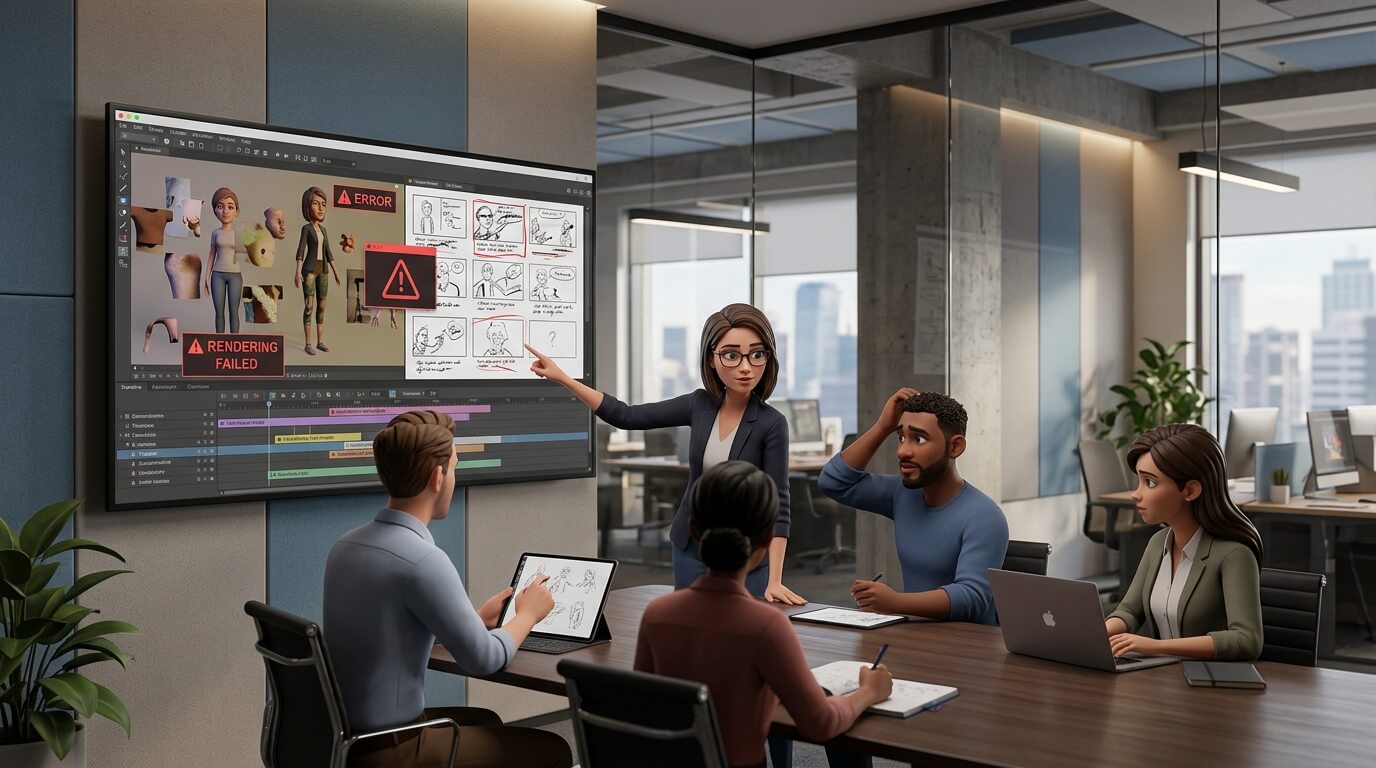
Animation has become one of the most powerful tools businesses use to communicate ideas, explain products, attract customers, and strengthen brand identity. From animated explainer videos and social media campaigns to website visuals and advertising content, animation allows companies to present complex information in a simple and engaging way. When created strategically, animation can improve customer understanding, increase engagement rates, and make a brand more memorable.
However, many businesses invest in animation without fully understanding the creative and strategic decisions behind successful animated content. A poorly planned animation project can result in unclear messaging, wasted budgets, weak audience connections, and content that fails to achieve business goals. The problem is often not the animation itself but the mistakes made during planning, designing, storytelling, and execution.
Businesses sometimes focus too much on making videos look visually impressive while ignoring important elements such as audience needs, brand consistency, storytelling structure, and communication goals. A beautiful animation without a clear purpose may entertain viewers but fail to generate leads, explain a product, or encourage action.
Understanding common animation mistakes can help businesses create more effective content. Whether a company is producing an explainer video, promotional animation, educational content, or digital advertising campaign, avoiding these errors can improve the overall impact of the project.
Failing to Define a Clear Purpose Before Creating Animation
One of the biggest mistakes businesses make is starting an animation project without defining what they want to achieve. Animation should never be created simply because it is a popular marketing trend. Every animated video should have a specific purpose that connects with business objectives.
Some companies begin production by focusing on visuals, characters, colors, and effects before deciding what message they want to communicate. This often leads to a video that looks attractive but lacks direction. Without a clear goal, the animation may confuse viewers rather than guide them toward understanding a product or service.
Before creating animation, businesses should determine whether the goal is increasing brand awareness, explaining a complicated process, introducing a new product, educating customers, generating sales, or improving customer engagement. Each objective requires a different storytelling approach.
For example, an animation designed to explain software features should focus on clarity and education, while an advertisement animation may prioritize emotional connection and brand recognition. When businesses fail to identify their main goal, the final animation often becomes a collection of attractive scenes without a strong message.
A successful animation begins with strategy. Companies should first understand their audience, define their communication goal, and determine what action they want viewers to take after watching the video. This foundation helps designers and animators create content that delivers measurable results.
Ignoring the Target Audience
Another common mistake businesses make is creating animation based on what they like rather than what their audience needs. A successful animation is not designed only for the company; it is designed for the people who will watch it.
Different audiences respond to different styles, tones, and storytelling methods. A financial technology company targeting professionals may require a clean, modern animation style with a serious tone. On the other hand, a children’s education brand may benefit from colorful visuals, playful characters, and a more energetic approach.
When businesses ignore audience preferences, their animation can feel disconnected. Viewers may struggle to relate to the message because the content does not reflect their expectations, interests, or problems.
Understanding the audience involves researching customer demographics, challenges, motivations, and behaviors. Businesses should ask questions such as what problems customers face, what information they need, what language they understand best, and what emotions influence their decisions.
Animation is most effective when viewers feel that the content was created specifically for them. A customer who connects with the story is more likely to remember the brand and take the desired action.
Overcomplicating the Message
Many businesses make the mistake of trying to include too much information in a single animation. They want to explain every feature, highlight every benefit, mention every service, and include every detail. While this approach may seem useful, it often creates confusion.
Animation works best when it simplifies information. One of its greatest strengths is transforming complex ideas into easy-to-understand visual stories. However, when too many messages compete for attention, viewers may lose interest or fail to understand the main point.
A common example is an explainer video that introduces a product but spends most of its time describing technical specifications instead of explaining how the product solves customer problems. The audience may remember details but fail to understand the actual value.
Businesses should focus on one central message and build the animation around it. Supporting information can be included, but the primary idea should remain clear throughout the video.
The strongest animations answer simple questions: What is the problem? How does the solution help? Why should customers care? What should they do next? Keeping the message focused creates stronger communication and better viewer retention.
Prioritizing Visual Effects Over Storytelling
Modern animation software allows creators to produce impressive visual effects, advanced movements, and detailed designs. While these elements can improve quality, businesses often make the mistake of believing that more effects automatically create better animation.
Visual appeal is important, but storytelling remains the foundation of effective animation. A video filled with impressive transitions and complex movements may capture attention briefly but fail to create meaningful engagement.
Great animation uses visuals to support the story, not replace it. Every movement, character expression, color choice, and scene transition should contribute to the overall message. For example, a product animation should not only show a product rotating with attractive effects. It should explain why the product matters, how it works, and how it improves the customer’s experience.
Businesses should focus on creating a balance between creativity and communication. A simple animation with a strong story can often produce better results than a visually complicated animation without purpose.
Choosing the Wrong Animation Style
Animation comes in many styles, including 2D animation, 3D animation, motion graphics, whiteboard animation, character animation, and stop-motion. Each style creates a different feeling and serves different communication goals. A common mistake businesses make is choosing an animation style because it looks trendy rather than because it fits their brand and message. The wrong style can make content feel inconsistent with the company’s identity.
For example, a healthcare company may require a professional and trustworthy animation style, while a gaming company may benefit from a more dynamic and imaginative approach. Selecting a style that does not match the audience or industry can reduce credibility.
The animation style should support the brand personality. Colors, characters, movement patterns, and visual elements should work together to create a consistent experience.
Businesses should consider factors such as industry expectations, audience preferences, message complexity, and marketing goals before selecting an animation style.
| Animation Decision | Common Mistake | Possible Impact | Better Approach |
| Purpose | Creating animation without clear goals | Unclear messaging and weak results | Define objectives before production |
| Audience | Ignoring viewer preferences | Low engagement and poor connection | Research target customers |
| Script | Adding too much information | Viewer confusion | Focus on one main message |
| Visual Style | Choosing trends over strategy | Brand inconsistency | Select style based on goals |
| Storytelling | Focusing only on effects | Lack of emotional connection | Build a strong narrative |
| Branding | Forgetting brand elements | Reduced recognition | Maintain visual consistency |
Neglecting the Importance of a Strong Script
Many businesses underestimate the importance of scriptwriting in animation production. They assume that strong visuals can carry the entire message, but even the most attractive animation needs a well-developed script.
The script determines the structure, pacing, tone, and overall effectiveness of the video. A weak script can make a high-quality animation feel confusing or uninteresting.
A good animation script does more than describe visuals. It creates a story that guides viewers through the information. It introduces a problem, presents a solution, explains benefits, and encourages action.
Businesses often make the mistake of writing scripts that focus heavily on company achievements rather than customer needs. For example, saying “We have been providing services for 20 years” may be less engaging than explaining “We help businesses save time and reduce operational challenges.” The audience should always be at the center of the story. The script should address their concerns, explain solutions clearly, and create a reason for them to continue watching.
Creating Animation Without a Strong Brand Identity
One of the most overlooked mistakes businesses make when developing animated content is failing to maintain a consistent brand identity. Animation provides a major opportunity for companies to strengthen recognition, but this only works when the visual elements match the overall brand image.
Some businesses create animations that look attractive but feel disconnected from their existing marketing materials. The colors may not match their brand guidelines, the typography may feel different, or the tone may not represent the company’s personality. When this happens, viewers may enjoy the animation but fail to remember which brand created it.
Brand consistency is essential because customers interact with businesses across multiple platforms. They may see a company’s website, social media posts, advertisements, emails, and animated videos at different times. If every piece of content has a different visual identity, it becomes harder for customers to develop a strong connection with the brand.
A successful animation should incorporate important brand elements such as logo placement, color schemes, design patterns, visual style, and communication tone. These details do not need to overpower the animation, but they should create a recognizable connection between the video and the company.
For example, a technology company known for innovation may use modern graphics, smooth transitions, and futuristic design elements. A company focused on reliability and trust may choose a cleaner, more professional animation approach. The animation style should feel like a natural extension of the brand rather than a separate creative project.
Ignoring the Importance of Timing and Pacing
Timing plays a major role in animation effectiveness. Even a well-written script and beautifully designed visuals can fail if the pacing is incorrect. Businesses often make the mistake of moving too quickly through important information or making scenes unnecessarily long.
Animation requires careful control of timing because viewers process visual information differently from written content. If scenes change too rapidly, audiences may not have enough time to understand the message. If scenes move too slowly, viewers may lose interest and stop watching.
A common issue is trying to fit too much information into a short animation. Businesses may believe shorter videos are always better, so they attempt to communicate everything within 30 or 60 seconds. However, reducing length should not mean sacrificing clarity.
Effective animation focuses on delivering the right amount of information at the right speed. Important concepts should receive enough time for viewers to understand them, while unnecessary details should be removed.
Professional animators carefully consider transitions, pauses, character movements, voiceover speed, and scene duration. Every second of the animation should contribute to maintaining viewer attention and improving understanding.
Using Poor Quality Voiceovers and Audio
Sound is one of the most powerful elements of animation, yet many businesses underestimate its importance. While visuals attract attention, audio helps create emotion, explain information, and guide viewers through the story. A common mistake is using low-quality voiceovers, unsuitable background music, or poorly balanced audio levels. Even excellent animation can appear unprofessional when the sound quality is weak.
The voiceover should match the brand personality and audience expectations. A professional financial service animation may require a confident and trustworthy voice, while a creative entertainment brand may benefit from a more energetic and expressive style.
Businesses should also consider how background music affects the viewer experience. Music should support the message rather than distract from it. The wrong soundtrack can completely change how an audience interprets the content.
Sound effects can also improve animation by adding depth and realism. Small details such as movement sounds, transitions, and environmental effects can make the animation feel more engaging. A complete animation experience combines visuals and audio together. Ignoring sound quality can reduce the impact of even the most creative visual work.
Failing to Optimize Animation for Different Platforms
Businesses often create one animation and use it everywhere without considering platform differences. This approach can limit performance because audiences interact with content differently depending on where they see it.
A video created for a company website may not perform the same way on social media platforms. Website visitors may watch longer videos because they are actively seeking information, while social media users often decide within seconds whether content is worth watching.
Animation should be adapted based on the platform, audience behavior, and viewing environment. Social media animations may require shorter formats, stronger opening moments, captions, and mobile-friendly designs. Website animations may focus more on detailed explanations and customer education.
Mobile optimization is especially important because a large percentage of users watch videos on smartphones. Small text, complicated visuals, or unclear details can negatively affect the viewing experience.
Businesses should think beyond creating animation and focus on how the audience will experience it. A successful animation strategy considers distribution from the beginning of the production process.
Not Including a Clear Call to Action
A common mistake businesses make is creating informative animations without telling viewers what to do next. A viewer may enjoy a video and understand the message but still not take any action because there is no clear direction. Every business animation should have a purpose, and that purpose should connect with a specific action. Depending on the goal, the call to action may encourage viewers to visit a website, request a consultation, download a resource, purchase a product, or contact the company.
A weak call to action can reduce the effectiveness of the entire project. For example, a company may spend significant time and money creating an explainer video, but if viewers are not guided toward the next step, the business opportunity may be lost.
The best calls to action feel natural and relevant. They should appear at the right moment, usually after the audience understands the problem and sees the value of the solution. Instead of simply ending with a logo, businesses should use the final moments of an animation to reinforce the message and encourage meaningful engagement.
Trying to Reduce Costs by Sacrificing Quality
Budget management is important for every business, but attempting to save money by reducing animation quality can create negative results. Many companies choose the cheapest option available without considering the long-term impact of poor-quality content.
Low-quality animation can affect brand perception. Customers often associate the quality of marketing content with the quality of the company itself. A poorly designed animation may make a business appear less professional or less trustworthy.
This does not mean every company needs an expensive production with advanced effects. Instead, businesses should focus on finding the right balance between budget and quality. Clear storytelling, professional design, and strategic planning often matter more than unnecessary visual complexity.
Investing in quality animation can provide long-term value because a strong video can be used across websites, social media platforms, presentations, advertisements, and sales campaigns.
The goal should not be creating the most expensive animation. The goal should be creating an animation that effectively communicates the message and supports business objectives.
Skipping Testing and Performance Analysis
Another mistake businesses make is assuming that their animation will automatically succeed once it is published. However, effective marketing requires measurement and improvement.
Without analyzing performance, businesses cannot understand whether their animation is achieving its purpose. Metrics such as watch time, engagement rate, conversions, and audience feedback can provide valuable insights.
For example, if viewers leave the video within the first few seconds, the opening may not be engaging enough. If viewers watch until the end but do not take action, the call to action may need improvement.
Testing different versions of animation can also help businesses understand what works best. Changes to the opening scene, video length, messaging, or visual style can significantly influence results.
Successful companies treat animation as part of a larger marketing strategy rather than a one-time project. Continuous analysis allows businesses to improve future content and achieve better results.
Failing to Update Outdated Animation Content
Businesses sometimes create an animation and continue using it for many years without considering whether it still represents their brand or audience needs. While evergreen content can remain useful, outdated animation can eventually harm a company’s image.
Technology, design trends, customer expectations, and business goals change over time. An animation created several years ago may contain outdated information, old branding, or visual styles that no longer represent the company.
Regularly reviewing animation content helps businesses maintain relevance. Updates may include refreshing visuals, improving messaging, adding new features, or adapting the video for new platforms.
Keeping animation current shows customers that a business values quality and continues to evolve.
How Businesses Can Create More Effective Animations
Avoiding animation mistakes requires a combination of planning, creativity, and strategic thinking. Businesses should begin every animation project by identifying their goals, understanding their audience, and developing a clear message.
Strong animations usually follow a customer-focused approach. Instead of explaining only what a company offers, successful content focuses on why customers need the solution and how it improves their experience.
Collaboration between business teams, writers, designers, and animators is also essential. Each professional contributes valuable knowledge that improves the final result. Businesses should provide clear objectives while allowing creative experts to develop effective visual solutions. A successful animation should also be simple. The purpose of animation is to make communication easier, not more complicated. Clear storytelling, engaging visuals, and strong branding create content that viewers can understand and remember.
Companies should also consider animation as a long-term investment. A well-produced video can continue generating value through marketing campaigns, customer education, and brand awareness.
Conclusion
Animation has become an essential communication tool for modern businesses, but creating successful animated content requires more than attractive visuals. Many companies make mistakes by focusing on trends, effects, or production speed while ignoring strategy, storytelling, audience needs, and brand consistency.
The most effective animations are built around clear goals, strong scripts, meaningful stories, and customer-focused messaging. Businesses that avoid common animation mistakes can create videos that not only capture attention but also build trust, improve understanding, and encourage action.
By investing time in planning, choosing the right style, maintaining quality, and analyzing performance, companies can use animation as a powerful tool for marketing and communication success.
Frequently Asked Questions (FAQ)
Q. What is the biggest mistake businesses make with animation?
The biggest mistake is creating animation without a clear purpose. Without defined goals and audience understanding, even visually impressive content may fail to deliver results.
Q. How long should a business animation video be?
The ideal length depends on the purpose and platform. Many explainer animations work well between one and three minutes, but the focus should always be on delivering value rather than meeting a specific time limit.
Q. Why is storytelling important in animation?
Storytelling helps audiences connect emotionally with content. A strong story makes complex information easier to understand and helps viewers remember the message.
Q. Should businesses use professional animators?
Professional animators can help businesses create higher-quality content with better storytelling, design, and technical execution. However, the right choice depends on project goals and budget.
Q. How can businesses measure animation success?
Businesses can measure success through metrics such as views, watch time, engagement, website visits, conversions, and customer feedback. These insights help improve future animation projects.