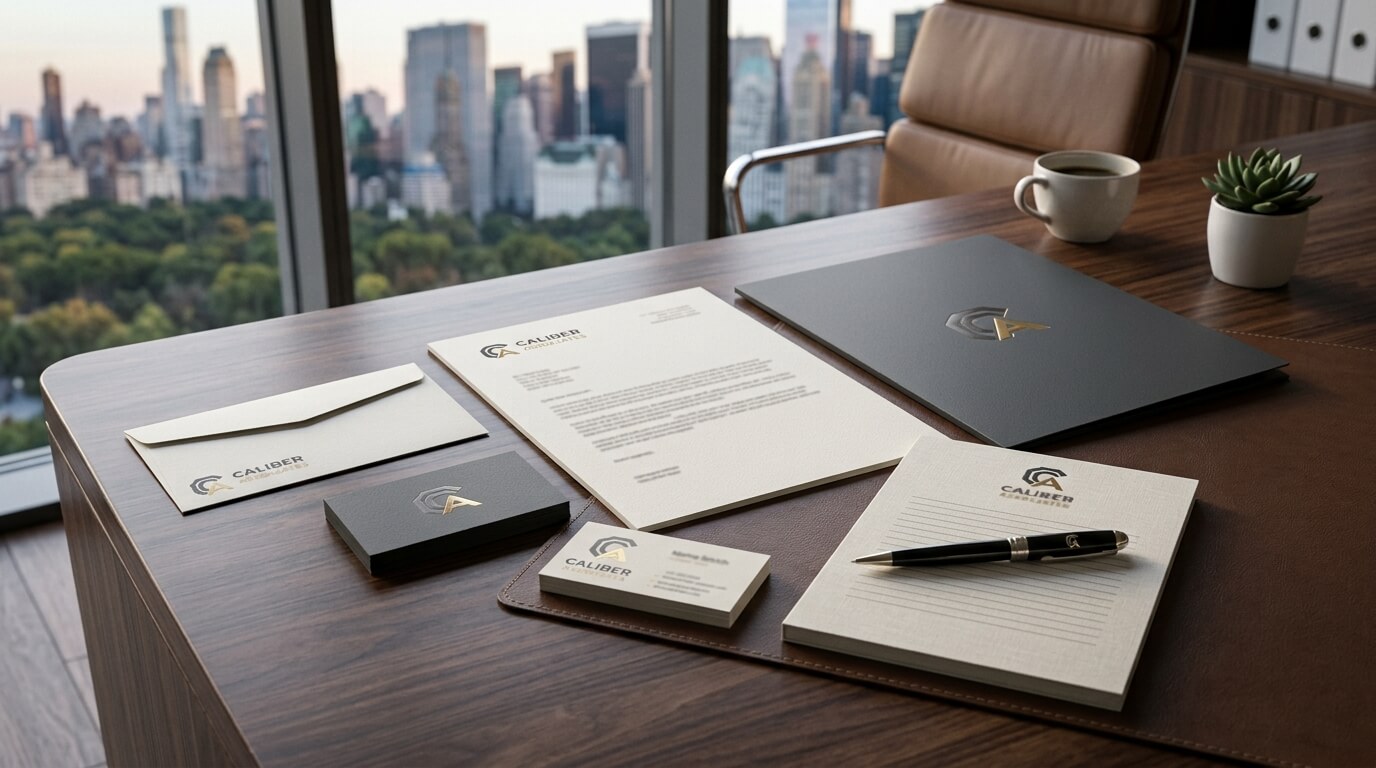
In a digital-first business environment, it is easy to assume that printed stationery has lost its importance. Companies communicate through emails, websites, social media, video calls, and digital presentations every day. Yet, despite the growth of digital communication, physical business materials continue to play an important role in how a company presents itself. A professionally designed business card, letterhead, envelope, presentation folder, notepad, or branded document can communicate credibility in a way that digital communication sometimes cannot. This is where custom stationery for corporate branding becomes particularly valuable.
Custom stationery is more than putting a logo on a piece of paper. It is about creating a consistent visual identity across the materials a company uses to communicate with customers, partners, employees, investors, and other stakeholders. When stationery is designed thoughtfully, even a simple document can reinforce the company’s personality and make the brand more recognizable. Colors, typography, logos, spacing, imagery, paper quality, and layout all contribute to the impression a business creates.
For established companies, custom stationery can strengthen an existing brand identity. For growing businesses, it can create a professional appearance from the beginning. Whether a company operates in finance, technology, consulting, healthcare, real estate, manufacturing, retail, or professional services, branded stationery can support a cohesive corporate image. The key is to treat stationery as part of the overall branding system rather than as a collection of unrelated printed materials.
Understanding Custom Stationery in Corporate Branding
Custom stationery refers to business materials specifically designed around a company’s visual identity. Traditional stationery might include letterheads and business cards, but modern corporate stationery can extend much further. It may include envelopes, compliment slips, folders, invoices, proposals, notepads, presentation covers, appointment cards, certificates, branded forms, packaging inserts, and other printed materials.
The purpose of custom stationery is to ensure that these different materials look as though they belong to the same organization. A customer should be able to see a business letter, business card, or presentation folder and recognize the company without needing to study the details carefully. This consistency helps create familiarity, and familiarity can contribute to trust.
Corporate branding is essentially about shaping how people perceive a company. While a logo is an important part of that process, branding involves much more than a recognizable symbol. It includes the colors a business uses, the typography it selects, its communication style, visual hierarchy, photography, graphic elements, and overall presentation. Stationery provides a physical environment where these elements can work together.
Why Stationery Still Matters in a Digital Business World
Digital communication may dominate modern business, but physical materials still appear at important moments. A sales meeting may involve exchanging business cards. A proposal may be printed for an executive meeting. A contract may be presented in a professional folder. A customer may receive an official letter through the mail. A new employee may receive branded documents during onboarding.
These interactions can create tangible associations with the company. Unlike an email that can disappear into an inbox within seconds, a well-designed printed document can remain on a desk, inside a folder, or in a customer’s records. The physical nature of stationery gives the brand another opportunity to make an impression.
This does not mean companies should abandon digital branding. Instead, physical and digital branding should support one another. A business can use the same brand colors, typography, logo treatment, and visual language across its website, social media channels, presentations, emails, and printed materials. When these experiences are consistent, the brand feels more organized and intentional.
Building a Consistent Corporate Identity Through Stationery
Consistency is one of the most important principles of effective corporate branding. When every business material follows different design rules, the company can appear disorganized even if the quality of its products or services is excellent. Custom stationery gives businesses an opportunity to establish clear visual standards.
A corporate stationery system should reflect the same visual identity used throughout the organization. The logo should be presented consistently, brand colors should remain recognizable, typography should follow established guidelines, and information should be positioned in a predictable way.
The Role of Logo Placement
The logo is often the most recognizable element of corporate stationery. However, effective stationery design does not necessarily mean making the logo as large as possible. A professional design considers balance, visibility, and hierarchy.
A logo that is too large can dominate the page and make the material look promotional rather than professional. A logo that is too small or poorly positioned may become difficult to recognize. The goal is to create a clear relationship between the logo and the rest of the information.
Letterheads, for example, often use a restrained logo placement near the top of the page, while business cards may give the logo greater visual prominence. The exact treatment depends on the company’s identity and the purpose of the stationery.
Choosing Corporate Colors Carefully
Color is another major component of stationery branding. Companies often have specific brand colors that appear across their websites, advertisements, packaging, and social media graphics. These colors should be translated carefully into printed materials.
Print and digital environments do not reproduce color in exactly the same way, which makes professional color selection important. A bright color that looks vibrant on a screen may appear different when printed. Businesses should therefore establish appropriate print specifications and test important materials before ordering them in large quantities.
Color should also support readability. A corporate letterhead, for example, needs enough contrast between text and background to remain easy to read. Decorative colors can enhance the design, but they should never interfere with important business information.
Essential Elements of Custom Corporate Stationery
A complete corporate stationery system can include many different materials. Not every business needs every item, but the selection should reflect the company’s communication needs.
| Stationery Item | Corporate Branding Purpose | Important Design Consideration |
| Letterhead | Creates an official and professional document identity | Clear hierarchy and readable contact information |
| Business Cards | Supports networking and brand recognition | Memorable but uncluttered design |
| Envelopes | Extends the brand to external correspondence | Consistent logo and address placement |
| Presentation Folders | Strengthens the appearance of proposals and documents | Strong exterior branding with practical interior space |
| Notepads | Provides everyday brand visibility | Useful layout with subtle branding |
| Compliment Slips | Adds professionalism to short communications | Minimal, elegant design |
| Branded Forms | Makes administrative materials consistent | Functionality and readability |
| Certificates | Gives formal recognition a branded appearance | Professional typography and balanced layout |
Corporate Letterheads
Letterheads remain one of the most important pieces of corporate stationery because they are used for official communication. A letterhead can make proposals, notices, statements, contracts, and formal correspondence appear more credible and organized.
An effective letterhead usually provides enough branding to establish identity without distracting from the document itself. The company’s name, logo, contact information, website, and relevant registration details can be incorporated into the design where appropriate.
The page should also leave sufficient space for the actual content. Overdesigned letterheads can create problems when documents become lengthy or when employees need to add detailed information. Corporate stationery should always balance branding with functionality.
Business Cards
Business cards remain useful in situations where professionals meet clients, attend conferences, participate in networking events, or represent their organizations at meetings. A custom business card gives an individual a compact representation of the company’s identity.
A strong business card should provide essential information without becoming crowded. Name, job title, company name, telephone number, email address, website, and other relevant details should be presented in a logical hierarchy. The design should also reflect the company’s broader visual identity.
A creative agency might use a bold and contemporary design, while a financial consulting firm may benefit from a more restrained and sophisticated approach. The goal is not simply to make the card attractive but to make it appropriate for the brand.
How Custom Stationery Builds Professional Credibility
Professionalism is partly communicated through details. Customers may not consciously analyze a company’s stationery, but they can still form impressions from it. A poorly aligned letterhead, inconsistent logo, low-quality printing, or confusing information can create doubts about the company’s attention to detail.
Custom stationery can help avoid these problems by creating standardized materials. Employees no longer have to create documents from scratch using different fonts, colors, or layouts. Instead, they can work within a defined visual system.
This consistency can be especially important for companies with multiple departments or offices. If the sales team, finance department, human resources department, and executive team all use completely different materials, the corporate identity can become fragmented. A standardized stationery system creates a common visual language.
Stationery and Customer Trust
Trust is particularly important in industries where customers are making significant financial or professional decisions. When people interact with a company, they want signals that the organization is established, reliable, and serious about its work.
Stationery cannot create trust by itself, but it can support the credibility created by good products, services, communication, and customer experiences. A professionally prepared proposal inside a branded folder, accompanied by a polished business card and consistent documentation, creates a more complete professional experience.
The opposite is also true. Inconsistent or amateur-looking materials can weaken otherwise strong business communication. This is why stationery should be considered part of the customer experience rather than merely an administrative necessity.
Designing Stationery Around the Target Audience
A company’s stationery should reflect not only its brand but also the people it wants to reach. Corporate branding becomes more effective when the visual identity feels appropriate to the target audience.
A technology company targeting startups may use modern typography, clean layouts, and contemporary visual elements. A law firm may prefer a more traditional approach with restrained colors and formal typography. A luxury business may focus on premium materials, sophisticated typography, and subtle design details.
Balancing Creativity and Professionalism
Custom stationery does not have to be boring to be professional. In fact, distinctive design can help a business become more memorable. The challenge is knowing where to introduce creativity.
Creative elements can appear through color combinations, typography, paper selection, geometric patterns, subtle illustrations, embossing, or unusual layouts. However, these features should support the brand rather than compete with the information.
A successful corporate stationery design usually feels intentional. Nothing appears random, excessive, or disconnected from the company’s identity.
The Importance of Typography in Stationery Design
Typography is one of the easiest elements to overlook because people often focus primarily on logos and colors. Yet typography strongly influences how corporate stationery feels.
A modern sans-serif typeface may create a clean and contemporary impression, while a serif typeface can communicate tradition and authority. Some brands may use a combination of fonts to create hierarchy between headings, names, contact information, and body text.
Readability should always come first. Decorative fonts may work well for limited branding elements, but important business information should be easy to read. The typography used on stationery should also align with the company’s broader brand guidelines so that customers experience consistency across different channels.
Choosing the Right Paper and Printing Finish
Design is only one part of custom stationery. Physical quality also affects perception. Paper weight, texture, finish, and printing technique can change how a piece of stationery feels in someone’s hands.
For example, a premium business card printed on quality stock can create a different impression from a thin card with basic printing. Similarly, a textured letterhead can communicate sophistication, while a smooth finish may provide a cleaner and more contemporary feel.
Businesses should select materials based on their brand positioning and practical requirements. Premium finishes can be valuable for client-facing materials, but they may not be necessary for everyday internal documents. A thoughtful stationery strategy considers both appearance and cost.
Matching Materials to Brand Personality
Material choices should reinforce the company’s identity. A luxury brand might benefit from tactile paper and refined finishing techniques. An environmentally focused company may consider recycled or responsibly sourced paper. A technology company may prefer a clean, minimalist material with modern finishing.
The important point is that material selection should have a reason behind it. Customization is most effective when every physical detail contributes to the larger brand story.
Custom Stationery for Internal Corporate Communication
Corporate stationery is not limited to customer-facing communication. Employees also interact with branded materials every day. Internal documents, notepads, forms, folders, certificates, meeting materials, and onboarding documents can all contribute to a company’s internal brand environment.
When employees consistently see a professional and cohesive brand identity, it can reinforce the idea that they are part of an organized organization. Branded materials can also create a sense of unity across departments.
This becomes especially valuable during company events, employee recognition programs, training sessions, conferences, and corporate meetings. Even small details can contribute to a consistent experience.
Common Mistakes to Avoid in Corporate Stationery
One of the biggest mistakes businesses make is trying to include too much information. Stationery is not the same as a brochure. Its primary function should remain clear. Overloading a business card or letterhead with unnecessary details can make the design difficult to use.
Another common mistake is inconsistency. A company may use one shade of blue on its website, another on its business cards, and a completely different shade on its printed documents. Small inconsistencies may seem insignificant individually, but they can weaken the overall visual identity.
Poor-quality printing is another issue. Even an excellent design can look unprofessional when printed incorrectly. Businesses should review proofs, check colors, confirm dimensions, and ensure that text and logos remain sharp before approving large print runs.
It is also important to avoid following design trends too closely. Corporate stationery needs to remain useful for an extended period. A design that looks fashionable for a few months may quickly become dated. Strong corporate stationery tends to prioritize clarity, consistency, and brand relevance over temporary visual trends.
Making Custom Stationery Part of a Larger Branding Strategy
Stationery works best when it is connected to the company’s complete brand system. Businesses should not design their letterhead, business cards, folders, and envelopes independently. Instead, these materials should be created as parts of one coordinated identity.
A corporate brand guideline can help maintain consistency. It may define logo usage, colors, fonts, spacing, imagery, iconography, and other visual standards. Once these rules are established, stationery can be designed to follow them.
This approach becomes increasingly important as a company grows. New employees, departments, offices, and external vendors may all produce branded materials. Without clear guidelines, inconsistencies can quickly appear.
Digital templates can also complement physical stationery. A company can create standardized presentation templates, email signatures, proposal layouts, invoices, and social media graphics that use the same visual language. This creates a unified experience whether customers interact with the company online or offline.
The Long-Term Value of Custom Corporate Stationery
The value of custom stationery should not be measured only by the cost of printing. Its real value comes from repeated brand exposure and improved consistency.
A business card may be exchanged hundreds or thousands of times over its useful life. Letterheads may appear on countless documents. Branded folders may be carried into meetings with important clients. Notepads may remain on desks for months. Each interaction creates another opportunity for the company to be recognized.
When stationery is professionally designed and consistently used, it becomes a quiet branding tool. It does not need to make a loud statement. Its repeated presence can gradually strengthen recognition and reinforce the company’s professional identity.
For businesses competing in crowded markets, these small points of contact can matter. Products and services may be similar, but the way a company presents itself can influence whether potential customers perceive it as credible, established, and worth considering.
Conclusion
Custom stationery is an important part of corporate branding because it transforms everyday business materials into consistent brand experiences. From letterheads and business cards to folders, envelopes, notepads, and official documents, each piece can reinforce a company’s visual identity and professional reputation.
The strongest stationery designs balance branding with practicality. They use appropriate colors, typography, logo placement, materials, and layouts without overwhelming the information they are meant to communicate. Most importantly, they connect physical business materials with the company’s broader digital and corporate identity.
In a world where much communication happens through screens, well-designed stationery offers something different: a tangible representation of the brand. When carefully planned, it can strengthen recognition, support credibility, and create a more consistent experience at every stage of the customer relationship.
Frequently Asked Questions
Q1. What is custom corporate stationery?
Custom corporate stationery is a collection of business materials designed according to a company’s brand identity. It can include letterheads, business cards, envelopes, folders, notepads, forms, and other branded documents.
Q2. Why is custom stationery important for branding?
Custom stationery creates consistency across business communications. It helps customers recognize the company and can contribute to a more professional and trustworthy brand image.
Q3. What should corporate stationery include?
Corporate stationery may include the company logo, brand colors, typography, contact information, website, address, and other relevant business details. The exact elements depend on the type of material and the company’s branding requirements.
Q4. How can businesses make stationery look professional?
Businesses should focus on clear layouts, consistent branding, readable typography, appropriate colors, high-quality printing, and suitable paper materials. Avoiding unnecessary design elements can also improve professionalism.
Q5. Should stationery match a company’s digital branding?
Yes. Ideally, physical stationery and digital materials should use the same core brand identity. Consistency between websites, presentations, emails, social media, and printed materials helps create a stronger and more recognizable corporate brand.