Introduction
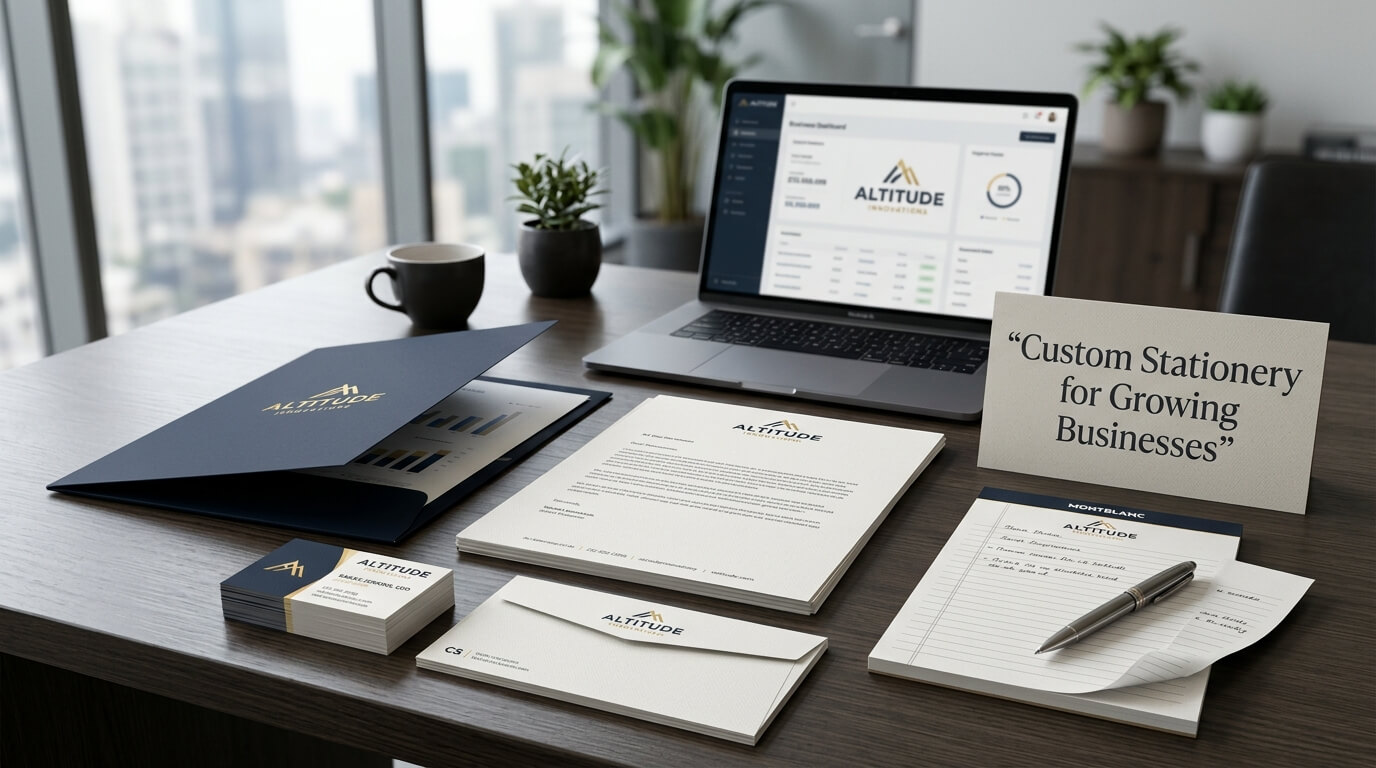
As a business grows, every customer interaction becomes an opportunity to communicate professionalism, reliability, and brand identity. While websites, social media profiles, digital advertisements, and email campaigns receive much of the attention in modern marketing, printed stationery continues to play an important role in creating a recognizable business presence. Custom stationery gives a company a consistent visual identity across letters, invoices, envelopes, business cards, presentation materials, and other documents that customers, clients, and business partners encounter.
For growing businesses, stationery is more than decorative paper. It is a practical branding tool that can influence how a company is perceived. A carefully designed letterhead can make an official communication feel more trustworthy, while a professionally designed business card can make a networking interaction more memorable. Even an envelope can contribute to the overall customer experience before the recipient opens the document inside.
Custom stationery becomes particularly valuable as businesses expand because growth often creates a need for greater consistency. A small company may begin with an informal logo and basic documents, but as it gains customers, hires employees, works with suppliers, and enters new markets, inconsistent materials can make the brand appear disorganized. A unified stationery system helps solve this problem by giving the business a recognizable appearance across different communication channels.
Why Custom Stationery Matters for Growing Businesses
Building a Recognizable Brand Identity
Brand recognition does not develop from a logo alone. Customers recognize businesses through repeated exposure to colors, typography, imagery, language, layouts, and other visual elements. Custom stationery brings these elements into everyday business communication.
When a company uses consistent letterheads, envelopes, business cards, folders, and other printed materials, customers begin to associate the visual style with the organization. Over time, this consistency strengthens brand recognition. Even when the business name is not immediately visible, familiar colors, typography, and design elements can help customers identify the company.
This becomes increasingly important as a business grows. A company that initially serves a small group of customers may eventually communicate with hundreds or thousands of people. Consistent stationery ensures that every formal interaction reinforces the same brand identity rather than creating a different impression each time.
Creating a Professional First Impression
First impressions matter in business because customers often make quick judgments about credibility. A poorly formatted letter, generic invoice, or low-quality business card can unintentionally suggest that a company lacks attention to detail. Professional stationery creates the opposite impression.
Custom-designed materials demonstrate that a business has invested time in presenting itself properly. This can be particularly important for new or growing businesses that are competing with established companies. When a smaller company presents polished materials, it can communicate confidence and professionalism even before the customer has extensive experience with the business.
Professional stationery is not about making materials unnecessarily complicated. Effective design is often simple, clean, and practical. The goal is to make every document look intentional and connected to the business.
The Role of Stationery in Business Branding
Extending the Brand Beyond Digital Platforms
Modern businesses often invest heavily in digital branding. Websites, social media accounts, online advertisements, and email newsletters may receive considerable attention, but businesses still communicate through physical documents.
Contracts, proposals, thank-you letters, invoices, receipts, certificates, invitations, packaging inserts, and printed correspondence can all become physical expressions of a brand. Custom stationery extends the company’s digital identity into these real-world interactions.
For example, if a company’s website uses a sophisticated color palette, distinctive typography, and a clean visual style, its printed stationery should reflect the same characteristics. When customers see the company’s website and later receive a professionally printed document, the two experiences feel connected.
This consistency helps create a stronger overall brand rather than treating online and offline communication as separate identities.
Establishing Visual Consistency
Growing businesses frequently have multiple employees creating documents. Without clear stationery standards, different employees may use different fonts, logos, colors, and layouts. This can quickly lead to inconsistent branding.
A custom stationery system establishes a visual framework that employees can follow. Letterheads can have standardized layouts, business cards can use approved designs, and envelopes can follow a consistent format. Digital templates can also be created alongside printed materials so that employees can maintain the same identity when communicating electronically.
Visual consistency does not mean every document needs to look identical. Instead, each piece should share recognizable brand elements while remaining appropriate for its purpose.
Essential Types of Custom Business Stationery
Custom Letterheads
Letterheads are among the most important stationery items for a professional business. They are commonly used for formal correspondence, proposals, notices, agreements, and other official communication.
A good letterhead should provide essential company information without overwhelming the page. The logo, business name, contact information, website, and relevant legal details can be incorporated into the design. The layout should leave enough space for the actual message so that the document remains easy to read.
For growing businesses, letterheads can also help standardize communication across departments. When employees use the same template, customers receive a consistent experience regardless of who sends the correspondence.
Business Cards
Business cards remain useful for networking, meetings, conferences, appointments, and face-to-face introductions. A custom business card can provide contact information while reinforcing the company’s identity.
The most effective business cards usually prioritize clarity. A business card does not need to contain every piece of information about a company. Instead, it should make essential details easy to find and give the recipient a reason to remember the brand.
For businesses with multiple employees, a standardized business card design can create a unified professional appearance while allowing individual names, job titles, phone numbers, and email addresses to vary.
Custom Envelopes
Envelopes are sometimes overlooked, but they are one of the first physical elements a recipient sees. A branded envelope can create anticipation and establish professionalism before the letter or document is opened.
A company logo, brand colors, return address, or other subtle design elements can be incorporated into the envelope. The design should remain practical, particularly when the envelope is used for invoices, legal correspondence, or sensitive business documents.
Presentation Folders
Presentation folders are particularly useful for businesses that regularly provide proposals, brochures, contracts, reports, or other documents to clients.
A professionally designed folder can transform a collection of loose papers into a cohesive presentation. For consultants, real estate professionals, agencies, financial businesses, construction companies, and professional service providers, folders can help create a more polished client experience.
Invoices and Business Documents
Invoices and other transactional documents are often viewed purely as administrative materials, but they can also support branding. A branded invoice can make routine financial communication feel more organized and professional.
The design should never compromise readability. Important information such as invoice numbers, dates, payment terms, descriptions, totals, and contact information must remain clear. Branding should complement the document rather than distract from its purpose.
Choosing the Right Design for a Growing Business
Start With the Brand Personality
The stationery design should reflect how the company wants to be perceived. A law firm may prefer a traditional and authoritative design, while a creative agency may use a more expressive visual approach. A technology company might choose a modern minimalist style, whereas a luxury business may rely on refined typography and premium materials.
The important point is that stationery should support the company’s personality rather than simply following design trends.
Select Consistent Colors and Typography
Colors and fonts are among the strongest visual elements in stationery design. Businesses should select a limited color palette that works across different materials and printing conditions.
Typography should also remain consistent. Using too many fonts can make stationery appear chaotic, while carefully selected typefaces can create a polished visual hierarchy.
Growing businesses should consider how their chosen colors and fonts will appear on letterheads, business cards, envelopes, folders, digital documents, and other materials. A design that works beautifully in one format may not translate effectively into another.
Custom Stationery and Customer Experience
Making Communications Feel More Personal
Customers increasingly interact with businesses through automated digital systems. While automation improves efficiency, it can sometimes make communication feel impersonal.
Printed stationery can introduce a human element into business relationships. A handwritten thank-you note on branded stationery, for example, can feel considerably more personal than an automated email.
Custom stationery gives businesses opportunities to create memorable moments. A customer receiving a thoughtfully packaged document, personalized note, or branded card may develop a stronger emotional connection with the company.
Supporting Trust and Credibility
Trust is particularly important for businesses that handle significant purchases, professional services, confidential information, or long-term client relationships. Customers want to know that the company they are dealing with is established, organized, and dependable.
Professional stationery cannot create trust by itself, but it can reinforce other signals of credibility. When branding, communication, customer service, and documentation all appear organized, customers are more likely to perceive the company as professional.
The Business Value of Consistent Stationery
Custom stationery can provide both practical and branding benefits. The following table illustrates how different stationery materials can support a growing company.
| Stationery Type | Primary Purpose | Branding Benefit | Common Business Use |
| Letterhead | Formal communication | Builds credibility | Letters, proposals, notices |
| Business Cards | Sharing contact details | Supports recognition | Meetings and networking |
| Envelopes | Delivering documents | Creates a branded first impression | Mail and correspondence |
| Presentation Folders | Organizing documents | Creates a polished presentation | Client meetings and proposals |
| Invoices | Financial communication | Reinforces professionalism | Billing and payments |
| Thank-You Cards | Customer appreciation | Builds emotional connection | Client appreciation |
| Notepads | Everyday communication | Keeps the brand visible | Meetings and internal use |
How Custom Stationery Supports Business Growth
Creating Consistency Across Teams
As businesses hire more employees, maintaining brand consistency becomes more difficult. Different teams may develop their own documents and communication styles if there are no established guidelines.
Custom stationery can provide a common foundation. Employees can use approved templates and designs rather than creating documents from scratch. This reduces inconsistency and allows the company to maintain a professional appearance as its workforce expands.
Brand guidelines can also specify how logos, colors, fonts, contact information, and other elements should be used. This makes it easier for new employees to understand the company’s visual identity.
Supporting Marketing Efforts
Stationery can also contribute to marketing without feeling like traditional advertising. Every printed document that reaches a customer creates another opportunity for brand exposure.
A branded invoice may remain on a customer’s desk. A business card may be placed in a wallet. A presentation folder may be stored for future reference. A thank-you card may create a positive emotional association with the business.
These repeated physical interactions can reinforce awareness over time.
Improving Perceived Business Value
Presentation influences perceived value. When a business invests in thoughtful design and high-quality materials, customers may perceive greater care behind the company’s products or services.
This is especially important for premium businesses. A luxury service provider, boutique consultancy, professional firm, or high-end retailer may find that inexpensive-looking stationery conflicts with the quality it wants to communicate.
The goal is not necessarily to spend as much as possible. Rather, the stationery should be appropriate to the company’s market position and customer expectations.
Choosing Materials for Custom Stationery
Paper Quality
Paper selection affects both appearance and physical experience. Lightweight paper may be suitable for everyday internal documents, while heavier stock can provide a more substantial feel for business cards and premium correspondence.
The right paper depends on the purpose of the material. Businesses should consider durability, print quality, texture, cost, and environmental factors when selecting paper.
Printing and Finishing Options
Modern printing provides businesses with numerous ways to customize stationery. Different printing methods and finishing techniques can create distinctive results, from clean minimalist designs to premium textured materials.
However, additional effects should be selected strategically. Embossing, specialty finishes, unusual paper textures, and other premium details can enhance certain materials, but they are not necessary for every document.
A growing business should balance visual impact with practicality and budget.
Managing Stationery Costs as a Business Grows
Custom stationery should be considered an investment rather than an unnecessary expense, but businesses still need to manage costs carefully. Ordering large quantities can reduce the cost per item, but companies should avoid printing excessive amounts of materials that may become outdated.
This is especially important when contact information, addresses, employee details, or branding may change. A business should estimate its expected usage and order enough to benefit from reasonable pricing without creating unnecessary waste.
Digital templates can also complement printed stationery. For example, a company may use professionally designed digital letterhead for routine electronic documents while reserving premium printed stationery for important client communications.
Common Mistakes Businesses Should Avoid
Overcomplicating the Design
A common mistake is trying to include too many design elements. Excessive colors, decorative graphics, multiple fonts, and crowded layouts can reduce readability and make a brand appear less professional.
Effective stationery usually has a clear visual hierarchy. Customers should immediately understand who the document is from and where to find important information.
Ignoring Practical Information
A beautiful design is not useful if customers cannot find essential contact details. Business stationery should include the information necessary for its intended purpose.
Businesses should carefully check phone numbers, email addresses, websites, physical addresses, legal information, and other details before printing large quantities.
Using Inconsistent Designs
Creating different stationery styles for every department can weaken brand recognition. While individual materials can have different layouts, they should share common visual characteristics.
A unified stationery system helps customers understand that every communication comes from the same organization.
Custom Stationery in the Digital Age
The rise of digital communication has not eliminated the value of physical branding. Instead, it has changed how stationery should be used.
Businesses can combine printed and digital materials to create a unified experience. A branded letterhead can have a matching digital template. A business card can include a QR code leading to the company’s website. Printed brochures can direct customers toward online resources.
This combination allows businesses to connect traditional physical communication with modern digital experiences.
Custom stationery should therefore not be viewed as outdated. When thoughtfully designed, it can become part of an integrated brand communication strategy.
When Should a Growing Business Invest in Custom Stationery?
A business does not necessarily need to wait until it reaches a particular size. Custom stationery can be useful from the early stages of operation, particularly when a company begins communicating regularly with customers, suppliers, partners, or professional organizations.
As the company grows, its stationery system can evolve. Early designs may be simple, while later versions may incorporate more sophisticated materials and specialized documents.
The key is to establish consistency early enough that the business does not develop a collection of unrelated visual identities.
Conclusion
Custom stationery gives growing businesses a practical way to strengthen their professional image, maintain visual consistency, and create memorable customer experiences. From letterheads and business cards to envelopes, folders, invoices, and thank-you cards, every piece of stationery can contribute to the way a company is perceived.
The strongest stationery is not necessarily the most elaborate. It is the stationery that reflects the company’s personality, communicates essential information clearly, supports its broader branding, and provides a consistent experience across different interactions. When combined with thoughtful digital branding and strong customer service, custom stationery becomes a valuable part of a growing company’s overall identity.
Frequently Asked Questions
Q. What is custom business stationery?
Custom business stationery is professionally designed printed or digital communication material created around a company’s specific branding, including letterheads, business cards, envelopes, folders, invoices, and related documents.
Q. Why is custom stationery important for growing businesses?
It helps businesses create a professional appearance, strengthen brand recognition, maintain consistency, and provide a more cohesive experience across customer and business communications.
Q. What should business stationery include?
Depending on the material, stationery may include the company logo, business name, contact information, website, address, employee details, and other relevant information.
Q. Is custom stationery still useful in the digital age?
Yes. Physical stationery can complement digital branding and provide a more personal experience in situations where printed communication, documents, packaging, or face-to-face networking are involved.
Q. How can businesses keep stationery costs under control?
Businesses can select materials according to their needs, order appropriate quantities, use standardized templates, and combine printed stationery with professionally designed digital documents.