Introduction
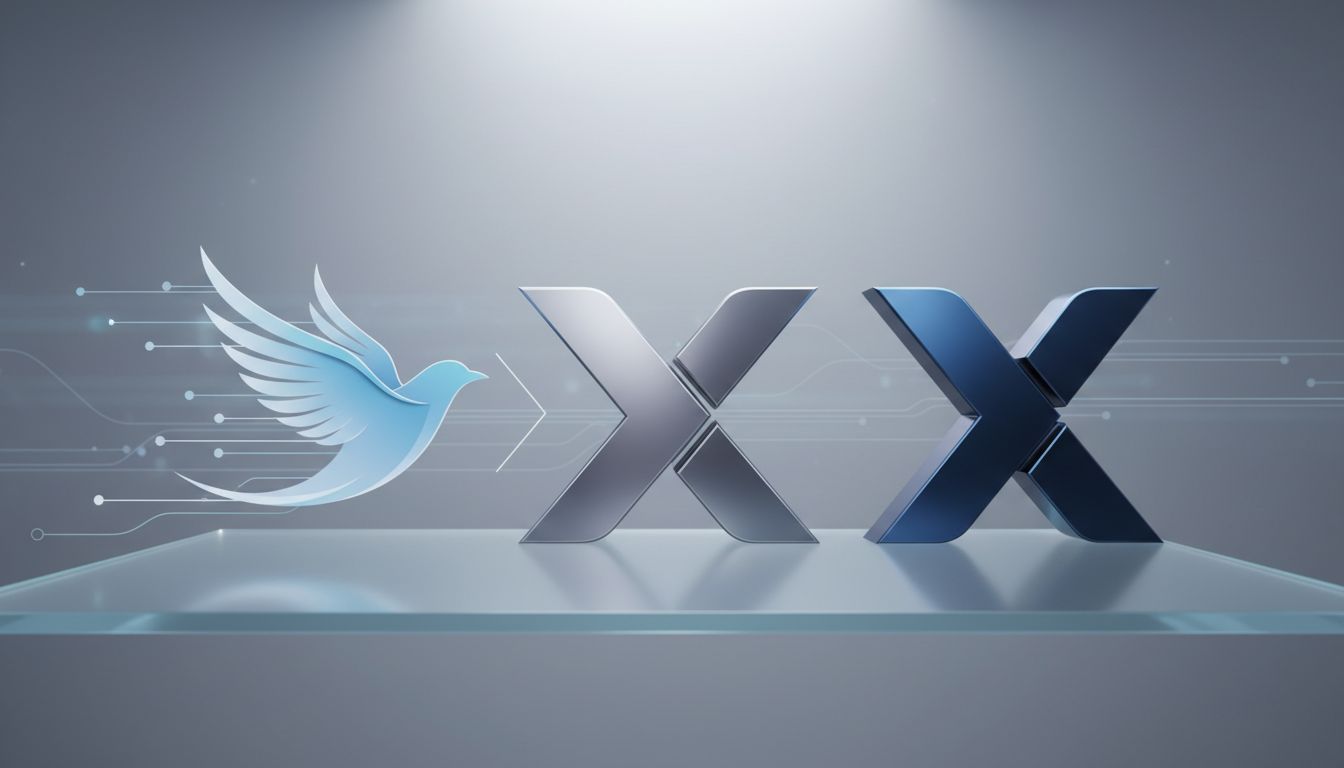
In the dynamic world of corporate branding, few transformations have sparked as much global conversation, debate, and analysis as the radical shift of a universally recognized social media platform. The journey of From Bird To X: The Evolution Of Twitter’S Logo Branding is not just a story about a changing graphic; it is a profound case study in brand equity, corporate restructuring, and the psychological impact of visual identity on consumer behavior. For over a decade, a cheerful, sky-blue bird served as the digital ambassador for hundreds of millions of users, symbolizing freedom of speech, rapid communication, and the democratization of information. Today, that bird has been replaced by a stark, minimalist, and brutalist “X,” representing a dramatic pivot in company vision and user experience.
Understanding this transition is essential for entrepreneurs, marketers, and graphic designers alike. A logo is the foundational anchor of a brand’s visual identity. It communicates core values, establishes market positioning, and builds invaluable trust with an audience over time. When a company with the monumental global footprint of Twitter decides to obliterate a decade and a half of established brand equity overnight, it sends shockwaves through the industry. In this comprehensive guide, we will explore the meticulous history, the design psychology, and the strategic business implications behind From Bird To X: The Evolution Of Twitter’S Logo Branding. By examining each iterative phase of this iconic logo, businesses can extract vital lessons on how visual identity shapes public perception and drives commercial success.
Key Takeaways
- Brand Equity is Fragile: The transition to ‘X’ demonstrates how billions of dollars in recognizable brand equity can be discarded in favor of a new, disruptive corporate vision.
- Geometry in Design Matters: The iconic 2012 Twitter bird was celebrated for its use of overlapping circles, proving that mathematical precision creates timeless aesthetic appeal.
- Color Psychology Drives Perception: The shift from an inviting, friendly “Twitter Blue” to a stark, aggressive black-and-white palette fundamentally altered the platform’s emotional resonance.
- Evolution vs. Revolution: While Twitter’s early years saw gradual, iterative refinements to its bird mascot, the 2023 rebrand to X was an abrupt revolution, carrying significant market risks.
- Professional Design is an Investment: From purchasing a $15 stock image to hiring top-tier design agencies, the evolution highlights why investing in expert branding is crucial for long-term growth.
The Origins: Before the Bird Took Flight (2006)
The “Twttr” Era and Scrappy Beginnings
To fully grasp the scope of From Bird To X: The Evolution Of Twitter’S Logo Branding, we must return to the platform’s inception in 2006. Originally conceived as an SMS-based communication tool, the project was initially dubbed “twttr,” inspired by the shortcode style popularized by Flickr. The very first visual representation of the brand was created by co-founder Noah Glass. It was a slimy, green, bubble-lettered logo that looked more like a remnant of the early dot-com bubble than the face of a future tech behemoth. This initial design was quickly scrapped before the platform’s official public launch, proving that even the most successful companies often start with raw, unrefined visual concepts.
The $15 Stock Image
When the platform officially launched as “Twitter,” the founders needed a logo that represented the concept of “tweeting” visually. In a move that highlights the scrappy nature of early-stage startups, co-founder Biz Stone purchased an illustration from iStockphoto for a mere $15. Designed by British graphic designer Simon Oxley, the image featured a slender, stylized blue bird perched on a branch. While elegant, companies are legally prohibited from using unmodified stock images as official trademarks. Consequently, Twitter was forced to abandon Oxley’s design as its official logo, though the concept of the bird had already taken root in the minds of the founders and early adopters. This necessity birthed the first proprietary iterations of the Twitter bird.
The Birth and Maturation of Larry the Bird (2006–2009)
Finding the Right Mascot
Unable to trademark the stock image, Biz Stone teamed up with designer Philip Pascuzzo in 2006 to create a proprietary bird logo. This new iteration was named “Larry the Bird,” an homage to the legendary Boston Celtics basketball player Larry Bird. The 2006 design was highly characteristic of the “Web 2.0” design era. It featured a cartoonish aesthetic, complete with a visible white eye, a stylized wing, and a slightly awkward, disproportionate body. While it lacked the sleek professionalism of later iterations, Larry successfully humanized the brand. The bird metaphor was perfect: birds tweet, they are swift, and they deliver messages rapidly across great distances.
Iterative Refinements and Typography
Alongside the bird mascot, Twitter utilized a distinct wordmark. The typography was rounded, friendly, and approachable, featuring a customized sans-serif font in a soft, inviting light blue. Between 2007 and 2009, the bird underwent several minor tweaks. Designers Biz Stone and Pascuzzo refined the bird’s shape, removing some of its more cartoonish elements, such as the distinct white eye and the overly detailed wings. The goal was to simplify the mascot, making it more scalable and recognizable across various digital interfaces, from desktop browsers to the emerging smartphone app ecosystem. This period highlights a crucial principle in logo design: as a company scales, its visual identity must shed unnecessary complexity.
The Golden Age of the Twitter Bird (2010–2012)
Refining the Silhouette
By 2010, Twitter had transitioned from a niche Silicon Valley startup to a global communication powerhouse. The logo needed to reflect this newfound maturity. The 2010 redesign stripped away the remaining cartoonish features of Larry the Bird. The mascot was rendered as a solid, flat blue silhouette. The tuft of hair on the bird’s head was streamlined, and the overall posture was adjusted to look more dynamic and forward-moving. This era marked the beginning of Twitter’s adherence to minimalist design principles, focusing entirely on shape and form rather than illustrative details.
The Shift to Pure Symbolism
During this period, the bird was still frequently accompanied by the “twitter” wordmark. However, the sheer ubiquity of the platform meant that the bird alone was becoming instantly recognizable. The platform was embedding itself into the cultural zeitgeist, with “tweet” entering the modern lexicon as both a noun and a verb. The visual identity was becoming so strong that the company realized it no longer needed to spell out its name to be recognized—a milestone achieved by only the world’s most elite brands, such as Apple and Nike.
The Perfected Geometry: The 2012 Redesign
The Golden Ratio and Overlapping Circles
The pinnacle of the bird’s evolution occurred in 2012. Twitter commissioned former art center graduate Martin Grasser to execute a complete overhaul of the logo. Grasser’s approach was heavily rooted in mathematical precision and geometry. He used 15 overlapping circles of varying sizes to construct the new bird’s proportions. This technique, closely related to the principles of the Golden Ratio, ensured that every curve of the beak, head, wings, and chest was perfectly balanced and harmonious.
The 2012 bird was angled upward, symbolizing hope, freedom, and limitless possibilities. The tuft of hair was completely removed, and the number of feathers on the wing was reduced to three, representing the simplicity of the platform’s 140-character limit. The color was also updated to a slightly darker, more vibrant shade known as “Twitter Blue,” which offered better contrast and digital legibility.
Dropping the Wordmark
Accompanying the launch of the 2012 logo was a bold corporate announcement: Twitter would completely drop its wordmark. The bird was Twitter. The company stated that there was no longer a need for text, bubbled type, or a lowercase “t” to represent the brand. This decision solidified Twitter’s status as a global icon. The 2012 logo remained untouched for over a decade, becoming one of the most recognized and beloved corporate symbols in the world. It stood as a masterclass in modern, minimalist logo design.
The Shocking Disruption: Enter Elon Musk and ‘X’ (2023)
The Motivations Behind the Rebrand
In October 2022, billionaire entrepreneur Elon Musk acquired Twitter for $44 billion. What followed was a period of intense operational and cultural upheaval within the company. However, the most visible shock to the public arrived in July 2023, marking the most dramatic chapter in the story of From Bird To X: The Evolution Of Twitter’S Logo Branding. Musk unceremoniously retired the iconic blue bird, replacing it with a stark, black-and-white, Art Deco-style “X.”
The motivation behind this radical rebrand was rooted in Musk’s long-standing obsession with the letter X. Decades earlier, he founded X.com, an online bank that eventually merged to become PayPal. Musk also utilizes the letter in his space exploration company, SpaceX, and even in the name of his child. The rebranding of Twitter to X was not merely an aesthetic choice; it was a loud, unmistakable declaration of new ownership and a complete break from the company’s past.
The “Everything App” Vision
Beyond personal affinity, the rebrand to X was tied to Musk’s strategic vision of creating an “Everything App,” heavily inspired by China’s WeChat. The goal for X is to transcend microblogging and become a comprehensive digital ecosystem encompassing messaging, video streaming, peer-to-peer payments, and e-commerce. The friendly, chirping blue bird was deemed too narrow and specific to the concept of “tweeting.” The letter X, however, is a mathematical variable representing the unknown, the infinite, and the intersection of multiple functionalities. It provided a blank canvas for this expansive, albeit controversial, corporate vision.
Analyzing the ‘X’ Logo Design
Minimalism and Brutalism in Tech Branding
From a purely graphic design perspective, the X logo represents a stark departure from the warm, organic curves of the Twitter bird. The X logo is characterized by its brutalist, utilitarian aesthetic. It features sharp angles, harsh lines, and a high-contrast black-and-white color palette. Interestingly, the initial X logo was crowd-sourced and closely resembled a generic Unicode character (U+1D54F) and a font glyph from Monotype’s “Special Alphabets 4.”
This minimalist, almost aggressive design aligns with a broader trend in the tech industry known as “blanding,” where companies strip away colorful, unique brand identifiers in favor of stark, monochromatic typography. However, the X logo takes this to an extreme. It lacks the approachability of its predecessor, projecting instead a highly corporate, serious, and somewhat enigmatic presence.
Public Reception and Brand Equity Loss
The transition from the bird to X was met with widespread criticism from brand strategists, marketing experts, and the general public. Twitter had spent 17 years building a unique lexicon—users “tweeted,” “retweeted,” and followed “Twitter threads.” By changing the name and logo, the company effectively incinerated billions of dollars in accumulated brand equity. The suddenness of the change also violated a core tenet of brand management: evolution is generally safer than revolution.
While the long-term commercial success of the X rebrand remains to be seen, the immediate impact was a masterclass in brand disruption. It forced users to recalibrate their relationship with the platform, fundamentally altering the emotional connection that had been fostered by the blue bird.
What Businesses Can Learn From the Twitter to X Rebrand
The Importance of Brand Equity
The saga of From Bird To X: The Evolution Of Twitter’S Logo Branding serves as a powerful cautionary tale and educational resource for businesses. Brand equity—the commercial value derived from consumer perception of the brand name of a particular product or service—is a precious asset. When a company owns a verb in the cultural lexicon (like “Google it” or “Tweet it”), rebranding carries an astronomical risk. Businesses must carefully weigh the desire for a fresh, modern identity against the potential alienation of their loyal customer base.
Knowing When to Rebrand and Seeking Expert Guidance
While Twitter’s extreme pivot to X was driven by a billionaire’s unique vision and immense capital, typical businesses must approach rebranding with meticulous strategy. A successful rebrand should solve a specific business problem, such as entering a new market, reflecting a major shift in services, or modernizing an outdated visual identity. It should never be done on a whim.
To navigate these complex waters, businesses require the expertise of seasoned design professionals who understand the delicate balance between innovation and brand heritage. If your company is considering a visual overhaul, or simply needs a foundational logo that can scale with your ambitions, partnering with experts is non-negotiable. For instance, consulting with an agency like London Logo Designs can provide you with the strategic insight and creative execution necessary to build an enduring visual identity. Professional designers utilize market research, color psychology, and geometric precision to ensure your logo communicates the right message to your target audience, generating high-quality leads and fostering unwavering customer loyalty.
Frequently Asked Questions
Why did Twitter change its logo to X?
Twitter changed its logo to X following its acquisition by Elon Musk. The change reflects Musk’s vision of transforming the platform from a simple microblogging site into an “Everything App” that incorporates messaging, banking, and video. It also aligns with Musk’s long-standing personal affinity for the letter X, seen in his other ventures like SpaceX and X.com.
Who designed the original Twitter bird logo?
The very first bird associated with Twitter was a stock image designed by British graphic designer Simon Oxley, which the company bought for $15. However, the first proprietary “Larry the Bird” logo was co-designed by Twitter co-founder Biz Stone and graphic designer Philip Pascuzzo in 2006.
How was the famous 2012 Twitter bird designed?
The iconic 2012 Twitter bird was designed by Martin Grasser. He utilized a highly mathematical approach, using 15 overlapping circles of varying sizes to create the precise, harmonious curves of the bird’s beak, head, chest, and wings, drawing inspiration from the Golden Ratio.
Did the rebrand to X hurt the company’s brand equity?
Yes, according to most brand analysts. Twitter had built immense brand equity over 17 years, to the point where “tweet” was an internationally recognized verb. Erasing the bird and the name overnight destroyed billions of dollars in established brand value and forced the company to rebuild its identity from scratch under the “X” moniker.
What makes a successful corporate logo redesign?
A successful logo redesign retains the core essence of the brand while modernizing its aesthetic to reflect current business goals. It relies on extensive market research, psychological color choices, and scalable geometry. It should evolve the brand’s narrative without alienating its existing, loyal customer base.
Conclusion
The visual journey of a company is a direct reflection of its internal culture, market positioning, and ultimate ambitions. The study of From Bird To X: The Evolution Of Twitter’S Logo Branding provides one of the most fascinating narratives in the history of modern graphic design and corporate strategy. We witnessed the platform grow from a scrappy startup using a $15 stock image, to a global cultural pillar represented by a geometrically perfect blue bird, and finally to a disruptive, brutalist “X” that aims to redefine the boundaries of social technology.
For business owners, marketers, and designers, this evolution underscores a fundamental truth: a logo is never just a picture. It is a powerful psychological tool that dictates how the world perceives and interacts with your business. Whether you are aiming for the friendly accessibility of a blue bird or the stark, infinite utility of an X, your visual identity must be crafted with intention, precision, and a deep understanding of your audience. As the digital landscape continues to evolve, the brands that succeed will be those that recognize the immense, undeniable power of strategic logo design.