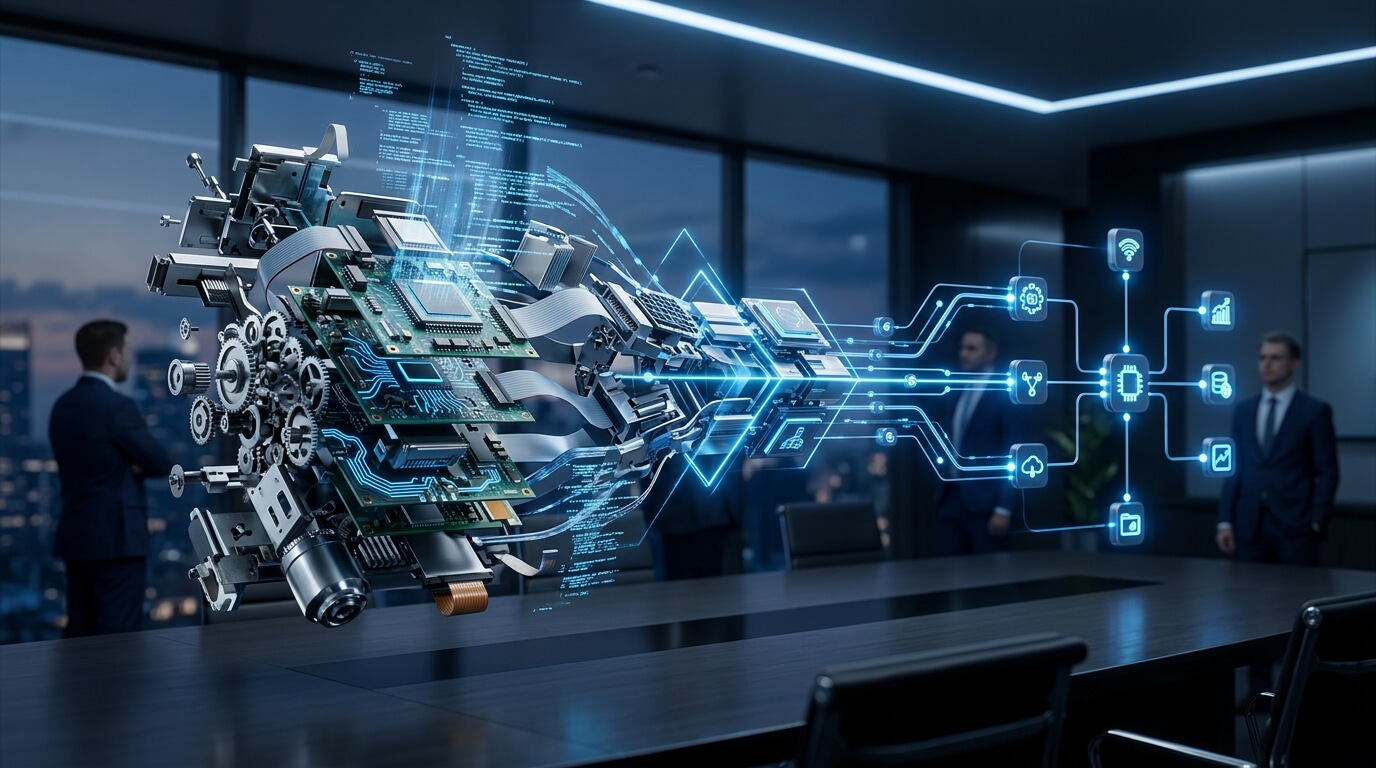
In today’s competitive marketplace, having a powerful product is not always enough. A company can develop an advanced software platform, sophisticated medical device, financial technology solution, cybersecurity system, engineering tool, or industrial machine, yet still struggle to communicate its value to potential customers. The problem is often not the product itself. The problem is that customers may not immediately understand what the product does, how it works, why it matters, or how it can solve their problems.
This is where animation becomes a powerful communication tool. Animation can take complicated features, invisible processes, technical systems, and abstract ideas and transform them into visual experiences that are easier to understand. Instead of asking customers to read several pages of technical information or interpret complicated diagrams, businesses can use animation to show how a product works step by step.
The growing use of video reflects this shift in how people prefer to learn. According to Wyzowl’s 2026 video marketing research, 93% of video marketers say video has helped increase understanding of their product or service, while 63% of consumers say they would prefer to watch a short video when learning about a product or service.
Animation is particularly valuable when a product is difficult to demonstrate through traditional video. A software feature, cloud-based system, artificial intelligence platform, internal machine mechanism, or future product prototype may not be visually interesting or even physically accessible. Animation removes those limitations and gives brands control over what the audience sees.
Why Complex Products Are Difficult to Explain
Complex products often contain multiple layers of information. A single product may have dozens of features, several technical processes, different user journeys, and a variety of benefits depending on the customer. The people who develop these products usually understand all of this information naturally because they have spent months or years working with it. For a new customer, however, the same information can feel overwhelming.
Technical Knowledge Can Create a Communication Gap
One of the biggest challenges businesses face is the gap between technical knowledge and customer understanding. Engineers, developers, scientists, and product specialists may naturally use industry terminology because it is familiar to them. Customers, however, may not have the same background.
A cybersecurity company might describe encryption protocols, threat detection systems, authentication layers, automated monitoring, and security architecture. All of these details may be accurate, but a potential customer may still be left wondering a simple question: “How does this actually protect my business?”
Animation can bridge this gap by translating technical language into visual storytelling. Instead of explaining every technical component separately, an animated video can show a potential threat entering a system, demonstrate how the security solution detects it, and visually represent how the threat is blocked.
The customer does not necessarily need to understand every line of code or security protocol. They need to understand the problem, the solution, and the result.
Complexity Can Delay Purchasing Decisions
When customers do not understand a product, they are less likely to feel confident about purchasing it. Confusion creates friction. A customer may postpone a decision, search for alternatives, request additional explanations, or leave the website entirely.
Animation can reduce this friction by presenting information in a structured sequence. The viewer can see the problem first, followed by the solution and then the outcome. Instead of processing a large amount of information at once, the audience receives information progressively.
This makes the product feel more approachable without necessarily removing its sophistication.
How Animation Turns Abstract Ideas Into Visual Experiences
One of animation’s greatest advantages is its ability to visualize things that cannot easily be filmed.
Consider a cloud computing platform. There may be no physical object that represents the entire product. The system exists across servers, networks, applications, interfaces, and data flows. A live-action video could show employees using computers, but that does not necessarily explain what happens behind the screen.
Animation can visualize the entire system.
Showing Invisible Processes
Animation can move inside a computer system, travel through a network, visualize data movement, reveal internal mechanisms, and demonstrate interactions that would otherwise remain invisible.
For example, a company selling an artificial intelligence platform could use animation to show information entering the system, being processed through different stages, analyzed by algorithms, and transformed into useful insights. The audience can see the journey rather than simply hearing that the platform “uses advanced AI technology.”
This distinction is important because visual storytelling creates a mental model. Customers begin to understand not only what the product does but also how different parts of the product relate to one another.
Demonstrating Cause and Effect
Complex products often involve relationships between multiple actions. Animation is particularly effective at showing cause and effect because it can make one event visibly lead to another.
A healthcare device, for instance, could demonstrate how a sensor detects a particular condition, how the information is transmitted, how the system processes it, and how an alert is generated. Each stage can appear in sequence, creating a clear narrative.
This is much easier to follow than a paragraph explaining the same workflow.
Research and industry guidance on complex product explainers similarly emphasizes animation’s ability to show relationships, workflows, system logic, and cause-and-effect sequences in a manageable format.
Animation Reduces Cognitive Overload
Complexity is not necessarily a problem. Unorganized complexity is.
A product can have hundreds of capabilities and still be easy to understand if those capabilities are presented in the right order. Conversely, even a relatively simple product can appear complicated if its information is poorly structured.
Animation helps organize information by controlling what the viewer sees and when they see it.
One Idea at a Time
A well-designed animated product video does not attempt to explain everything simultaneously. Instead, it introduces information progressively.
The screen might first establish the customer’s problem. It can then introduce the product. After that, the animation can highlight one feature, explain how it works, and demonstrate its benefit before moving to the next feature.
This approach prevents viewers from being overwhelmed by too many visual elements.
The goal is not to make the product look less sophisticated. The goal is to make its sophistication easier to process.
Visual Hierarchy Makes Information Clearer
Animation also gives designers control over visual hierarchy. Important components can be enlarged, highlighted, isolated, or placed at the center of the scene. Less important information can remain in the background.
For example, an animated explanation of an industrial machine might show the entire machine first. The camera can then move inside it, highlight a particular component, demonstrate its movement, and return to the complete machine.
This creates a natural learning path.
The viewer understands where the component exists, what it does, and why it matters.
Animation Can Explain Products That Do Not Exist Yet
Another major advantage of animation is its ability to demonstrate products before they are physically available.
This is particularly useful for technology companies, manufacturers, architects, engineers, and startups.
Visualizing Prototypes
Imagine a company developing a new medical device. The physical prototype may still be under development, making traditional product photography impossible. Animation can create a detailed representation of the finished product and demonstrate how it is expected to operate.
Similarly, an engineering company can use 3D animation to show the internal structure of a machine before manufacturing is complete.
This gives sales and marketing teams something tangible to show investors, distributors, partners, and potential customers.
Recent industry guidance on animated product demonstrations specifically highlights pre-launch hardware and CAD-based products as situations where animation can overcome the limitations of live-action video.
Showing Future Products in Action
Animation can also demonstrate products that are difficult to access. A large industrial system may be installed in a restricted facility. A piece of heavy equipment may be expensive to transport for a demonstration. A new building may not exist yet.
Animation allows audiences to see the product from virtually any angle.
The camera can move above, below, inside, and around the product. Components can be separated and reassembled visually. Internal mechanisms can be exposed. Technical processes can be slowed down or accelerated.
That level of control is difficult to achieve with conventional filming.
How Animation Makes Software Products Easier to Understand
Software is one of the clearest examples of a complex product that benefits from animation.
A software platform may contain dashboards, menus, integrations, automation systems, analytics, notifications, permissions, and multiple user journeys. Showing every interface screen in a traditional product demo can overwhelm a first-time viewer.
Animation allows companies to simplify the interface while preserving the underlying concept.
Turning Features Into Stories
Rather than showing a dashboard and saying, “Here is our analytics feature,” an animated video can create a scenario.
A business owner needs information. The platform collects data. The system organizes the information. A dashboard appears. The customer receives an insight and uses it to make a decision.
The feature is no longer an isolated technical capability. It becomes part of a story.
This makes the benefit easier to understand because the audience can see how the feature fits into a real-world situation.
Explaining User Workflows
Animation can also show what happens before, during, and after a user interacts with software.
For example, an animated SaaS video could demonstrate how a new customer signs up, connects an existing system, activates automation, receives notifications, and monitors results.
Each step becomes visually connected.
The audience does not have to imagine the workflow. They can watch it happen.
Animation Helps Customers Understand the Value, Not Just the Features
One common mistake in product marketing is focusing too heavily on features.
A product may have advanced technology, but customers rarely buy technology simply because it is advanced. They buy solutions to problems.
Animation can help companies move from feature-focused communication toward benefit-focused storytelling.
| Product Communication Challenge | How Animation Helps | Customer Outcome |
| Technical terminology | Converts concepts into visuals | Easier understanding |
| Invisible processes | Shows internal operations | Stronger mental model |
| Multiple features | Presents information sequentially | Less confusion |
| Complex workflows | Visualizes each stage | Clearer product journey |
| New technology | Creates familiar scenarios | Greater accessibility |
| Pre-launch products | Visualizes prototypes | Better product visualization |
| Abstract benefits | Shows real-world outcomes | Stronger perceived value |
| Difficult demonstrations | Uses controlled visual environments | More effective explanation |
A cybersecurity platform, for example, could have dozens of technical features. But instead of discussing each one, an animation might focus on the business outcome: threats are identified earlier, suspicious activity is monitored, and important systems remain protected.
This makes the product meaningful to the customer rather than merely impressive to a technical audience.
Different Animation Styles Can Simplify Different Products
There is no single animation style that works for every complex product. The visual approach should depend on what needs to be explained.
2D Animation for Conceptual Products
Two-dimensional animation is particularly useful for SaaS products, financial services, professional services, educational platforms, and technology concepts.
Its strength comes from simplicity. Clean shapes, icons, characters, diagrams, and transitions can explain complicated ideas without creating visual distractions.
3D Animation for Physical Products
Three-dimensional animation is particularly effective when shape, structure, movement, and internal mechanisms matter.
A manufacturer can show how components fit together. A medical technology company can reveal the internal structure of a device. An engineering company can demonstrate how machinery operates.
Because 3D animation allows detailed camera movement, viewers can examine products from perspectives that may not be possible through conventional filming.
Motion Graphics for Data and Systems
Motion graphics are useful when the main challenge involves numbers, processes, diagrams, statistics, or abstract information.
Charts can animate. Data can move across the screen. Connections can appear between systems. Complex diagrams can be built gradually rather than displayed all at once.
This makes technical information more dynamic and easier to follow.
Animation Makes Sales Conversations More Effective
Animation does not only belong on websites. It can become a valuable sales enablement tool.
Sales teams often have limited time to explain complicated products. A concise animated video can establish the fundamentals before or during a sales conversation.
Creating a Shared Understanding
When sales representatives and customers look at the same animation, they have a common visual reference.
Instead of saying, “The system connects these components and then processes the information,” a salesperson can show the sequence.
This can reduce repetitive explanations and allow sales conversations to focus on more valuable questions, such as implementation, pricing, customization, and business outcomes.
Supporting Different Decision-Makers
Complex B2B purchases often involve several stakeholders. A technical specialist may care about integration. A financial decision-maker may care about cost and efficiency. An executive may care about strategic value.
Animation can communicate across these different perspectives.
A single video can introduce the technology visually while also showing the business problem, customer experience, and expected outcome.
Animation Can Improve Customer Education After the Sale
The usefulness of animation does not end when a customer makes a purchase.
Complex products often require onboarding and training. Customers may need to learn how to configure software, operate equipment, understand a workflow, or troubleshoot common problems.
Animated instructional videos can make this information more accessible.
Wyzowl’s 2026 research reports that 57% of video marketers say video has helped reduce support queries, while customer onboarding and training remain established use cases for business video.
Instead of forcing customers to search through long manuals, companies can provide short animations explaining specific tasks.
A series of small instructional animations can sometimes be more useful than one large training video because customers can watch exactly what they need.
The Storytelling Element Makes Technical Products More Human
One reason animation works so well is that it allows companies to tell stories.
Technical products are often presented through specifications, charts, and feature lists. Animation can introduce characters, situations, challenges, and outcomes.
A logistics platform can show a business struggling with delayed deliveries before introducing its solution. A healthcare application can show a patient navigating a difficult process before demonstrating how the technology improves that experience.
The technology remains important, but the story gives it context.
This is particularly valuable because customers want to know how a product affects their lives or businesses, not simply how the underlying technology operates.
Animation Should Simplify Without Oversimplifying
There is an important distinction between simplification and oversimplification.
A good animation removes unnecessary complexity while preserving the information required to understand the product. A poor animation may remove so much detail that the product becomes misleading.
The objective should therefore be clarity rather than reduction for its own sake.
Focus on the Core Message
Before production begins, businesses should determine what the audience absolutely needs to understand.
If the product solves one primary problem, the animation should make that problem and solution unmistakable. Secondary features can be introduced later through supporting content.
A two-minute video does not need to explain every technical specification. It needs to give the viewer a strong enough understanding to take the next step.
Use Visuals to Support the Voiceover
Animation becomes most effective when narration and visuals complement each other.
If the narrator says that data moves from one system to another, the animation should show that movement. If the narrator explains that a component detects a problem, the visual should demonstrate the detection.
The viewer should not hear one explanation while watching unrelated graphics.
This alignment between audio and visuals creates a stronger learning experience.
Why Animation Is Becoming More Important for Product Marketing
Video has become deeply integrated into modern marketing. Wyzowl’s 2026 research reports that 91% of businesses use video as a marketing tool, while explainer videos are among the most commonly produced video formats. The same research found that 96% of people surveyed had watched an explainer video to learn more about a product or service.
These figures do not mean every complex product automatically needs an animated video. They do, however, demonstrate why visual product education has become an important part of modern communication.
For companies selling complicated solutions, the opportunity is particularly strong. Animation provides a way to control the explanation from beginning to end.
It can decide what appears on screen, how quickly information is introduced, which component receives attention, and how the story concludes.
That level of control makes animation more than an attractive marketing format. It makes it a communication strategy.
How Businesses Can Create Better Animated Product Videos
The strongest animated product videos begin with the audience rather than the product.
Instead of asking, “What features should we show?” businesses should first ask, “What does our audience struggle to understand?”
That question changes the entire creative direction.
The script should then build a logical journey from problem to solution. Visuals should reinforce each major idea. Technical details should appear only when they help the viewer understand the product’s value.
The final goal should be confidence. After watching the animation, the viewer should have a clear understanding of what the product does, why it matters, and what they should do next.
A strong animated product video should leave the audience thinking, “Now I understand.”
Conclusion
Complex products are not necessarily difficult to sell because they are complicated. They are difficult to sell when customers cannot quickly understand their purpose and value. Animation solves this communication challenge by turning invisible systems, technical processes, complicated workflows, and abstract ideas into visual experiences.
Through 2D animation, 3D visualization, motion graphics, product demonstrations, and storytelling, businesses can explain sophisticated products in a way that feels clear and approachable. Animation can also support sales, improve onboarding, educate customers, and demonstrate products that cannot easily be filmed.
The real power of animation is not simply that it makes products look interesting. Its greatest value is that it makes difficult ideas easier to understand. When customers understand a product, they can evaluate it with greater confidence, recognize its value, and make more informed decisions.
FAQ
Q1. How does animation simplify complex products?
Animation simplifies complex products by breaking technical concepts into smaller visual steps. It can show processes, workflows, internal mechanisms, and cause-and-effect relationships that may be difficult to explain through text alone.
Q2. Is animation useful for software products?
Yes. Animation can demonstrate software workflows, user journeys, integrations, automation, dashboards, and invisible processes without overwhelming viewers with a full technical interface.
Q3. Can animation explain products that are not yet manufactured?
Yes. Animation can visualize prototypes, CAD designs, future products, machines, buildings, and devices before physical versions are available. This makes it useful for product launches, investor presentations, and early-stage marketing.
Q4. Which animation style is best for complex products?
The best style depends on the product. 2D animation works well for abstract concepts and software, 3D animation is useful for physical products and machinery, while motion graphics are effective for data, processes, and system explanations.
Q5. Can animated product videos help sales?
Yes. Animated product videos can give prospects a clearer understanding of a product before or during a sales conversation. They can also help different stakeholders understand the same product from technical, practical, and business perspectives.