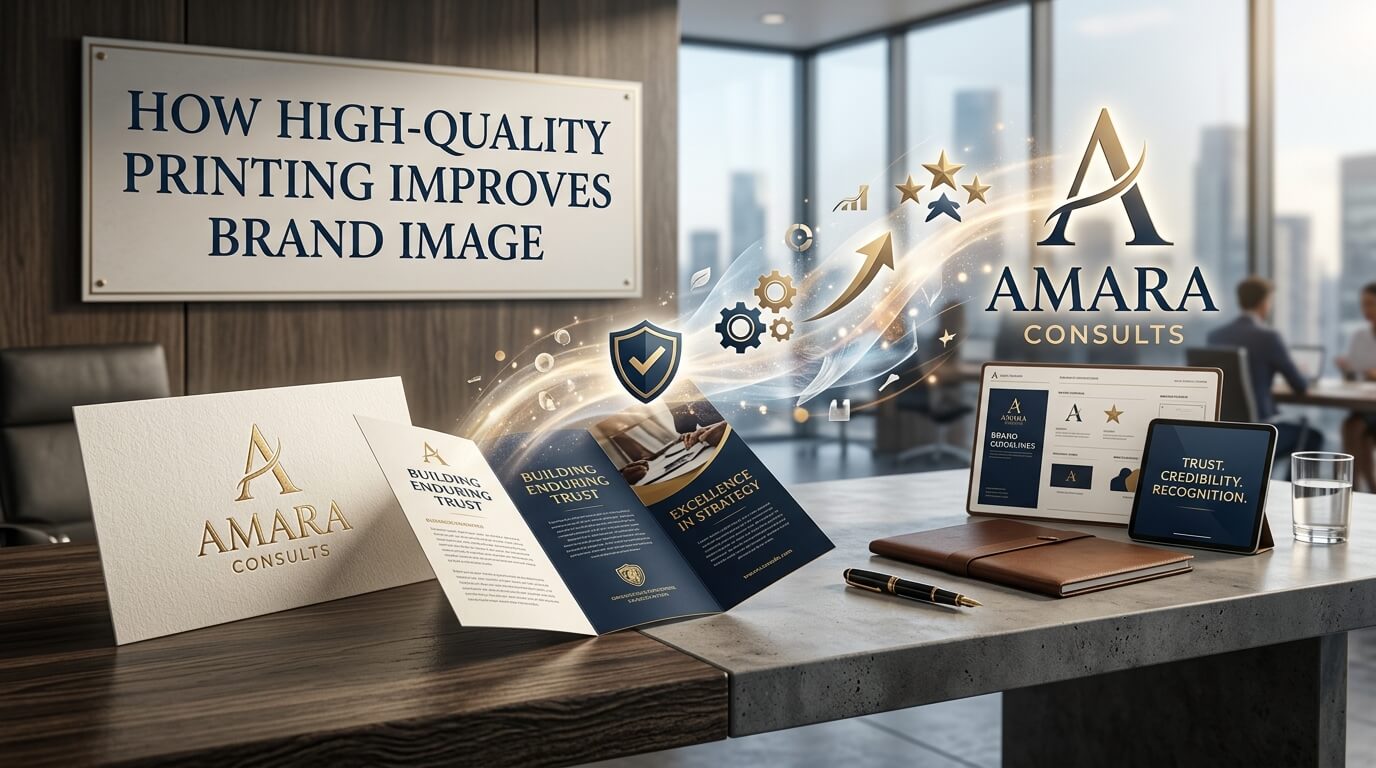
In a digital-first business environment, it is easy to assume that printed materials no longer have a major influence on how customers perceive a company. Emails, websites, social media, and digital advertisements dominate modern communication, but high-quality printing still plays an important role in shaping brand image. Business cards, brochures, packaging, catalogs, letterheads, flyers, presentation folders, posters, and other printed materials often create physical interactions between a customer and a brand. The quality of those materials can influence whether a business appears professional, reliable, established, and trustworthy.
High-quality printing is not simply about producing sharper images or brighter colors. It is about presenting a brand consistently and professionally through physical materials. When a company invests in quality paper, accurate colors, clean typography, precise finishing, and professional production, customers can often sense the difference immediately. These details communicate that the business pays attention to quality in everything it does.
A strong brand image is built through many individual experiences. Every interaction contributes to a customer’s overall impression of a company, and printed materials can become an important part of that experience. A beautifully printed business card can make a networking interaction more memorable. A professionally produced brochure can make a service appear more established. High-quality packaging can make a product feel more valuable before the customer even uses it.
The Connection Between Printing and Brand Perception
Brand perception is largely shaped by the signals customers receive from a business. People evaluate not only what a company says but also how it presents itself. Visual appearance, communication style, customer service, website design, packaging, and printed materials all contribute to this perception.
Printing quality becomes particularly important because physical materials provide something digital communication cannot: a tangible representation of the brand. Customers can hold a business card, examine a brochure, feel the paper, see the colors, and notice the finishing details. This physical experience can make a company feel more real and established.
When printed materials look cheap, blurry, poorly aligned, or inconsistent, customers may unconsciously associate those weaknesses with the business itself. Even if the company provides excellent products or services, poor presentation can create unnecessary doubts. On the other hand, high-quality printing can reinforce the idea that the company is careful, professional, and committed to delivering a strong customer experience.
First Impressions Matter
First impressions are often formed quickly. A customer receiving a business card, brochure, product catalog, or printed proposal may develop an opinion about the company before reading every word. The condition and quality of the material can influence that initial reaction.
A professionally printed piece immediately creates a more polished appearance. Sharp text, balanced layouts, accurate colors, and quality paper can make the company look organized and confident. These characteristics can be especially valuable for businesses operating in competitive industries where customers have many options.
High-quality printing does not guarantee customer trust, but it can create a strong foundation for it. When physical presentation matches the company’s promises, the brand appears more credible and dependable.
High-Quality Printing Communicates Professionalism
Professionalism is one of the most important qualities businesses try to communicate. Customers want to know that a company takes its work seriously and can deliver on its promises. Printed materials can reinforce this message.
A professionally designed and printed document demonstrates attention to detail. A letterhead with consistent branding, carefully selected paper, and accurate printing can make everyday correspondence feel more official. A well-produced proposal can make a business presentation appear more credible. A polished brochure can help customers understand that a company has invested in presenting its services properly.
Attention to Detail Builds Confidence
Small printing details can have a surprisingly strong effect on perception. Uneven margins, faded colors, pixelated photographs, incorrect logos, or inconsistent fonts may seem minor individually, but they can make printed materials appear careless.
High-quality printing reduces these distractions. Consistent color reproduction ensures that brand colors appear as intended. Sharp images help photographs and graphics look professional. Precise cutting and finishing create cleaner edges and more polished results.
When customers repeatedly encounter this level of attention to detail, it can strengthen their confidence in the brand. They may begin to associate the company’s visual precision with its overall approach to business.
Consistent Printing Strengthens Brand Identity
Brand identity depends heavily on consistency. A business may have carefully chosen colors, fonts, logos, imagery, and design elements, but those elements need to appear consistently across different communication channels.
Printed materials provide another opportunity to reinforce this identity. When business cards, brochures, stationery, packaging, catalogs, and promotional materials follow the same visual system, customers are more likely to recognize the brand.
Consistency also makes a business appear more organized. If one brochure uses dark blue while another uses a completely different shade, or if the logo changes appearance between materials, customers may perceive the brand as less established.
High-quality printing helps preserve the visual standards established during the branding process. Accurate color reproduction and professional production ensure that the identity remains recognizable across physical materials.
The Role of Color Accuracy in Brand Image
Color is one of the most recognizable elements of a brand. Many businesses use specific colors to create visual associations and differentiate themselves from competitors. However, those colors need to be reproduced accurately in print.
Poor printing can cause brand colors to appear dull, overly dark, washed out, or noticeably different from their intended appearance. This can weaken visual consistency, particularly when customers compare printed materials with a company’s website or digital content.
High-quality commercial printing can produce more consistent color results, helping businesses maintain a recognizable appearance. When customers repeatedly see the same colors across business cards, packaging, brochures, and promotional materials, those colors become part of their memory of the brand.
Color Influences Perceived Quality
Color quality can also affect how valuable a printed item appears. Rich, balanced colors can make photography, graphics, and illustrations look more sophisticated. Weak or inconsistent color reproduction can have the opposite effect.
This is particularly important for businesses where visual presentation is closely connected to perceived value. Luxury brands, hospitality companies, creative agencies, retailers, property businesses, restaurants, and professional services can all benefit from strong color reproduction.
Paper Quality Adds a Physical Dimension to Branding
Printing quality is not limited to ink and technology. Paper selection also has a major impact on the final result. The texture, weight, thickness, brightness, and finish of paper can influence how a printed piece feels in the customer’s hands.
A lightweight, poorly finished piece of paper may feel temporary or inexpensive. A carefully selected premium stock can create a stronger sense of value and permanence.
This does not mean every business needs the most expensive paper available. The important consideration is whether the material matches the brand’s positioning. A modern technology company may prefer a clean, minimalist stock, while a luxury business may choose a heavier material with sophisticated finishing.
The physical feel of a printed item creates an additional layer of brand communication. Before customers read the message, they are already experiencing the material itself.
High-Quality Printing Makes Marketing Materials More Effective
Printed marketing materials are designed to attract attention, communicate information, and encourage action. Their effectiveness depends partly on the quality of their presentation.
A brochure with sharp photographs and clean typography is easier and more enjoyable to examine than one with blurry images and inconsistent printing. A well-produced catalog can make products appear more desirable. A professionally printed flyer can stand out in a crowded environment.
The quality of printing supports the message rather than distracting from it. When customers can easily read the information and appreciate the visuals, the material has a better chance of communicating the intended message.
Printed Materials Can Increase Memorability
Physical marketing materials can remain with customers long after an interaction ends. A business card may sit on a desk for weeks. A brochure may be placed in a folder for future reference. Packaging may remain in a home long after a purchase.
High-quality printing can make these materials more memorable. Interesting finishes, attractive layouts, strong imagery, and professional production can encourage people to keep a printed item rather than immediately discard it.
The longer a branded item remains visible, the more opportunities the customer has to remember the business.
Packaging Quality Can Influence Product Perception
For product-based businesses, printing quality can be especially influential because packaging is often one of the first physical brand experiences customers have.
A package with clear printing, accurate colors, professional typography, and high-quality graphics can make a product appear more trustworthy and valuable. Customers often interpret packaging as an indication of what they can expect from the product inside.
If packaging looks carefully produced, it suggests that the company has considered the entire customer experience. If packaging appears poorly printed or damaged, it may create doubts about the product itself.
Packaging Creates an Experience
Modern customers often evaluate products based on more than functionality. Presentation, convenience, visual appeal, and the overall experience can influence purchasing decisions.
High-quality printed packaging can therefore become an important part of brand storytelling. Colors, imagery, typography, and printed messages can communicate the personality of a company before the customer uses the product.
For businesses competing in crowded markets, distinctive and professional packaging can help create recognition and differentiation.
High-Quality Printing Helps Businesses Look More Established
Customers often make assumptions about the size, experience, and stability of a company based on its presentation. While printed materials cannot determine whether a company is actually successful, professional materials can contribute to an established appearance.
A startup with professionally produced stationery, brochures, presentation folders, and business cards can present itself with confidence when meeting potential customers or partners. The quality of these materials can help the company compete visually with larger organizations.
This is especially useful during networking, trade shows, sales meetings, conferences, and client presentations. When customers encounter polished printed materials alongside professional communication, the overall experience becomes more cohesive.
Printing Quality Supports Premium Positioning
Businesses that want to position themselves as premium providers need their physical presentation to support that claim. Customers may question a premium price if the company’s materials look inexpensive.
High-quality printing can help bridge the gap between what a company promises and what customers physically experience. Premium paper, sophisticated finishing, sharp imagery, and accurate color reproduction can create a more refined impression.
However, premium branding should be intentional. Simply adding expensive finishes does not automatically make a brand look sophisticated. The design, paper, printing method, and finishing should work together to reflect the company’s identity and target audience.
How Different Printing Elements Affect Brand Image
| Printing Element | Impact on Brand Image | Best Brand Benefit |
| Color accuracy | Creates visual consistency and recognition | Stronger brand identity |
| Paper quality | Influences physical perception of value | Premium presentation |
| Image resolution | Improves clarity and visual appeal | Professional appearance |
| Typography | Supports readability and design consistency | Clear communication |
| Finishing | Adds distinction and tactile appeal | Memorability |
| Cutting and alignment | Demonstrates production precision | Attention to detail |
| Packaging print quality | Shapes the product experience | Increased perceived value |
| Consistent layouts | Reinforces recognizable branding | Brand familiarity |
High-Quality Printing Builds Trust
Trust develops through repeated positive experiences. Customers rarely decide that a company is trustworthy because of one brochure or business card, but every interaction can contribute to that conclusion.
Professional printing helps remove doubts that might otherwise arise from poor presentation. When a company’s physical materials are clear, consistent, and carefully produced, customers receive another signal that the business takes its responsibilities seriously.
Trust is particularly important for professional services where customers cannot physically evaluate the service before purchasing it. Lawyers, consultants, financial professionals, designers, agencies, real estate companies, and other service providers can use printed materials to create a more credible presence.
Printed Documents Can Reinforce Reliability
Invoices, contracts, proposals, reports, letterheads, and other business documents may not be considered marketing materials, but they still contribute to brand perception.
When these documents use consistent branding and professional printing, they create continuity across the customer experience. A company that looks professional in its advertising but sends poorly presented documents creates a disconnect.
A consistent standard across all printed communication helps customers develop a clearer understanding of the brand.
High-Quality Printing Supports Customer Loyalty
Brand image does not only affect first-time customers. It also influences existing relationships. When customers repeatedly encounter consistent, professional presentation, the brand can become more familiar and recognizable.
Familiarity can contribute to customer confidence. People tend to feel more comfortable with brands they recognize and understand. Printed materials can reinforce this recognition by repeatedly presenting the same visual identity.
For example, a customer might receive a branded invoice, product package, loyalty card, promotional brochure, and thank-you card from the same company. When all these materials share a consistent visual language, they strengthen the customer’s memory of the brand.
Printing Can Differentiate a Business From Competitors
Many businesses compete in markets where products and services can appear similar. Strong branding can help create differentiation, and printed materials are part of that opportunity.
A distinctive brochure, beautifully designed packaging, or professionally produced presentation folder can help a company stand out from competitors relying on generic materials.
The goal is not simply to make printed materials look attractive. Effective printing should communicate what makes the brand different. Design choices, imagery, typography, materials, and finishing can work together to create a recognizable personality.
Physical Branding Creates a Competitive Advantage
Digital content is essential, but physical materials can provide a different kind of brand experience. A printed item can be touched, displayed, stored, shared, or revisited.
This physical quality can make certain marketing interactions more memorable. At networking events, for example, a thoughtfully designed business card may remain with a potential client longer than a brief digital introduction.
The Importance of Professional Printing for Business Events
Trade shows, conferences, exhibitions, seminars, and networking events create environments where businesses compete for attention. Printed materials can help companies present themselves effectively in these settings.
Large-format graphics, brochures, banners, business cards, catalogs, and promotional materials all contribute to the appearance of a booth or presentation area.
When these materials are professionally printed, the entire display can appear more coordinated and credible. Customers may be more willing to approach a company that presents itself clearly and professionally.
Making High-Quality Printing Part of a Long-Term Brand Strategy
Businesses should view printing as part of their broader branding strategy rather than as an isolated production expense. Every printed item should reinforce the same core identity.
This means establishing consistent standards for logos, colors, typography, imagery, paper, finishes, and layouts. It also means selecting printing techniques based on the purpose of each material.
A small business card may require different specifications from a product catalog or luxury package. What matters is that each item feels like it belongs to the same brand.
Quality Should Match the Audience
The right printing quality depends on the expectations of the target audience. A budget-focused business may not need elaborate finishes, while a premium service provider may benefit from heavier stock and sophisticated production.
Understanding the audience helps businesses spend their printing budget strategically. The goal should always be to create materials that look professional, communicate clearly, and fit the brand’s positioning.
Conclusion
High-quality printing is an important part of building a strong and credible brand image. From accurate colors and sharp images to quality paper and professional finishing, every physical detail can influence how customers perceive a business. Well-produced printed materials communicate professionalism, reinforce brand identity, increase memorability, and help create a consistent customer experience.
In a world dominated by digital communication, physical materials can provide a valuable opportunity to make a brand tangible. Businesses that treat printing as an extension of their brand strategy can create stronger impressions and present themselves with greater confidence. Ultimately, high-quality printing is not simply about making materials look better; it is about making every physical interaction with the brand feel intentional, reliable, and professional.
Frequently Asked Questions
Q1. How does high-quality printing improve a brand’s image?
High-quality printing creates a more professional and credible appearance by presenting clear images, accurate colors, quality materials, and consistent branding.
Q2. Does paper quality really affect brand perception?
Yes. Paper weight, texture, and finish can influence how customers perceive the value, professionalism, and positioning of a brand.
Q3. Can high-quality printing help a small business?
Yes. Professionally printed business cards, brochures, packaging, and stationery can help smaller businesses appear established and compete more confidently with larger companies.
Q4. Why is color accuracy important in branded printing?
Accurate colors help maintain consistency across physical and digital materials, making the brand easier for customers to recognize and remember.
Q5. Is high-quality printing still important in the digital age?
Yes. Digital communication is essential, but physical materials offer a tangible brand experience that can strengthen credibility, recognition, and customer relationships.