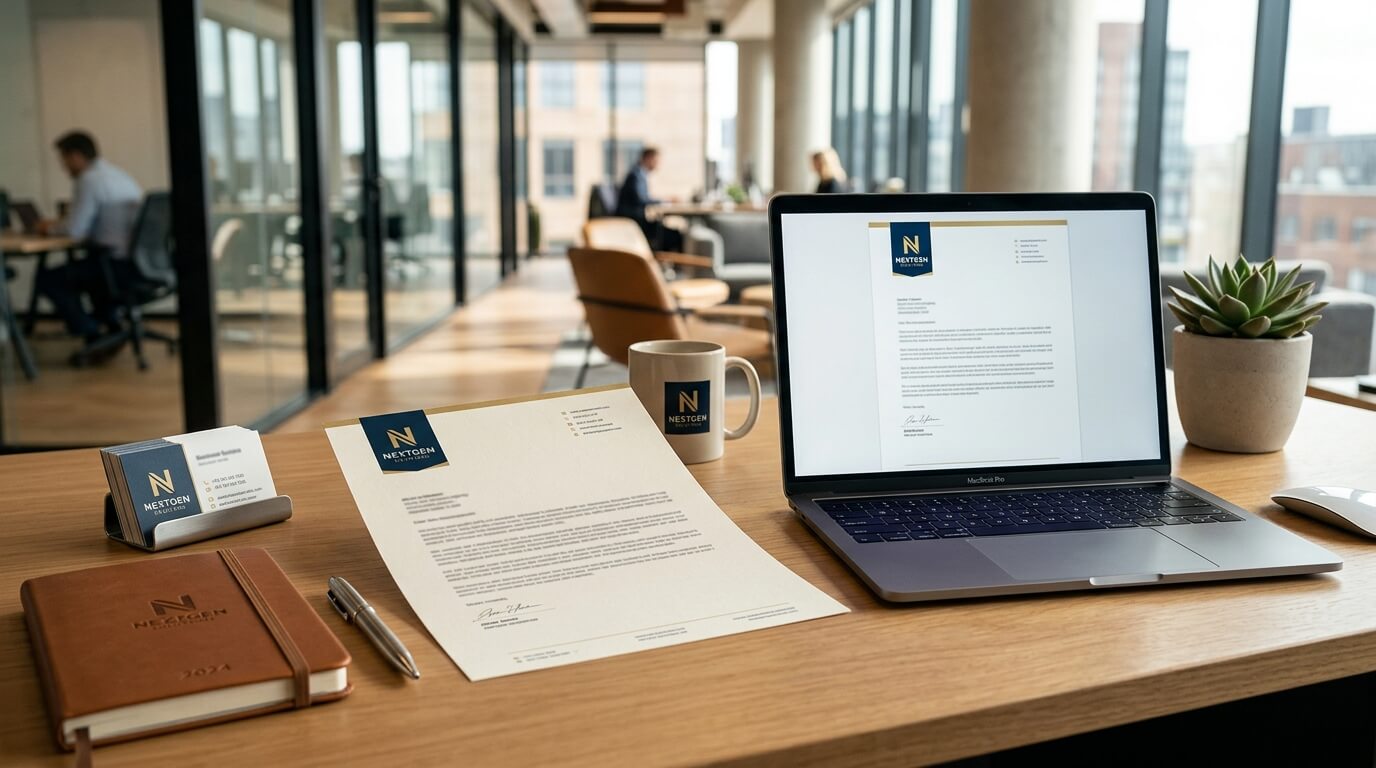
In business, credibility is rarely built through one major action. It develops through a series of small signals that show customers, clients, partners, employees, and other stakeholders that a company is professional, organized, reliable, and serious about what it does. One of those signals is the business letterhead.
A letterhead may appear to be a simple design element placed at the top of a page, but its role goes far beyond decoration. It combines a company’s name, logo, contact information, colors, typography, and other identifying details into a consistent visual format. When used properly, it transforms an ordinary business document into an official communication that looks intentional and trustworthy. Modern letterheads are used not only on printed letters but also on proposals, invoices, agreements, reports, certificates, notices, and digital PDFs.
In an environment where businesses compete heavily for attention and trust, presentation matters. A company might provide an excellent service, but if its communication looks careless or inconsistent, potential customers may question its reliability. A professional letterhead helps close that gap by making every formal communication feel connected to an established organization.
What Is a Business Letterhead?
A business letterhead is a branded document layout used for official company communication. It generally contains the business name, logo, address, telephone number, email address, website, and selected brand elements. Depending on the business and document type, additional information such as registration details, certifications, or other relevant identifiers may also be included.
Traditionally, letterheads were printed on physical stationery. Today, the same concept has moved into the digital environment. Companies frequently use letterhead templates in Word documents, PDFs, proposals, formal emails, and electronic correspondence. This makes the letterhead a continuing part of business identity rather than an outdated piece of office stationery.
The important point is that a letterhead identifies the sender before the recipient has even read the main message. The logo establishes visual recognition, the contact details make the organization easier to verify, and the overall design communicates something about the company’s standards. A clean and carefully constructed letterhead can therefore make a document feel more official and dependable.
Why Business Credibility Matters
Credibility is one of the foundations of successful business relationships. Before customers purchase a service, sign an agreement, approve a proposal, or recommend a company, they need some reason to believe that the organization can deliver what it promises.
Large companies often benefit from established reputations, recognizable names, and years of market presence. Smaller businesses and newer companies have a different challenge. They must often establish trust while competing with organizations that already have strong recognition.
This is where professional presentation becomes particularly valuable. A letterhead cannot prove that a company provides excellent products or services, but it can reinforce the impression that the organization is legitimate, organized, and attentive to detail. Professional business communication uses the letterhead as one part of a broader credibility system that includes the website, customer service, contracts, invoices, email communication, packaging, and other brand touchpoints.
Letterheads Create a Strong First Impression
The Visual Introduction to Your Business
A business document often creates an impression before the recipient reads its actual content. A plain page with inconsistent formatting can feel informal, while a carefully designed letterhead immediately establishes a visual identity.
Imagine receiving two proposals from competing businesses. One arrives on a completely plain document with inconsistent fonts and limited contact information. The other has a polished layout, recognizable branding, clear contact details, and professional typography. Even if the written proposals contain similar information, the second document may feel more established.
This does not mean attractive design automatically creates trust. Instead, professional design reduces unnecessary doubt. It tells the reader that the company has taken care with the communication and understands the importance of presenting itself properly.
Professionalism Begins Before the Message
Professionalism is often associated with the quality of a company’s work, but it is also reflected in how that work is communicated. A letterhead helps create a consistent presentation across formal documents and can make business communication feel more deliberate.
Research and professional communication guidance commonly describe letterhead as a way to identify the sender and establish a formal company communication format.
This is particularly important for documents that carry greater importance, such as contracts, quotations, official notices, employment letters, proposals, and business agreements. When the document looks official and organized, the communication itself can carry greater perceived authority.
Letterheads Strengthen Brand Identity
Consistency Builds Recognition
Brand recognition is not created by a logo alone. It develops through repeated exposure to the same visual language. Colors, fonts, spacing, imagery, logos, and other design elements work together to create a recognizable identity.
A letterhead allows those elements to appear repeatedly in business correspondence. Every proposal, formal letter, report, or invoice becomes another opportunity to reinforce the same visual identity.
When the letterhead matches the company’s website, business cards, envelopes, presentations, and other materials, customers encounter a consistent brand wherever they interact with the organization. Professional design guidance emphasizes the importance of keeping logos, colors, fonts, and other elements consistent across business materials.
A Small Design Element With Long-Term Value
The value of a letterhead is cumulative. One document may not dramatically change how someone views a business. However, repeated exposure can make the company appear more familiar and established.
For example, a client might receive a quotation today, an agreement next month, an invoice later, and a formal update several months afterward. If every document carries the same recognizable identity, the client develops a consistent visual association with the company.
This consistency helps make communication feel connected rather than random. It also reduces the risk of different departments creating documents that look as though they came from different organizations.
Letterheads Make Business Documents Look More Official
Establishing Authority
Certain forms of communication require a greater sense of formality than an everyday email. A formal notice from a business should look different from an informal internal message.
Letterheads help establish this distinction.
When a company sends an official document on branded stationery, the recipient can immediately identify who issued it. The presence of the company name, logo, and contact information gives the document an identifiable source.
This can be particularly useful when a company communicates with banks, suppliers, government organizations, professional partners, clients, educational institutions, or other formal organizations. Letterhead does not replace legal requirements or authentication, but it provides an important layer of professional identification.
Useful Across Multiple Business Documents
Letterheads are not restricted to traditional letters. Modern businesses can use them across many forms of communication.
| Business Document | How Letterhead Supports Credibility |
| Business Proposal | Creates a polished and organized presentation |
| Invoice | Clearly identifies the issuing business |
| Contract | Gives the document a formal company identity |
| Quotation | Makes the offer look official and professional |
| Employee Letter | Creates consistency in internal documentation |
| Business Report | Reinforces organizational identity |
| Official Notice | Establishes a recognizable source |
| Client Correspondence | Creates a consistent professional experience |
The same principle applies to digital communication. A branded PDF or electronic document can maintain the visual identity of a printed letterhead while making the communication suitable for modern workflows.
Letterheads Demonstrate Attention to Detail
Small Details Influence Perception
People often make judgments based on details that may seem insignificant. A spelling mistake, misaligned logo, inconsistent font, or missing contact information can make a business appear less organized.
The opposite is also true. A document with clear hierarchy, balanced spacing, readable typography, accurate information, and consistent branding communicates attention to detail.
A well-designed letterhead therefore becomes a subtle demonstration of organizational standards. It suggests that the business cares about how information is presented and understands that professional communication deserves care.
This matters because customers often associate attention to detail with the quality of service they can expect. While the connection is not automatic, polished communication can support a positive perception.
Avoiding an Overdesigned Appearance
Credibility does not require an elaborate letterhead. In fact, excessive decoration can have the opposite effect.
A letterhead should support the written content rather than compete with it. Professional printing guidance recommends using clear logo placement, controlled colors, appropriate typography, and enough white space for the main message.
The strongest designs are often simple. A recognizable logo, company name, carefully selected brand color, and clear contact information may be enough to establish a strong identity.
Letterheads Improve Brand Consistency Across Departments
As businesses grow, maintaining consistency becomes more difficult. Different employees may create proposals, reports, invoices, notices, and correspondence using their own formatting preferences.
This can result in a company having several unofficial visual identities.
A standardized letterhead solves part of this problem by giving employees a shared foundation. Instead of starting with a blank page, employees can work from an approved company template.
This makes documents look as though they belong to the same organization regardless of which department created them. Marketing, finance, human resources, sales, management, and customer service teams can all maintain the same basic visual identity.
Brand consistency is especially valuable when a company is communicating with the same client across multiple departments. If every document uses the same professional structure, the organization feels more coordinated.
Letterheads Increase Trust in Digital Communication
The Digital Letterhead Is More Relevant Than Ever
The decline of traditional mail has not eliminated the need for letterheads. Instead, letterheads have adapted to digital communication.
Businesses frequently send formal documents as PDFs, Word files, proposals, quotations, and other electronic attachments. A digital letterhead allows these documents to maintain the same visual identity as printed materials.
Modern guidance on letterhead design specifically recognizes its use in digital documents and PDFs as well as physical correspondence.
This is particularly important for businesses that rarely print documents. A company can still create a professional communication experience without using physical stationery.
Helping Recipients Identify the Sender
Digital communication can sometimes feel impersonal because an attachment can easily be forwarded, downloaded, or separated from its original email.
A branded document provides context. The company name, logo, website, and contact details remain visible within the document itself.
This can make the document easier to identify when it is saved or shared. It also gives the recipient useful information for contacting the organization without needing to return to the original email.
Letterheads Help Small Businesses Look Established
Small businesses do not always have the resources or market recognition of larger organizations. A professional letterhead offers an affordable way to improve the presentation of formal communication.
For a new consultancy, agency, law firm, accounting business, design studio, construction company, or professional service provider, the letterhead can help create a more established appearance.
The goal should not be to make a small company pretend to be a large corporation. Instead, the goal is to communicate that the business takes its work seriously.
A simple, professional letterhead can therefore support the company’s reputation while remaining authentic to its size and personality.
The Information on a Letterhead Can Reinforce Legitimacy
A professional letterhead does more than show a logo. It can provide practical information that helps recipients identify and contact the organization.
A well-structured letterhead commonly includes the official company name, address, phone number, email address, website, and other relevant details.
This information can make a business appear more transparent. If someone receives a formal document and wants to verify the sender, they have clear information available.
The information must, of course, be accurate. An outdated telephone number, incorrect address, broken website, or old company name can weaken credibility rather than strengthen it. Businesses should periodically review their templates and update details whenever necessary.
Letterhead Design Should Match the Business
Not every business needs the same visual style.
A financial company may benefit from a conservative and structured design. A creative agency may use a more distinctive visual approach. A technology company may prefer a modern minimalist appearance, while a traditional professional firm may use classic typography and restrained branding.
The key is alignment.
The letterhead should reflect the character of the company while maintaining readability and professionalism. The colors, fonts, logo treatment, and overall layout should feel like a natural extension of the brand.
A design that looks impressive but has no connection to the company’s identity may create inconsistency. Strong letterhead design should feel recognizable rather than decorative for its own sake.
Common Letterhead Mistakes That Can Hurt Credibility
Using Too Many Design Elements
A crowded letterhead can make a document difficult to read. Large graphics, multiple fonts, excessive colors, and complicated borders can distract from the actual message.
The purpose of the letterhead is to identify and support the communication. It should not dominate the page.
Using Poor-Quality Logos
A blurry or pixelated logo immediately makes a document look less professional. Businesses should use high-quality brand assets and ensure that logos remain sharp in both printed and digital formats. Professional letterhead guidance commonly recommends using sufficiently high-resolution artwork for print.
Forgetting Important Contact Information
A letterhead should make it easy for recipients to identify the organization and contact it. Missing information can create unnecessary friction and may make a business appear less established.
Inconsistent Templates
If one employee uses one version of the letterhead and another employee uses a completely different version, the company’s branding becomes fragmented.
A central, approved template can help prevent this issue.
Poor Spacing and Typography
Even a beautiful logo cannot compensate for poor typography. Text that is too small, cramped, decorative, or difficult to read can reduce the overall quality of the document.
Good letterhead design creates enough space for the actual content while keeping the business identity visible.
How to Create a Credible Business Letterhead
Start With the Brand Identity
The first step is understanding the existing brand. Review the company’s logo, colors, fonts, website, business cards, and other marketing materials. The letterhead should complement these elements rather than introduce an unrelated visual style.
Prioritize Essential Information
Decide which details recipients genuinely need. The business name, logo, contact information, website, and address are common starting points. Additional details should only be included when they serve a useful purpose.
Create Both Print and Digital Versions
A modern business should consider how its letterhead will appear on paper and on screen. The design should remain clear when printed and should also look professional when converted into a PDF.
Testing the template in both formats helps identify issues with spacing, image quality, font compatibility, and readability.
Establish a Standard Template
Once the design is approved, create an official template that employees can use. Clear internal guidelines can help ensure that staff members do not change logos, colors, fonts, or other core elements without authorization.
This makes the letterhead a practical part of the company’s communication system rather than simply another design asset.
Why Letterheads Remain Valuable in Modern Business
The business world has changed dramatically, but the need for credible communication has not. Email, messaging platforms, cloud documents, and digital contracts have changed how information travels, yet businesses still need to communicate with clarity and professionalism.
Letterheads have adapted to this environment. They now exist as digital templates as much as physical stationery.
Their real value comes from what they communicate. A good letterhead says that the document has a clear source, belongs to a recognizable organization, and has been prepared with care. It reinforces the company’s identity and gives formal communication a consistent appearance.
It is not a substitute for good products, excellent service, honest business practices, or strong customer relationships. Instead, it supports those qualities by making the company’s communication reflect the same level of professionalism.
Conclusion
A letterhead may occupy only a small portion of a business document, but its influence can extend much further. It creates a professional first impression, strengthens brand recognition, supports consistency, identifies the sender, and makes formal communication feel more official. A well-designed letterhead can be especially valuable for businesses that want to establish trust and present themselves confidently in competitive markets.
The most effective letterhead is not necessarily the most elaborate. It is the one that clearly communicates who the business is while allowing the actual message to remain the focus. When its logo, colors, typography, contact information, and layout are carefully managed, a letterhead becomes a practical extension of the company’s brand and a subtle but meaningful contributor to business credibility.
Frequently Asked Questions
Q1. Why does a letterhead make a business look more credible?
A professional letterhead gives formal communication a recognizable business identity. It can make documents appear organized, official, and carefully prepared while providing essential information about the company.
Q2. What should a professional letterhead include?
A typical letterhead includes the business name, logo, address, telephone number, email address, and website. Depending on the business, additional legal, registration, or certification information may be appropriate.
Q3. Are digital letterheads still important?
Yes. Digital letterheads are useful for PDFs, proposals, reports, quotations, contracts, and other electronic documents. They help maintain brand consistency even when communication takes place entirely online.
Q4. Can a letterhead help a small business appear more professional?
Yes. A well-designed letterhead can give a small business a more organized and established presentation without requiring an expensive branding campaign.
Q5. What makes a letterhead look professional?
A professional letterhead usually has a clear layout, high-quality logo, readable typography, appropriate use of brand colors, accurate contact information, and sufficient white space. The design should support the document rather than overwhelm it.