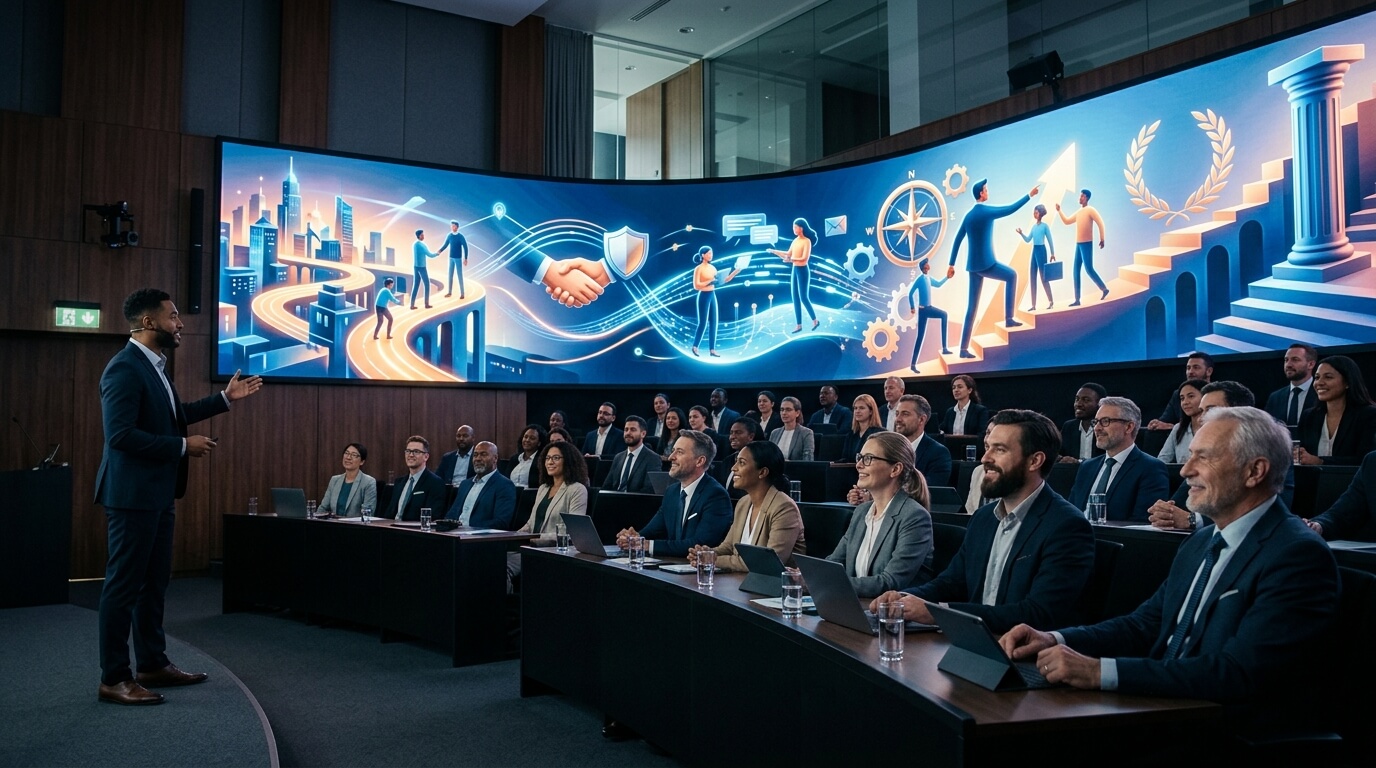
In a crowded digital marketplace, brand authority is no longer built through a logo, a slogan, or a polished website alone. Customers want to understand what a business stands for, what it knows, and whether it can genuinely deliver on its promises. This is why professional animation has become such a valuable communication tool. When carefully planned and professionally produced, animation can turn complex ideas into engaging stories, create a recognizable visual identity, and make a business appear more established and knowledgeable.
Animation is particularly useful because it gives brands control over how their ideas are presented. Unlike ordinary static graphics, animation can combine movement, sound, narration, typography, illustrations, characters, and visual effects into one cohesive experience. Research and industry analysis increasingly point to animation’s ability to simplify complicated subjects while supporting visual consistency and engagement.
However, professional animation is not simply about making content look attractive. Its real value comes from using visual storytelling strategically. A beautifully animated video that communicates nothing meaningful will not create lasting authority. On the other hand, an animation that explains a difficult concept, reflects a company’s personality, and communicates with confidence can become a powerful representation of expertise.
Understanding Brand Authority in the Digital Age
Brand authority refers to the level of expertise, credibility, and influence an organization has within its market. An authoritative brand is one that customers recognize as knowledgeable and dependable. People are more likely to listen to its advice, consider its products, share its content, and ultimately trust its recommendations.
Authority develops over time through consistent experiences. A company cannot simply announce that it is an industry leader and expect customers to believe it. Instead, authority is demonstrated through useful information, professional presentation, reliable service, strong customer experiences, and a consistent brand presence.
This is where professional animation becomes particularly interesting. Every piece of branded content contributes to the audience’s perception of the company. When a business consistently produces thoughtful, polished visual content, it can communicate a sense of competence before a customer even makes direct contact.
A professional animation does not automatically make a company authoritative. What it can do is create an environment in which expertise becomes easier to communicate and remember.
Why Professional Animation Has Such a Strong Branding Effect
Animation combines several communication elements at the same time. A viewer can hear an explanation, see a process, follow a narrative, and associate the experience with a company’s visual identity. This makes animation particularly useful for subjects that are difficult to demonstrate through photographs or conventional video.
For example, a cybersecurity company might need to explain an invisible security process. A software company may need to demonstrate how several systems communicate with one another. A financial company might need to explain an unfamiliar service. A healthcare organization could need to simplify a complicated process for a general audience.
Instead of presenting several paragraphs of technical information, animation can transform the same idea into a visual sequence.
This does not mean animation should replace factual evidence. In fact, credibility becomes stronger when animated explanations are supported by accurate information, transparent claims, demonstrations, research, or other forms of proof. Recent analysis of animated video and trust emphasizes that clarity can improve comprehension, but brands still need to ensure that simplification does not create an exaggerated sense of certainty.
Animation Makes Expertise Easier to Understand
One of the biggest challenges businesses face when establishing authority is explaining expertise without overwhelming their audience. Experts often understand their subject so deeply that they forget how complicated it can appear to someone unfamiliar with it.
Animation provides a bridge between specialist knowledge and everyday understanding. Instead of expecting customers to interpret technical terminology, a company can use visual metaphors, diagrams, characters, motion graphics, and storytelling to demonstrate what is happening.
This is especially valuable in industries such as technology, finance, healthcare, engineering, education, logistics, and professional services.
When an audience finishes an animation feeling that a complicated subject suddenly makes sense, the company behind that explanation receives an important credibility benefit. It has demonstrated not only that it understands the subject but also that it knows how to explain it.
That distinction is important. True authority is not simply knowing something. It is being able to communicate that knowledge clearly.
Professional Animation Creates a More Polished Brand Image
First impressions matter considerably in digital environments. A customer may encounter a company through a website, social media post, presentation, advertisement, or search result before speaking with anyone from the organization.
Professional animation can help control that first impression.
High-quality animation demonstrates attention to detail. Smooth transitions, carefully designed illustrations, appropriate typography, thoughtful sound design, and consistent visual elements can make a brand feel organized and intentional. Industry commentary similarly notes that polished animation can reinforce professionalism while allowing companies to maintain visual consistency across different channels.
Poor animation can have the opposite effect. Unnatural movement, generic templates, confusing narration, inconsistent colors, or low-quality visuals may make a company appear inexperienced.
This is why the word “professional” matters. Brand authority is closely connected to perceived quality. If the animation feels rushed or generic, audiences may unconsciously associate those qualities with the company itself.
Quality Becomes Part of the Brand Experience
A professional animation should feel like it belongs to the brand. Its visual language should complement the company’s identity rather than exist as a disconnected piece of content.
Colors, typography, illustration style, character design, transitions, music, and narration should all support the same personality.
For example, a technology company positioning itself as innovative may use modern motion graphics, clean interfaces, and sophisticated transitions. An educational organization may choose friendly illustrations and approachable character animation. A luxury brand may prefer restrained movement, elegant typography, and cinematic pacing.
The animation style itself therefore becomes a branding decision. Recent B2B animation guidance similarly describes animation style as a brand-level choice because different styles can communicate different personality traits and positioning.
Animation Strengthens Brand Recognition
Brand authority and brand recognition often reinforce one another. When audiences repeatedly encounter a company and immediately recognize its visual language, the brand begins to feel familiar.
Animation gives businesses another dimension through which to build recognition: movement.
A logo can be animated in a consistent way. Brand colors can become part of motion graphics. Characters can appear repeatedly across campaigns. Certain transitions or visual patterns can become associated with the company. Even the style of narration and sound design can contribute to recognition.
Over time, these elements can create a distinctive visual signature.
This matters because customers are exposed to enormous amounts of content every day. A static image can disappear quickly in a crowded feed. A well-designed animation can create a more distinctive experience, particularly when its visual identity is consistent across multiple pieces of content.
Consistency Builds Perceived Stability
Authority is difficult to establish if a brand constantly changes its identity.
Imagine a company whose website looks corporate and sophisticated, but whose social media videos use completely different colors and cartoon styles. The inconsistency can make the organization feel less established.
Professional animation provides an opportunity to establish visual rules that can be repeated. Once those rules are defined, future animations can follow the same system.
This creates continuity.
The customer may see one animated explainer on a website, another short animation on LinkedIn, and a third product animation on YouTube. If all three share recognizable design elements, they reinforce one another.
The result is not simply better aesthetics. It is a stronger perception that the company has a coherent identity.
Animation Helps Brands Explain Complex Products
Some of the strongest opportunities for animation exist in industries where products or services are difficult to understand.
A physical product can often be photographed. A restaurant can show its food. A clothing company can display its products. But how does a software company visually demonstrate an invisible process? How does a consulting company explain a complicated methodology? How does a financial service explain an abstract system?
Animation can make invisible concepts visible.
A designer can show information moving through a system, illustrate the relationship between different components, demonstrate a hypothetical scenario, or visualize something that does not physically exist.
This flexibility is one of animation’s strongest strategic advantages. Industry research on animation marketing notes that animation is particularly useful when businesses need to communicate abstract information, invisible processes, hypothetical situations, or complex product mechanics.
Explaining Instead of Selling
Authority grows when brands educate rather than constantly promote themselves.
An animation that begins with “Buy our service” immediately feels like advertising. An animation that begins with a genuine problem and explains why it occurs can feel much more valuable.
For example, a cloud software company could create an animation explaining why businesses experience data management problems. The video does not necessarily need to begin with a product pitch. By educating the viewer first, the company demonstrates expertise.
Once the audience understands the problem, the brand can introduce its solution naturally.
This approach can make promotional content feel more useful and less aggressive.
Professional Animation Humanizes Businesses
Many businesses struggle to appear human online. Corporate language, technical terminology, stock photography, and overly formal communication can make a company feel distant.
Animation can introduce personality without requiring a real person to appear on camera.
Characters, illustrations, humor, storytelling, and expressive motion can give an organization a recognizable personality. This can be especially valuable for businesses operating in technical industries where their communication might otherwise feel dry.
A company can use animation to show how customers experience a problem, introduce fictional characters representing common users, or tell the story behind a product.
Storytelling also gives brands a way to communicate values rather than simply features. Video marketing guidance frequently highlights storytelling as a method for establishing a company’s identity, mission, and values.
Emotional Connection Supports Credibility
Authority is not purely rational. Customers also evaluate whether they feel comfortable with a company.
A technically impressive animation can establish expertise, while a well-told story can create emotional familiarity.
When these elements work together, the brand becomes easier to relate to.
A healthcare company, for example, might use animation to explain a complicated process while focusing on the emotional experience of a patient. A financial company could explain an investment concept through a relatable family scenario. A software business could show the frustrations of a team struggling with inefficient workflows.
The information remains important, but the story gives that information context.
How Different Types of Animation Can Influence Authority
Not every animation serves the same purpose. Businesses should select an animation format based on their communication goals, audience, and brand positioning.
| Animation Type | Primary Purpose | Authority Benefit | Best Use |
| Explainer Animation | Simplify complex ideas | Demonstrates expertise and clarity | Products and services |
| Motion Graphics | Present information dynamically | Creates a polished professional image | Data, presentations, campaigns |
| Character Animation | Tell relatable stories | Makes the brand approachable | Awareness and storytelling |
| 3D Animation | Demonstrate detailed products or environments | Signals sophistication and technical capability | Product visualization |
| Kinetic Typography | Emphasize words and concepts | Creates confident, modern communication | Social media and campaigns |
| Brand Animation | Strengthen visual identity | Improves recognition and consistency | Logo, website, advertising |
The most effective choice depends on what the audience needs to understand. A sophisticated 3D animation is not automatically more authoritative than a simple 2D explainer. If the objective is to explain a complicated process quickly, a clean 2D animation may be much more effective.
Animation Supports Authority Across Marketing Channels
One of the major advantages of professional animation is its flexibility.
A single animation can often be adapted into different formats for different platforms. A longer explainer can provide the foundation for shorter social media clips. A brand animation can be incorporated into a website. Motion graphics can become part of presentations, advertisements, webinars, or sales materials.
This creates opportunities for consistent communication.
Instead of creating completely unrelated content for every channel, businesses can develop a visual language that travels with the brand.
Websites
A professional animation on a website can help visitors understand what a business offers without forcing them to read lengthy explanations.
This can be particularly useful above the fold, on product pages, or within service sections where the audience needs to understand a concept quickly.
The goal should not be to add animation simply because it looks modern. The animation should solve a communication problem.
Social Media
Social media is highly competitive. Businesses have only a short amount of time to earn attention.
Short animated videos can help brands communicate ideas in a format that is visually distinctive. When the same animation style is repeated across campaigns, social media can become an important extension of the company’s brand identity.
Presentations and Sales
Animation can also strengthen sales presentations. Instead of showing a static slide describing how a service works, a salesperson can use a short animation to demonstrate the process.
This can help prospects visualize the solution rather than simply hearing about it.
For B2B organizations in particular, trust develops throughout a longer buying journey, so educational animation can serve different purposes at awareness, consideration, and decision-making stages.
Professional Animation Can Position a Business as an Industry Educator
One of the most powerful ways to establish authority is to become a source of useful knowledge.
Companies that consistently teach their audiences can move beyond being seen as sellers and become recognized as educators.
Animation is well suited to this approach.
A company could produce a series of animated videos explaining industry concepts, common mistakes, emerging technologies, customer challenges, or important processes. Over time, these resources can create an educational library associated with the brand.
The effect compounds.
A single video may attract attention. A collection of high-quality educational animations can establish a much stronger reputation.
Thought Leadership Becomes More Accessible
Thought leadership does not always need to involve lengthy white papers or technical reports.
Animation can translate expert knowledge into a more accessible format.
An executive’s insight can become an animated story. A research finding can become motion graphics. A complicated industry trend can become an animated timeline. A technical explanation can become a visual walkthrough.
This allows companies to communicate expertise to audiences who may not have the time or interest to read lengthy documents.
Professional Animation Shows Investment in Communication
Customers often judge businesses by the quality of the experience they provide.
When a company invests in professionally produced animation, it demonstrates that communication matters to it.
That does not mean businesses need the most expensive animation available. In fact, excessive production can sometimes distract from the message. The important factor is intentionality.
The script should be accurate. The visuals should be purposeful. The pacing should support comprehension. The voiceover should match the brand. The design should remain consistent.
Professionalism is therefore less about extravagance and more about control.
A simple animation that communicates exceptionally well can strengthen authority more effectively than an expensive production filled with unnecessary visual effects.
The Role of Storytelling in Building Authority
Animation becomes particularly powerful when information is organized around a story.
Stories give audiences a reason to continue watching. They establish a problem, introduce context, show a transformation, and provide a conclusion.
For brands, this structure can be used to demonstrate expertise without making the animation feel like a lecture.
A company might begin with a familiar customer challenge, explain why it happens, introduce a new way of approaching it, and then demonstrate the resulting improvement.
The company becomes the guide rather than the hero.
This distinction is important. Brands that constantly tell audiences how impressive they are can appear self-focused. Brands that help audiences solve meaningful problems can appear more knowledgeable and trustworthy.
Why Cheap or Generic Animation Can Damage Authority
If professional animation can strengthen authority, poor animation can weaken it.
Generic templates may make a company appear interchangeable with its competitors. Weak scripts can make even beautiful visuals feel meaningless. Inconsistent branding can create confusion. Poor voiceovers can reduce confidence in the message.
There is also the risk of overusing trends.
A style that looks fashionable today may feel dated tomorrow. Businesses should therefore focus on communicating their identity rather than copying whatever animation style happens to be popular.
Industry discussions have specifically warned that inexpensive animation can carry reputational risks when the final product appears generic or fails to connect with the intended audience.
Professional Does Not Mean Overcomplicated
Authority does not require visual complexity.
In many cases, minimal animation is more effective because it gives the audience space to understand the message.
A professional animator knows when to add movement and when to keep the screen simple. Every transition, illustration, sound effect, and visual element should support the story.
The goal is not to impress the viewer with technical ability. The goal is to make the viewer understand, remember, and trust the message.
How Businesses Can Use Animation Strategically
Businesses should begin with the question, “What does our audience need to understand?” rather than “What kind of animation should we make?”
Once the communication problem is identified, the animation style can follow.
The script should be developed around a clear objective. The visual identity should reflect the brand. The production quality should be appropriate for the audience. The final video should then be distributed where that audience is most likely to encounter it.
Measurement is also important. Businesses can evaluate watch time, engagement, traffic, inquiries, conversions, audience feedback, and other relevant indicators depending on the purpose of the animation.
Over time, these results can help determine which types of animation contribute most effectively to brand growth.
The Long-Term Impact of Animated Brand Content
The greatest benefit of professional animation may not come from one viral video.
Authority develops through repetition.
A company that consistently communicates clearly, visually, and professionally can gradually build a reputation for expertise. Each animation becomes another opportunity to reinforce the same identity.
The audience begins to recognize the visual style. The company becomes associated with useful explanations. Complex topics become easier to understand. The brand begins to occupy a clearer position within its industry.
This is how animation moves beyond being a marketing asset and becomes part of a broader brand strategy.
When visual quality, accurate information, storytelling, and consistency work together, animation can help turn expertise into something audiences can actually see and experience.
Conclusion
Professional animation can play a significant role in building brand authority because it allows businesses to demonstrate expertise in a clear, memorable, and visually engaging way. It can simplify complicated ideas, strengthen brand recognition, humanize corporate communication, and create a consistent visual experience across marketing channels.
However, animation should never be treated as decoration. Its effectiveness depends on strategy, accuracy, storytelling, design quality, and consistency. The strongest animated content does not simply tell audiences that a company is authoritative. It demonstrates authority by teaching something valuable, solving a communication problem, and presenting information with confidence and clarity.
In an increasingly visual digital environment, businesses that use professional animation thoughtfully can create a stronger connection between what they know and what their audiences understand.
Frequently Asked Questions
Q1. How does professional animation build brand authority?
Professional animation builds brand authority by helping businesses communicate expertise clearly while presenting a polished and consistent visual identity. It can make complex subjects easier to understand and demonstrate that a company knows how to communicate effectively.
Q2. Is animation better than live-action video for building authority?
Neither format is automatically better. Animation is particularly useful for abstract concepts, technical explanations, invisible processes, and scenarios that are difficult or expensive to film. Live-action can be stronger when real people, physical products, customer testimonials, or authentic environments are central to the story.
Q3. Can small businesses use professional animation?
Yes. Small businesses can use animation strategically without producing expensive, highly complex projects. A focused explainer, short social media animation, or branded motion graphic can communicate expertise while remaining manageable in scope.
Q4. What makes an animation look professional?
Professional animation combines a strong script, purposeful visuals, smooth movement, appropriate sound, consistent branding, effective pacing, and high-quality production. Most importantly, every visual element should support the message rather than exist only for decoration.
Q5. How often should a brand use animation?
There is no universal frequency. Businesses should use animation whenever it solves a genuine communication or branding need. A consistent series of useful animations can be more valuable than producing frequent videos simply to maintain a publishing schedule.