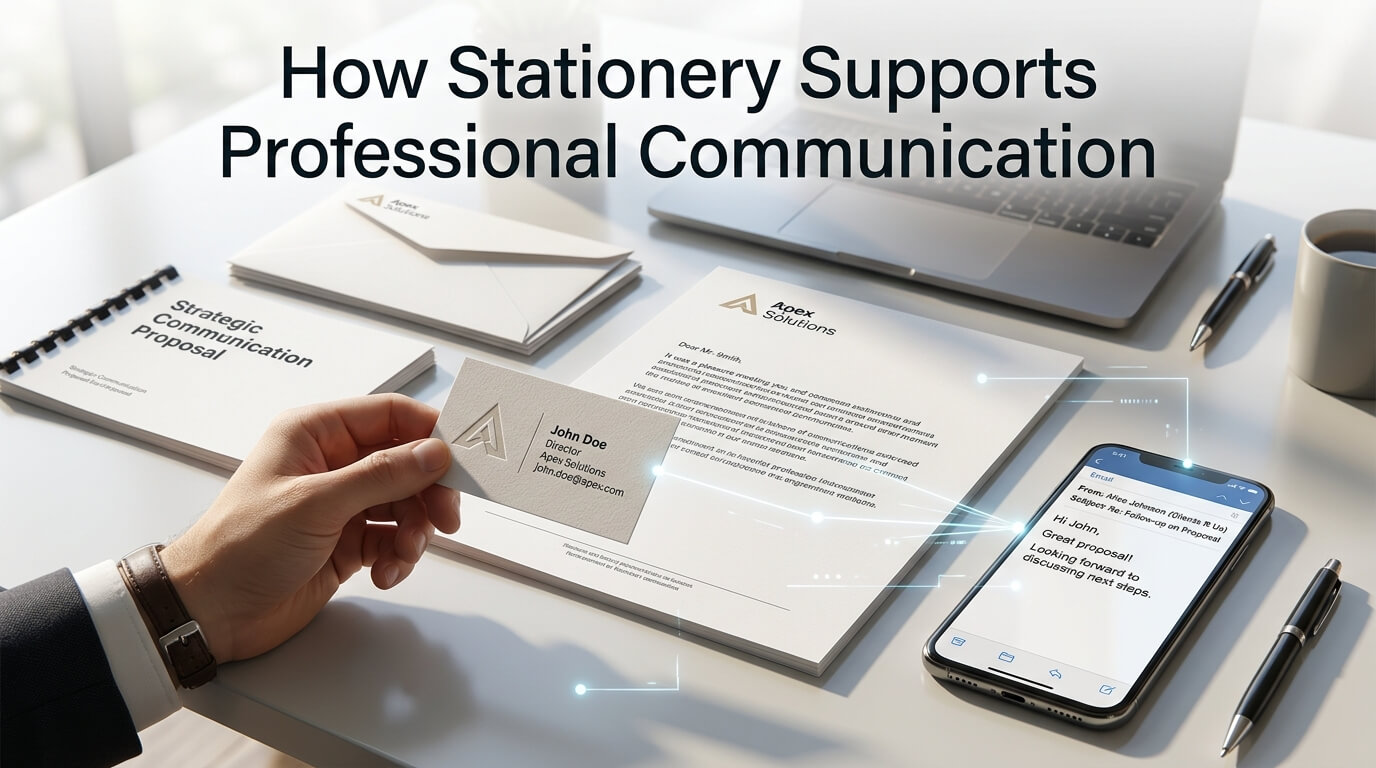
Professional communication is not limited to the words a business uses. The way information is presented, delivered, and remembered can have a significant effect on how a company is perceived. In an increasingly digital business environment, physical stationery may seem less important than emails, websites, and social media. However, professional stationery continues to play an important role in business communication because it adds structure, consistency, credibility, and a personal touch to everyday interactions.
Business cards, letterheads, envelopes, compliment slips, folders, invoices, notepads, and other branded materials all contribute to the way a business communicates with customers, clients, suppliers, partners, and employees. Well-designed stationery can make communication feel more organized and intentional, while poorly designed materials can create confusion or weaken an otherwise professional image.
Stationery is especially valuable when a business wants to establish a recognizable identity. Consistent colors, typography, logos, layouts, and messaging help recipients immediately connect a document or printed item with the organization behind it. Whether a company is sending a formal letter, handing over a business card at a meeting, or presenting a proposal in a branded folder, stationery reinforces the idea that communication is being handled professionally.
Why Professional Stationery Still Matters
The business world has become heavily dependent on digital communication, but physical communication has not disappeared. Important contracts, proposals, certificates, invoices, thank-you notes, presentation documents, and correspondence are still commonly printed or delivered in physical form. These materials often represent important moments in a business relationship, making their presentation particularly significant.
Professional stationery creates a sense of consistency. When every document follows the same visual identity, recipients can recognize the organization more easily. This consistency communicates that the business pays attention to details and takes its interactions seriously. Even something as simple as a professionally designed letterhead can make an ordinary message appear more official and trustworthy.
Stationery also gives businesses an opportunity to communicate personality. A law firm might use a restrained and traditional design, while a creative agency could use modern typography and distinctive visual elements. The stationery becomes an extension of the company’s communication style, allowing recipients to understand something about the organization before they even read the full message.
Stationery Creates a Strong First Impression
First impressions are important in professional relationships. When someone receives a document from a business, the design and quality of that document can influence how they interpret the information inside it. A clean layout, high-quality paper, appropriate typography, and consistent branding can create an immediate sense of professionalism.
This is particularly relevant for businesses competing for clients or partnerships. A proposal printed on carefully selected stationery may feel more considered than a generic document with inconsistent formatting. While stationery cannot replace strong products or services, it can support the overall impression a business is trying to create.
A professional first impression also helps establish confidence. When communication materials look organized, recipients may naturally associate that organization with competence. This is why stationery should not be treated as decoration. It is part of the communication experience.
Business Stationery Strengthens Brand Recognition
Brand recognition is usually associated with logos, websites, advertising, and social media. However, stationery can play an equally useful supporting role. Every piece of business communication provides another opportunity for a company to reinforce its identity.
When the same logo, color palette, fonts, and design principles appear across letterheads, business cards, envelopes, folders, and other materials, the brand becomes easier to recognize. Over time, repeated exposure creates familiarity. Customers may begin to identify the business simply by seeing its visual style.
Consistency Makes Communication More Memorable
Consistent branding helps connect separate communications. Imagine a customer receives a business card during a meeting, an invoice several weeks later, and a formal letter a month afterward. If all three materials share a recognizable visual identity, the customer is more likely to understand that they come from the same organization.
This continuity matters because businesses rarely communicate with customers through one channel. A client may interact with a company through email, a website, social media, printed documents, packaging, and face-to-face meetings. Stationery helps extend the brand into physical communication.
Consistency also prevents communication from looking fragmented. When every department uses different colors, fonts, and layouts, the organization can appear less coordinated. A standardized stationery system provides a visual framework that supports more unified communication.
Letterheads Give Formal Communication Greater Authority
The letterhead is one of the most recognizable forms of business stationery. It is commonly used for formal letters, notices, proposals, agreements, confirmations, and official correspondence. Its primary purpose is not simply to display a logo. It establishes context and identifies the organization responsible for the communication.
A well-designed letterhead normally presents important business information in a clear and professional manner. Depending on the organization and its requirements, this may include the company name, logo, contact information, website, address, and other relevant details.
Letterheads Help Organize Important Information
Good communication requires clarity. A letterhead can create a consistent structure that makes documents easier to read and understand. When the business identity and contact details are positioned appropriately, the recipient does not have to search through the document to determine who sent it.
This is especially useful for formal correspondence. A clearly structured letter immediately establishes the sender and creates a professional context for the message that follows. The design should support the content rather than compete with it.
Letterheads can also help establish document hierarchy. A strong design distinguishes the company information from the main body of the message, allowing readers to focus on the actual communication while still recognizing its source.
Business Cards Support Face-to-Face Communication
Business cards remain useful because they make professional introductions easier to remember. During conferences, meetings, networking events, interviews, and client visits, exchanging contact information can be an important part of building a relationship.
A business card provides a physical reminder of the interaction. Instead of relying entirely on someone to remember a name or search for a company later, the recipient has a tangible reference containing essential contact information.
A Business Card Extends the Conversation
A good business card does more than provide a phone number or email address. Its design can communicate the character of the organization and create a connection between the face-to-face conversation and the company’s broader identity.
For example, a minimalist card can suggest simplicity and precision, while a more creative design may communicate innovation. The important factor is relevance. The design should match the business and remain easy to read.
A business card also makes communication convenient. After a meeting, the recipient can keep the card and return to it when they are ready to make contact. This small physical interaction can help maintain continuity after an initial conversation.
Stationery Communicates Attention to Detail
Professional communication depends heavily on details. Spelling, grammar, formatting, tone, timing, and presentation all influence how a message is received. Stationery contributes to the visual side of that attention to detail.
When a company invests in well-designed communication materials, it demonstrates that presentation matters. This does not necessarily mean using expensive paper or elaborate designs. Professionalism often comes from simplicity, consistency, and thoughtful choices.
Quality Can Influence Perceived Credibility
The physical quality of stationery can contribute to perceived credibility. Paper that feels appropriate for the purpose, printing that is clear, and layouts that are carefully aligned can create a more polished experience.
However, quality should be appropriate rather than excessive. A formal organization may benefit from understated materials, while a creative business might choose something more distinctive. The objective is to make the stationery support the organization’s message and values.
This relationship between presentation and perception is particularly important when a business is communicating something significant. A carefully prepared proposal or formal letter can feel more substantial when its physical presentation reflects the importance of the message.
How Different Stationery Materials Support Communication
Different stationery items serve different communication purposes. Choosing the right format allows businesses to match the physical material with the situation.
| Stationery Type | Main Communication Purpose | Professional Benefit |
| Letterhead | Formal correspondence | Establishes authority and identity |
| Business Cards | Networking and introductions | Makes contact information memorable |
| Envelopes | Delivering documents | Reinforces brand identity before opening |
| Compliment Slips | Short notes and messages | Adds a personal professional touch |
| Folders | Presenting documents | Keeps information organized and branded |
| Notepads | Meetings and internal communication | Supports organized information sharing |
| Invoices | Financial communication | Presents business information clearly |
| Thank-You Cards | Relationship building | Adds warmth and personal appreciation |
The effectiveness of each item depends on how appropriately it is designed and used. A business does not necessarily need every possible stationery product. Instead, it should focus on materials that genuinely support its communication needs.
Stationery Adds a Personal Touch to Business Communication
Digital communication is fast and convenient, but it can sometimes feel impersonal. A printed note or handwritten message can provide a different experience because it requires a more deliberate action.
For example, a thank-you card sent after a successful project can make appreciation feel more genuine. A short handwritten message included with a document can show that someone took time to communicate personally rather than relying entirely on automated correspondence.
Personalization Builds Stronger Relationships
Businesses depend on relationships, and small details can contribute to those relationships. Personalized stationery allows organizations to combine branding with human communication.
A company can maintain a professional identity while still making communication feel warm and authentic. This is particularly useful for client appreciation, customer service, special occasions, follow-up messages, and relationship management.
The physical nature of stationery can also make a message more memorable. Emails can become buried in crowded inboxes, whereas a physical card or professionally presented document may remain on a desk or in a file for much longer.
Professional Stationery Improves Document Presentation
Important business documents often contain significant amounts of information. Without proper formatting, even valuable content can become difficult to navigate. Stationery and document design can create visual organization that improves readability.
A branded folder, for example, can keep several related documents together while reinforcing the business identity. A professionally formatted invoice can separate billing details from company information, making it easier for the recipient to understand the transaction.
Good Design Supports Clearer Messages
Professional design should never make communication unnecessarily complicated. The best stationery creates a balance between branding and readability.
Typography should be easy to read, spacing should provide sufficient breathing room, and important information should be easy to locate. Logos and decorative elements should support the design rather than dominate it.
This principle is important because communication ultimately depends on understanding. If a stationery design makes the message harder to read, it is working against the purpose of professional communication.
Stationery Supports Internal Communication Too
Stationery is not only intended for customers and external audiences. It can also support communication within an organization.
Branded notepads, internal forms, presentation folders, meeting materials, and printed notices can create consistency across departments. When employees use standardized materials, internal documents can appear more organized and easier to identify.
Professional stationery can also contribute to workplace culture. Employees may feel that the organization is more established and structured when internal materials are thoughtfully designed. This can support a stronger sense of identity and belonging.
Digital and Physical Communication Can Work Together
Modern businesses should not think of stationery and digital communication as competing systems. They can complement each other effectively.
A business card can include a website or digital contact point, allowing a physical introduction to lead directly into an online relationship. Printed documents can direct customers toward digital resources, while digital correspondence can reinforce the visual identity used on physical stationery.
Consistent Branding Across Channels Matters
The strongest communication strategy is often one in which physical and digital materials feel connected. The colors, typography, logo, tone, and overall visual identity used on stationery can be reflected across websites, email signatures, presentations, and social platforms.
This creates a unified brand experience. Customers do not have to mentally adjust to a completely different identity every time they interact with the company through another channel.
Choosing Stationery That Matches the Business
Effective stationery begins with understanding the organization. A business should consider its audience, industry, communication style, and brand personality before choosing designs and materials.
A corporate consultancy may prefer a refined and minimal presentation, while a design studio could use more expressive layouts. A professional services firm might prioritize formal document presentation, whereas a retail brand could place greater emphasis on memorable packaging and thank-you materials.
Simplicity Often Creates Greater Professionalism
There is a temptation to add too many design elements to stationery in an effort to make it impressive. In reality, excessive decoration can reduce clarity.
Simple layouts often communicate professionalism because they make important information easier to identify. A restrained color palette, readable typography, balanced spacing, and appropriate branding can create a polished result without overwhelming the recipient.
The goal is not to make stationery visually complicated. The goal is to make it recognizable, useful, and appropriate.
Common Mistakes That Can Weaken Stationery Communication
Stationery can support professional communication, but poor choices can have the opposite effect. One common problem is inconsistency. If different materials use unrelated logos, colors, fonts, or contact information, the brand may appear disorganized.
Another problem is overcrowding. Trying to include every possible piece of information can make a letterhead or business card difficult to read. Important details should have enough space around them to remain clear.
Low-quality printing can also weaken presentation. Blurry logos, incorrect colors, uneven alignment, or poorly reproduced text can make otherwise professional communication look careless.
Businesses should also review contact details regularly. An outdated phone number, incorrect address, or old website on stationery can create practical communication problems and undermine credibility.
The Long-Term Value of Professional Stationery
The value of stationery goes beyond individual pieces of paper. When consistently used, stationery becomes part of the organization’s communication infrastructure.
A customer may encounter the same branding repeatedly through different interactions. Each encounter reinforces familiarity and helps establish a recognizable business presence. Over time, these small impressions can contribute to stronger brand recognition and trust.
Professional stationery can also be viewed as an investment in consistency. Once a company establishes clear stationery standards, employees have a reliable framework for communicating with external and internal audiences.
Conclusion
Stationery remains an important part of professional communication because it combines information, branding, presentation, and human connection. Letterheads establish authority, business cards support networking, folders improve document presentation, and personalized notes can make customer interactions feel more meaningful.
In a digital-first business environment, thoughtfully designed stationery can provide something that electronic communication often lacks: a tangible representation of the organization. When physical materials are consistent with the wider brand identity and designed with clarity in mind, they can strengthen credibility, improve recognition, and make professional communication more memorable.
The most effective stationery is not necessarily the most elaborate. It is stationery that communicates clearly, reflects the organization’s identity, and makes every interaction feel deliberate and professional.
Frequently Asked Questions
Q1. Why is stationery important for professional communication?
Stationery helps businesses present information consistently while reinforcing credibility, brand identity, and professionalism.
Q2. How does a letterhead improve business communication?
A letterhead identifies the sender, organizes important business information, and gives formal correspondence a more authoritative presentation.
Q3. Are business cards still useful in digital communication?
Yes. Business cards provide a convenient physical reminder of a professional interaction and make contact information easy to retain.
Q4. Can stationery improve brand recognition?
Yes. Consistent logos, colors, typography, and layouts across stationery help customers recognize and remember a business.
Q5. What makes business stationery look professional?
Clear layouts, readable typography, consistent branding, accurate information, appropriate materials, and high-quality printing all contribute to professional stationery.