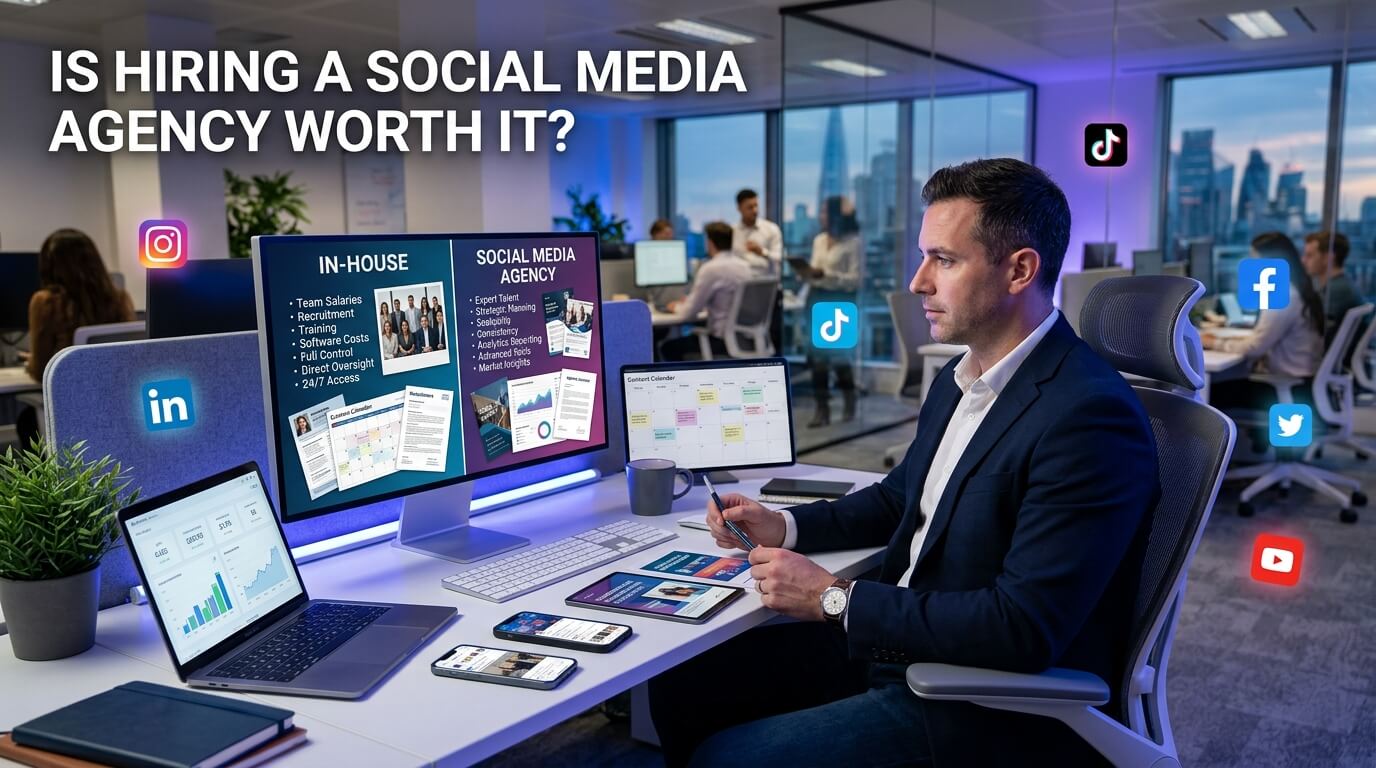
Social media has become one of the most visible parts of modern business marketing. Whether a company is selling products, offering professional services, building a personal brand, or trying to reach a niche audience, social platforms can create opportunities to connect with potential customers every day. However, maintaining an effective social media presence requires much more than publishing a few posts whenever there is free time. It involves strategy, content creation, audience research, community management, analytics, advertising, trend awareness, and consistent communication.
This raises an important question for many businesses: is hiring a social media agency worth it?
The answer depends on the company’s goals, internal resources, budget, industry, and expectations. For some businesses, managing social media internally may be practical and cost-effective. For others, working with an experienced agency can provide the structure, expertise, and consistency needed to make social media more productive. The real value of an agency is not simply the number of posts it publishes. It is the ability to turn social media activity into a coordinated marketing effort that supports broader business objectives.
Understanding what an agency actually does, what it costs, and when its services can make a meaningful difference can help businesses make a more informed decision.
What Does a Social Media Agency Actually Do?
A social media agency typically handles several interconnected parts of a company’s online presence. Its responsibilities can range from developing a social media strategy to creating content, scheduling posts, monitoring engagement, responding to comments, analyzing performance, and managing paid campaigns. The exact services vary from one agency to another, so businesses should always clarify what is included before signing an agreement.
Social Media Strategy and Planning
A strong social media presence usually begins with a strategy. Instead of publishing content randomly, an agency can examine a company’s target audience, competitors, industry trends, brand positioning, and marketing objectives. These insights can then be used to develop a content direction for platforms such as Instagram, Facebook, LinkedIn, TikTok, YouTube, or X.
Strategy also helps determine what the business should communicate. A company may need educational content to establish authority, behind-the-scenes material to humanize the brand, customer-focused content to build trust, or promotional campaigns to support sales. Without a clear strategy, even attractive content can struggle to produce meaningful results.
Content Creation and Management
Creating consistent social media content takes considerable time. Images, videos, captions, carousels, short-form videos, graphics, and other formats each require planning and production. Agencies often have designers, writers, strategists, video editors, and social media specialists who can contribute different skills to the process.
This can be especially useful for businesses that know their industry well but do not have the resources to produce marketing content regularly. An agency can translate technical information or business offerings into content that is easier for a social audience to understand.
Community Management
Social media is not simply a publishing channel. People expect brands to respond to comments, questions, messages, and feedback. Regular interaction can make a business appear more accessible and responsive.
An agency can help monitor conversations and manage routine interactions according to the company’s preferred tone. More sensitive questions or complaints can still be escalated to the internal team when necessary. This creates a clearer system for maintaining communication with customers.
Why Businesses Consider Hiring a Social Media Agency
There are several reasons companies decide to outsource their social media marketing. The most common is usually time. Business owners and internal teams may understand that social media is important but simply do not have enough hours in the day to manage it properly.
It Saves Internal Time
Social media management can become a daily responsibility. Researching content ideas, writing captions, designing graphics, editing videos, scheduling posts, responding to users, and reviewing analytics can quickly consume hours every week.
Outsourcing some or all of these responsibilities allows internal employees to focus on their primary roles. A business owner can concentrate on operations, sales, product development, or customer relationships rather than spending several hours trying to decide what to publish next.
The value of saved time should not be overlooked. Even when an agency represents a significant expense, the time returned to the business may make the arrangement worthwhile.
It Provides Specialized Knowledge
Social platforms change frequently. Content formats, algorithms, advertising options, audience behavior, and platform features can evolve over time. A social media specialist spends much of their working life monitoring these changes.
An agency may also bring experience from working with different industries and audiences. This does not automatically guarantee success, but it can provide access to knowledge that would take an internal team considerable time to develop.
It Creates Greater Consistency
Consistency is one of the biggest challenges for businesses managing social media themselves. A company may publish frequently for several weeks and then become inactive when work becomes busy.
An agency can establish a content calendar and production process that keeps social channels active. Consistency does not mean posting constantly. It means maintaining a deliberate presence that audiences can recognize and engage with over time.
What Are the Potential Drawbacks?
Hiring an agency is not automatically the right solution. There are also disadvantages that businesses should consider before making a decision.
Agency Costs Can Be Significant
Professional social media management requires skilled people, creative production, software, communication, and strategy. As a result, agency fees can represent a meaningful monthly investment.
For a small business with limited revenue or an uncertain marketing budget, outsourcing everything may not be practical. In some cases, hiring a part-time specialist or keeping basic social media management in-house may make more sense.
The important question is not simply whether an agency is expensive. It is whether the expected value of its work justifies the cost for that particular business.
The Agency May Not Understand the Brand Immediately
No external team will understand a business as deeply as the people who work inside it. An agency needs time to learn the company’s products, customers, culture, industry language, competitors, and personality.
This onboarding period can sometimes produce content that feels too generic. Good communication and a detailed brand brief can reduce this problem, but businesses should expect collaboration rather than assuming they can completely hand over the responsibility and never participate.
Results Can Take Time
Social media marketing rarely works as an instant solution. Building an audience, developing trust, testing content, and learning what resonates can take time.
Businesses that expect thousands of followers or immediate sales within a few weeks may become disappointed. A responsible agency should explain what it is trying to achieve and which metrics will be used to evaluate progress.
Comparing In-House Social Media Management With an Agency
The right choice often depends on the company’s available resources. There is no universal model that works for every organization.
| Factor | In-House Management | Social Media Agency |
| Cost structure | Employee salary and tools | Monthly agency fee and possible additional costs |
| Brand knowledge | Usually very strong | Develops through onboarding and collaboration |
| Specialized skills | Depends on the team | Often access to multiple specialists |
| Content production | Limited by internal resources | Can include designers, writers, and video specialists |
| Scalability | May require additional hiring | Services can often expand as needs grow |
| Strategy | Depends on internal expertise | Usually a core part of the service |
| Platform knowledge | Varies by employee | Often maintained as part of the agency’s work |
| Time commitment | Significant internal involvement | Reduces day-to-day workload |
| Analytics | Depends on available expertise | Usually included in reporting and strategy |
| Creative variety | Depends on team size | Often broader due to multiple creative resources |
Neither option is automatically better. An established company with a large marketing department may already have everything it needs internally. A growing business with a small team may benefit more from external support.
When Hiring a Social Media Agency May Be Worth It
The decision becomes easier when a business recognizes a specific problem that an agency can solve.
When Your Team Does Not Have Enough Time
If social media repeatedly gets pushed to the bottom of the priority list, outsourcing can provide structure. This is particularly relevant when the business understands the importance of social media but cannot consistently produce content.
An agency can take responsibility for planning and production while the internal team provides essential business information and approvals.
When You Need Better Content
Sometimes a business is active on social media but the content does not accurately communicate its value. Posts may look inconsistent, captions may lack direction, or videos may fail to capture attention.
An agency can bring dedicated creative resources into the process. Professional design, copywriting, video editing, and content planning can create a more cohesive presence.
When You Want to Scale
Growing businesses often reach a point where their original marketing processes are no longer sufficient. A founder who once managed social media personally may not have the time to continue doing so while handling sales, employees, customers, and operations.
An agency can provide additional capacity without requiring the business to immediately build a large internal marketing department.
When Paid Social Advertising Is Part of the Strategy
Organic social media and paid advertising require different skills. Advertising involves audience targeting, campaign structure, creative testing, budgeting, tracking, and performance analysis.
Businesses planning to invest significant amounts in paid social campaigns may benefit from working with professionals who understand these areas. However, advertising results still depend on factors such as the offer, landing page, audience, creative quality, budget, and market conditions.
When Hiring an Agency May Not Be Necessary
There are also situations where outsourcing may not provide enough additional value.
A very small business with a narrow audience and a highly involved owner may be able to manage a simple social presence internally. If the company only needs occasional updates rather than a comprehensive marketing program, a full-service agency could provide more support than necessary.
Similarly, businesses with an experienced internal marketing team may already have strategists, designers, writers, and analysts. In that situation, an agency might only be useful for specialized campaigns or temporary additional capacity.
The goal should not be to outsource social media simply because other businesses do it. The goal should be to identify whether external expertise solves a genuine business need.
How to Calculate Whether an Agency Is Worth the Investment
Businesses should look beyond follower counts when evaluating social media services. A large audience can be useful, but followers alone do not necessarily generate revenue.
Look at Business Objectives
Before hiring an agency, define what social media is supposed to accomplish. The objective might be increasing brand awareness, generating leads, driving website traffic, supporting customer relationships, promoting products, or establishing industry authority.
Once the objective is clear, relevant metrics can be selected. A lead-generation campaign, for example, should not be judged solely by the number of likes it receives.
Consider the Value of Your Time
Calculate how many hours your team currently spends managing social media. Then consider what those hours could be used for if the responsibility were outsourced.
If a business owner spends ten hours each week managing content, that time has an economic value. The same applies to employees who could be working on sales, customer service, operations, or other revenue-generating responsibilities.
Evaluate the Quality of the Agency’s Process
Before signing a contract, ask how the agency develops strategy, creates content, reports results, communicates with clients, and handles revisions. A professional process is often more important than impressive promises.
Businesses should also clarify ownership of content, access to social accounts, advertising accounts, analytics, and creative files. Clear arrangements can prevent problems later.
What Should You Look for in a Social Media Agency?
Finding an agency is not simply about choosing the one with the largest portfolio. Businesses should look for a team that understands their industry, audience, goals, and communication style.
An agency should be able to explain its strategy in understandable language. It should also be comfortable discussing realistic expectations rather than promising guaranteed viral growth.
Communication matters as well. Social media content often requires feedback from the client, particularly during the early stages of the relationship. A clear approval process can prevent delays and reduce misunderstandings.
Businesses should also review examples of previous work. Instead of looking only at visual quality, consider whether the agency demonstrates an understanding of different audiences and marketing objectives.
Questions to Ask Before Hiring an Agency
Before entering an agreement, businesses should understand exactly what they are paying for. Ask which platforms are included, how many pieces of content are produced, whether video is included, who writes captions, how comments and messages are handled, and whether paid advertising management is separate.
It is also useful to ask how performance is reported. A useful report should help the business understand what happened and what the agency plans to do next. Numbers without context may not provide much insight.
Contract terms should also be reviewed carefully. Businesses should understand the minimum commitment, cancellation terms, additional fees, revision limits, advertising budget requirements, and ownership of created materials.
How to Get the Most From a Social Media Agency
Hiring an agency does not mean the business can completely disappear from the process. The strongest partnerships usually involve collaboration.
The business should provide accurate information about products, customers, promotions, company developments, and industry changes. Internal knowledge can give the agency the raw material it needs to create relevant content.
Regular communication is also important. Monthly or biweekly meetings can help both sides review performance, discuss upcoming campaigns, and identify changes in audience behavior.
Most importantly, businesses should allow enough time for testing. Social media strategy often improves through experimentation. Different topics, formats, hooks, posting schedules, and creative approaches may need to be tested before the strongest patterns become clear.
Conclusion
So, is hiring a social media agency worth it? It can be, particularly when a business lacks the time, expertise, creative resources, or strategic structure needed to manage social media effectively. An agency can bring together planning, content creation, community management, analytics, and advertising expertise under one process.
However, outsourcing is not automatically the right choice for every company. Businesses with strong internal teams or very simple social media requirements may prefer to manage their channels themselves. The most useful way to make the decision is to compare the cost of an agency with the time, skills, consistency, and business opportunities it could provide.
Ultimately, social media should be treated as part of a broader marketing strategy rather than an isolated task. Whether that strategy is managed internally or with outside support, clear goals and consistent execution matter more than simply being active online.
Frequently Asked Questions
Q. Is a social media agency worth it for a small business?
It can be, especially when the business owner or internal team does not have enough time or expertise to manage social media consistently. The decision should depend on the available budget, marketing goals, and expected value of the service.
Q. How much does a social media agency cost?
Costs vary significantly depending on the number of platforms, content volume, creative services, advertising management, strategy, and level of support required. Businesses should compare the complete scope of services rather than looking only at the monthly fee.
Q. Can a social media agency guarantee more sales?
No responsible agency can guarantee a specific number of sales because results depend on many factors, including the product, pricing, audience, offer, website, market conditions, content, and advertising budget.
Q. How long does it take to see social media results?
The timeframe varies according to the platform, objectives, audience, content strategy, and whether paid advertising is being used. Building meaningful organic engagement and brand recognition generally requires consistent effort over time.
Q. Should a business manage social media in-house or hire an agency?
There is no single answer for every business. Companies should consider their internal skills, available time, budget, marketing goals, and required level of content production before choosing between an internal team and an external agency.