
In the pantheon of corporate branding, few symbols are as instantly recognizable as the Golden Arches. Whether viewed from a highway in the American Midwest or a busy street corner in Tokyo, that curvaceous yellow “M” transcends language and culture. The story behind this symbol is not merely a timeline of graphic design changes; it is a narrative of architectural innovation, corporate ambition, and the psychology of consumerism. To understand the McDonald’s Logo History: How the Golden Arches Became Global, we must look beyond the burgers and fries to examine how a roadside stand evolved into a monolithic brand identity that defines the fast-food industry.
The evolution of the McDonald’s logo is a masterclass in brand consistency and adaptation. Unlike many companies that undergo radical rebrands to shed past images, McDonald’s has engaged in a slow, deliberate refinement of its core visual assets. From a winking chef named “Speedee” to the minimalist arches of the digital age, the company’s visual identity reflects the changing tastes and aesthetics of the world around it. This comprehensive analysis explores the history, design philosophy, and enduring legacy of one of the world’s most famous logos.
The Pre-Arch Era: McDonald’s Famous Bar-B-Q (1940–1948)
Before the Golden Arches became a beacon for hungry travelers, the McDonald brothers, Richard and Maurice, opened a drive-in restaurant in San Bernardino, California, in 1940. At this stage, the branding was purely functional and notably devoid of the symbols we recognize today. The original establishment was named “McDonald’s Famous Bar-B-Q.”
During this era, the visual identity was text-heavy and relied on the typographic styles common to the 1940s. The signage was practical, designed to inform rather than evoke emotion. However, in 1948, the brothers made a risky but calculated business decision that would revolutionize the food industry: they streamlined their menu to focus on hamburgers, chips (later fries), and beverages, and they introduced the “Speedee Service System.” This pivot required a new visual identity to match the efficiency of their kitchen.
Enter “Speedee”: The Forgotten Mascot (1948–1953)
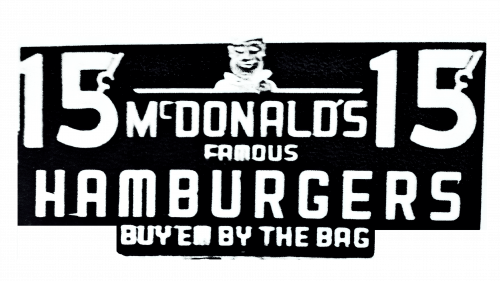
Before the “M” took center stage, McDonald’s relied on a mascot to communicate its value proposition. Created in 1948, the character was known as Speedee. He was a winking, round-faced chef with a hamburger shaped like a head, designed to emphasize the lightning-fast service that distinguished McDonald’s from traditional slow-service drive-ins.
Speedee stood atop the road signs, often holding a placard that read “15¢,” highlighting the incredibly low price of a burger. While Speedee was effective locally, he lacked the grandeur and scalability required for a national franchise. Furthermore, the mascot bore a striking resemblance to the “Speedy” character used by Alka-Seltzer, creating potential trademark conflicts and brand confusion. As the franchise ambitions grew, it became clear that a cartoon mascot was not enough to anchor a global empire. The brand needed something distinct, architectural, and impossible to ignore.
Architecture as Branding: The Birth of the Arches (1952–1960)
The true origin of the Golden Arches is not in graphic design, but in architecture. In 1952, the McDonald brothers were planning a new building design to maximize efficiency and visibility. They interviewed several architects before settling on Stanley Clark Meston. Richard McDonald had a sketch of two half-circle arches that he believed would look striking. Meston, with his draftsman Charles Fish, transformed this rough concept into a structural reality.
The result was a futuristic building design featuring two 25-foot yellow sheet-metal parabolic arches that trimmed the sides of the structure. These arches were illuminated by neon, making the restaurant visible from a distance at night. This was a stroke of genius in the context of 1950s car culture; the building itself became the billboard. When viewed from a specific angle, the two separate arches visually overlapped to form a letter “M,” though this was not yet the official logo. This architectural decision laid the physical foundation for the McDonald’s Logo History: How the Golden Arches Became Global.
The Ray Kroc Era and the “V” Logo (1961–1968)
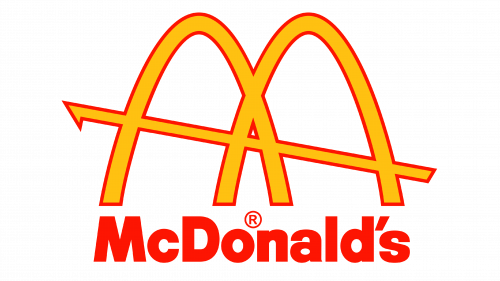
In 1961, Ray Kroc, the franchising agent who eventually bought out the McDonald brothers, was finalizing the acquisition of the company. Kroc recognized the visual power of the building’s arches. He understood that the distinctive roofline was the brand’s most valuable asset. As the company moved away from the specific architectural design of the early restaurants, Kroc wanted to ensure the arches survived as a graphic element.
He hired Jim Schindler, the head of engineering and design at McDonald’s, to translate the building into a logo. Schindler’s design featured a double-arch “M” with a slanted line cutting through it. This line was not arbitrary; it represented the slanted roof of the actual restaurant building. This logo, often referred to as the “slanty M,” was the first time the arches were formally stylized as a corporate trademark. It marked the transition from physical architecture to iconographic branding, solidifying the connection between the dining experience and the visual symbol.
The Definitive Golden Arches (1968–2003)

The late 1960s brought about the most significant transformation in the brand’s history. As McDonald’s expanded rapidly, the company sought a cleaner, more modern look that could stand alone without the reference to the roofline. In 1968, the company unveiled the logo that would become the definitive version for decades.
This iteration removed the diagonal roof line and connected the two arches in the center, creating a unified, rounded “M.” The legs of the “M” were shortened and the structure was thickened, giving it a sense of stability and friendliness. Crucially, the company name “McDonald’s” was often integrated directly across the lower third of the arches in a bold, black sans-serif typeface.
This era also cemented the brand’s color palette. The arches were rendered in a specific shade of yellow (Pantone 123 C) and placed against a red background. This was not a random choice. The combination of red and yellow became the gold standard for the fast-food industry, a decision rooted deeply in color psychology.
The Psychology of Red and Yellow
Understanding the success of the McDonald’s logo requires analyzing the psychological impact of its colors:
- Red: This color is associated with energy, urgency, and passion. In the context of food, red is believed to stimulate the appetite and increase heart rate. It commands attention and creates a sense of excitement.
- Yellow: Yellow is the most visible color in daylight. It represents happiness, optimism, and sunshine. It is inviting and friendly, signaling an affordable and cheerful experience.
Together, these colors create the “Ketchup and Mustard” effect, triggering hunger and encouraging rapid turnover—perfect for the fast-food business model.
The “I’m Lovin’ It” Campaign and 3D Design (2003–2006)
By the early 2000s, McDonald’s was facing a brand identity crisis. Market saturation and changing health trends required a fresh approach. In 2003, the company launched its most successful global marketing campaign: “I’m Lovin’ It.”
To coincide with this campaign, the logo underwent a subtle but impactful modification. Designed by Heye & Partner, a German agency, the new logo introduced shadows and highlighting to the arches, giving them a three-dimensional, cylindrical appearance. This “puffy” look made the logo feel more tangible and modern, fitting for the digital age and television advertising. The tagline “I’m Lovin’ It” appeared in a casual, lower-case font, signaling a shift from corporate rigidity to a more personal, lifestyle-oriented brand voice.
Modern Minimalism and Debranding (2006–Present)
In recent years, the trend in global design has shifted toward “flat design” and minimalism—a movement often called “debranding.” McDonald’s has been at the forefront of this shift. The current iteration of the logo strips away the heavy shadows, the 3D effects, and increasingly, the brand name itself.
The modern McDonald’s logo is often just the Golden Arches, standing alone. This level of confidence is reserved for only a handful of brands (like Apple or Nike) where the symbol is so ubiquitous that the name is redundant. In this phase of the McDonald’s Logo History: How the Golden Arches Became Global, the “M” serves as a universal signifier of the brand.
Furthermore, in European markets, McDonald’s has experimented with placing the yellow arches against a deep hunter-green background instead of the traditional red. This serves to promote an eco-friendly image, countering criticisms regarding sustainability and health. It demonstrates the flexibility of the logo; the arches remain constant, while the context shifts to meet contemporary consumer values.
Key Takeaways: What We Can Learn from the Golden Arches
- Architecture can inform Graphic Design: The most enduring logos often have roots in the physical reality of the business. The arches started as structural beams before becoming a 2D symbol.
- Simplicity Scales: The transition from the detailed “Speedee” mascot to the simple “M” allowed the brand to scale globally without language barriers.
- Color Psychology is Critical: The specific use of red and yellow was a strategic choice to influence consumer behavior and ensure high visibility.
- Evolution over Revolution: McDonald’s rarely changed its logo drastically. Instead, it refined the existing assets (the arches) to stay modern, preserving brand equity.
- Brand Confidence: The ultimate goal of logo design is to reach a point where the company name is no longer necessary for recognition.
Frequently Asked Questions (FAQ)
Who originally designed the Golden Arches?
The concept of the architectural arches came from Richard McDonald, but the structural design was executed by architect Stanley Clark Meston in 1952. The graphic logo version was later developed by Jim Schindler in 1961.
Why did McDonald’s stop using the Speedee mascot?
McDonald’s retired Speedee primarily because the name and character were too similar to the “Speedy” mascot used by Alka-Seltzer. Additionally, as the brand expanded nationally, they needed a more sophisticated and unique identifier than a generic chef character.
What font is used in the McDonald’s logo?
While the “M” itself is a custom graphic, the word “McDonald’s” (when it appears) typically uses a customized version of Helvetica Black or a proprietary font known as Lovin’ Sans in more recent marketing materials.
Why are the arches yellow?
The arches are yellow (Golden) for two main reasons: visibility and psychology. Yellow is the easiest color to see in daylight, making it perfect for roadside signage. Psychologically, it evokes feelings of warmth, happiness, and optimism.
Is the McDonald’s logo different in different countries?
While the shape of the Golden Arches is consistent worldwide, the background color varies. In many European countries, the background has shifted from red to green to emphasize environmental responsibility. In Sedona, Arizona, the arches are turquoise to comply with local zoning laws regarding scenery.
Conclusion
The McDonald’s Logo History: How the Golden Arches Became Global is a testament to the power of visual consistency. From the neon-lit beams of a roadside stand in San Bernardino to the minimalist icon on a smartphone app, the Golden Arches have remained a steadfast symbol of American culture and globalization. The logo’s success lies in its simplicity; it is an open door, a bridge, and a promise of familiarity.
As the brand continues to navigate the complexities of the 21st century—addressing sustainability, health consciousness, and digital integration—the Golden Arches will undoubtedly adapt. However, the core geometry that defines the brand is unlikely to change. It is more than a letter; it is a landmark in the history of design, proving that a great logo does not just identify a company—it defines an era.