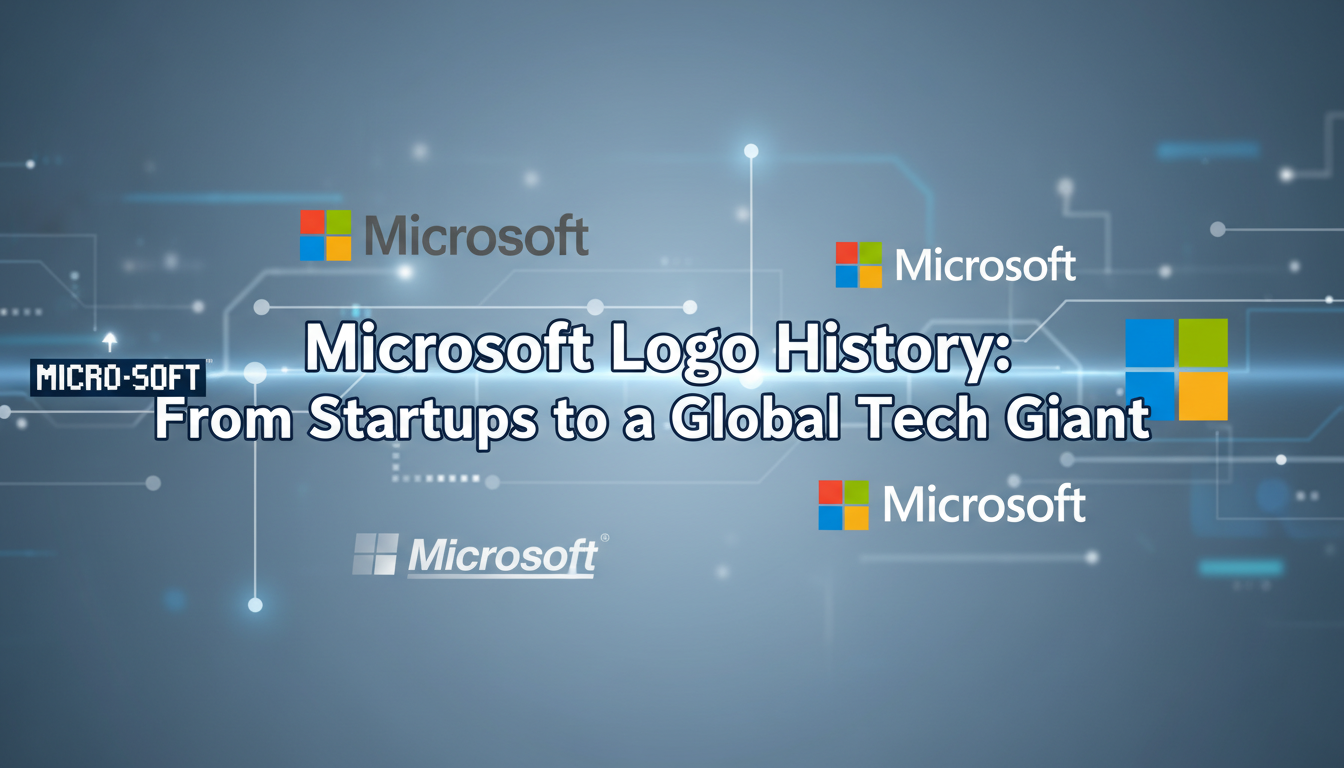
Introduction: The Visual Evolution of a Tech Titan
In the annals of technology history, few companies possess a narrative as compelling or as impactful as Microsoft. From a humble partnership in an Albuquerque garage to a ubiquitous global conglomerate, the company’s journey is mirrored perfectly by its visual identity. The history of the Microsoft logo is not merely a chronicle of changing fonts and colors; it is a masterclass in corporate branding, reflecting the shifting tides of the digital age, the evolution of personal computing, and the maturation of a brand that defines modern productivity.
A logo serves as the silent ambassador of a brand. For Microsoft, its visual identifiers have transitioned from the groovy aesthetics of the 1970s disco era to the jagged edges of the heavy metal 80s, through the corporate dominance of the 90s, and finally settling into the clean, flat design language of the 21st century. Understanding the Microsoft logo history requires a deep dive into the strategic decisions made by Bill Gates, Paul Allen, and subsequent leadership, analyzing how they wished to be perceived by consumers and enterprises alike.
This article provides an authoritative, comprehensive examination of Microsoft’s branding evolution. We will dissect the typography, color psychology, and design principles behind each iteration, offering expert insights into why these changes occurred and what they signified for the tech industry at large.
1975–1980: The “Groovy” Era and the Hyphenated Beginning
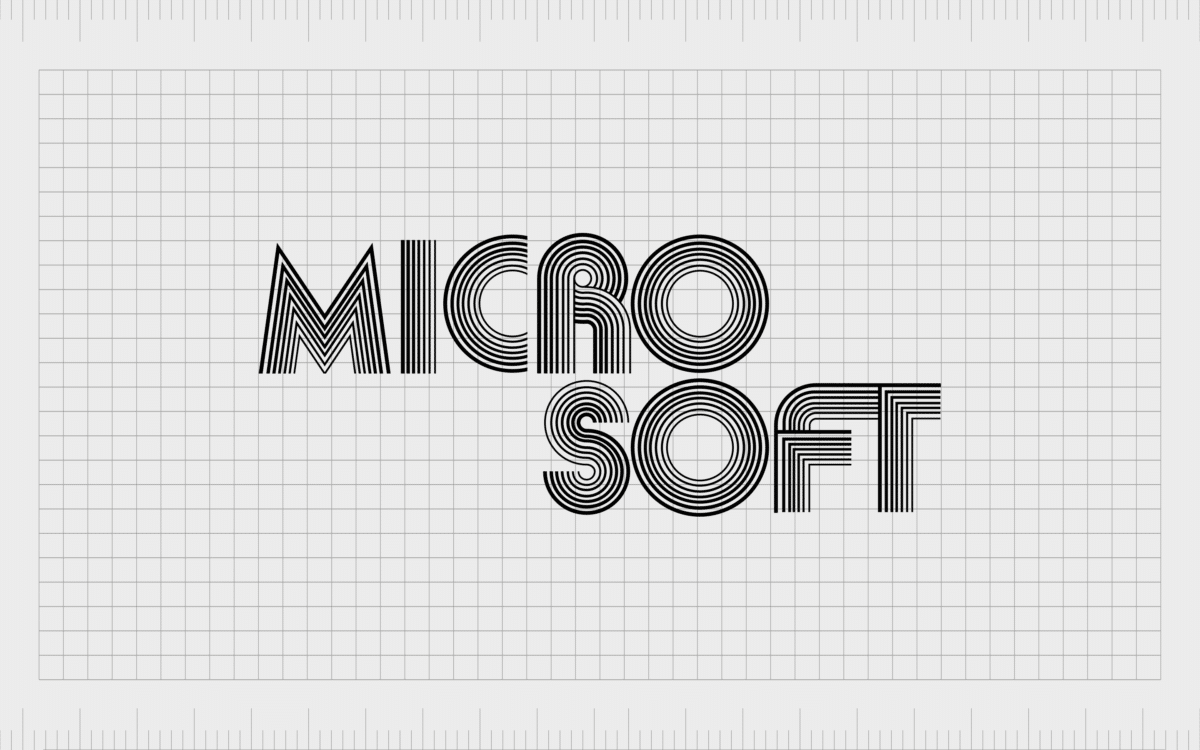
The genesis of Microsoft began in 1975. At this stage, the company was not the monolithic entity we know today; it was a scrappy startup founded by Bill Gates and Paul Allen. The original name of the company was “Micro-Soft,” a portmanteau derived from “microcomputer” and “software.” This linguistic combination was visually represented in their very first logo, often referred to by design historians as the “Groovy Logo.”
Designed by Simon Daniels, a friend of the founders, this logo encapsulates the zeitgeist of the 1970s. It utilized a typeface that heavily resembled the Aki Lines font. The defining characteristic of this design was the use of concentric lines to form the letters, creating a sensation of motion and depth. This was a popular aesthetic in 1970s graphic design, often associated with disco culture and the burgeoning age of electronics.
From a semiotic perspective, the concentric lines represented the multi-layered complexity of coding and the electronic circuits that powered the microcomputers of the era. The typography was wide, bold, and entirely uppercase, asserting a presence that was larger than the company actually was at the time. Crucially, this logo retained the hyphen, separating “Micro” and “Soft.” This distinction was vital in the mid-70s to educate the market on exactly what the company provided: software for microcomputers, a novel concept at the time.
1980–1982: The “Heavy Metal” Logo

As the 1980s dawned, the aesthetics of the previous decade quickly became obsolete. The personal computing revolution was beginning to gain traction, and Microsoft needed a visual identity that felt sharper, more aggressive, and undeniably modern. In 1980, the company underwent its first major rebranding, resulting in a logo that is largely forgotten by the general public but remains a favorite among design enthusiasts: the “Heavy Metal” logo.
This iteration dropped the hyphen, officially solidifying the name as “Microsoft.” The design drew heavy inspiration from the aesthetic of rock bands of the era, utilizing a font known as New Zelek. The typography was characterized by sharp angles, diagonal lines, and exaggerated serifs that extended aggressively. The letters “M,” “R,” and “F” featured long, descending distinct lines that extended beyond the baseline, giving the logo a jagged, edgy appearance.
While this logo only lasted for two years, it served a specific purpose. It positioned Microsoft as a radical, disruptive force in the industry. The design communicated speed and a break from tradition. However, as Microsoft began to secure major contracts—most notably with IBM—the need for a more corporate, reliable, and professional image became apparent. The “Heavy Metal” look, while distinct, lacked the stability required for a company aiming to dominate the enterprise market.
1982–1987: The “Blibbet” and the Rise of Corporate Identity

In 1982, Microsoft introduced one of its most beloved logos, affectionately known internally and by fans as the “Blibbet.” This redesign marked the company’s transition from a disruptive startup to a serious industry player. The design moved away from the aggressive angles of the previous iteration toward a more structured, geometric approach.
The standout feature of this logo was the letter “O.” While the rest of the typography was a relatively standard sans-serif font, the “O” was stylized with horizontal lines, breaking the solid form into a series of discs. This logo design choice was highly symbolic. It visually referenced the CD-ROMs and floppy disks that were becoming the standard medium for software distribution. It also evoked the lines of code on a green monochrome monitor, connecting the brand directly to the user experience of the early 80s.
The “Blibbet” was significant for establishing Microsoft’s brand culture. It was during this era that Microsoft went public (1986), turning its founders into billionaires. The logo became so ingrained in the company culture that when it was eventually replaced in 1987, there was a minor internal revolt. Employees launched a “Save the Blibbet” campaign, underscoring the emotional attachment that can form between a workforce and their corporate identity. Despite the internal affection, the rapid expansion of the company required a logo that was even more robust and timeless.
1987–2012: The “Pac-Man” Logo and Global Dominance

In 1987, Microsoft unveiled the logo that would define its brand for the next 25 years. Designed by Scott Baker, this iteration is widely known as the “Pac-Man” logo due to the distinctive slash in the letter “O,” which made it resemble the famous video game character. This logo accompanied Microsoft through its golden age: the launch of Windows 95, the browser wars, the release of Xbox, and the absolute dominance of Microsoft Office.
Design Analysis of the Baker Logo
Scott Baker’s design utilized Helvetica Black Italic, a typeface synonymous with modernism, clarity, and authority. The use of italics was a deliberate choice to imply forward motion and innovation. However, the genius of the design lay in the kerning (the spacing between characters) and the specific modification of the “O” and the “S.”
The slash in the “O” was not merely aesthetic; it served a functional purpose in the visual rhythm of the wordmark. It created a bridge between the “O” and the “S,” symbolizing the speed of software and the connection between the user and the machine. Baker stated that the slash was intended to emphasize the “soft” part of the name while conveying motion and speed.
This logo stood as a monolith of corporate branding. It was solid, bold, and unyielding. Unlike the previous logos, which were somewhat playful or edgy, the 1987 logo was purely business. It communicated stability and reliability, traits that were essential as Microsoft’s software became the backbone of the global economy. For a quarter of a century, this logo was arguably the most recognizable symbol in the technology sector.
2012–Present: The Metro Era and Unification

By 2012, the technology landscape had shifted dramatically. The era of the desktop PC as the sole computing device was ending, replaced by smartphones, tablets, and cloud computing. Apple and Google had emerged as fierce competitors with clean, minimalist design languages. Microsoft’s “Pac-Man” logo, while iconic, began to feel dated and heavy, representative of a bygone era of boxed software.
On August 23, 2012, Microsoft unveiled its first major logo change in 25 years. This rebranding was driven by the launch of the Surface tablet and Windows 8, which utilized the “Metro” design language (later called Microsoft Design Language). The new logo was a radical departure from the text-only logotypes of the past, introducing a symbol alongside the company name.
The Symbol: The Four Squares
The new logo features a symbol consisting of four colored squares arranged to form a larger square. This was a direct visualization of the Windows interface, but it carried deeper meanings regarding the company’s product ecosystem. The symbol is intended to represent the company’s diverse portfolio of products, unified under one banner.
- Red Square: Represents Microsoft Office (PowerPoint, Word, Excel). It signifies productivity and the active creation of content.
- Blue Square: Represents the Windows operating system. Blue has traditionally been the primary color of Windows and conveys stability and trust.
- Green Square: Represents the Xbox and gaming division. It signifies fun, energy, and the consumer side of the brand.
- Yellow Square: Represents Bing and Outlook. It signifies optimism, search, and information.
The Typography: Segoe UI
The logotype accompanying the symbol is set in Segoe, a font family owned by Microsoft and used across all their software interfaces and marketing materials. Segoe is a humanist sans-serif typeface, meaning it retains some influence of traditional handwriting (unlike the cold, mechanical Helvetica). This choice was strategic: it made the brand feel more approachable, human, and accessible.
The color of the text changed to a softer grey (#737373) rather than the stark black of the previous era. This reduction in contrast further emphasized the shift from an aggressive corporate giant to a user-centric service provider. The alignment is perfectly straight, abandoning the italics of the Baker era, suggesting that Microsoft no longer needs to rush; it has arrived and is the foundation upon which others build.
Expert Insights: The Psychology Behind the Changes
Analyzing the Microsoft logo history reveals a trajectory that mirrors the maturation of the tech industry. In the 1970s and early 80s, tech logos were often complex or aggressive, reflecting a niche hobbyist culture. As technology became a business necessity, logos like the 1987 “Pac-Man” design emphasized strength and dominance. Today, as technology becomes an intimate part of daily life, branding has shifted toward simplicity, approachability, and integration.
Brand Unification Strategy: The 2012 redesign was not just about aesthetics; it was a business strategy known as “Brand Architecture.” Prior to 2012, Microsoft’s products often had disparate logos. The 2012 redesign brought everything under a cohesive visual umbrella. The square motif of the logo is repeated in the logos for Windows, Office, and Azure, creating a subconscious link between all services. This is crucial for a company that relies on ecosystem lock-in—where a user of Windows is encouraged to use Office, OneDrive, and Teams.
Flat Design Revolution: Microsoft was actually a pioneer in the “Flat Design” trend that took over the internet in the 2010s. While Apple was still using skeuomorphism (making digital objects look like real-world materials like leather or glass), Microsoft’s Metro design and the 2012 logo embraced 2D minimalism. This approach prioritizes clarity and usability on digital screens, proving that the logo was designed with a “digital-first” mindset.
Frequently Asked Questions (FAQ)
What font is used in the current Microsoft logo?
The current Microsoft logo uses the Segoe font family. Specifically, it utilizes a variation of Segoe UI Semibold. This is a proprietary font developed by Microsoft and is used extensively throughout their operating systems and marketing materials to ensure brand consistency.
Why is there a slash in the 1987 Microsoft logo?
The slash in the “O” of the 1987 “Pac-Man” logo was designed by Scott Baker to emphasize the “Soft” part of the name and to convey motion and speed. It served as a bridge between the “O” and the “S,” creating a visual rhythm that suggested forward momentum.
What do the four colors in the Microsoft logo represent?
The four colors in the window pane symbol represent the company’s major product pillars: Red stands for Microsoft Office, Blue stands for Windows, Green stands for Xbox and gaming, and Yellow represents Bing and internet services. Collectively, they symbolize the diversity of Microsoft’s portfolio.
Who designed the original Microsoft logo?
The original “Groovy” logo from 1975 was designed by Simon Daniels, a co-founder of the design firm that worked with Bill Gates and Paul Allen during the company’s infancy in Albuquerque.
Why did Microsoft change their logo in 2012?
Microsoft changed their logo in 2012 to align with the launch of Windows 8 and the new “Metro” design language. The company wanted to signal a shift from a classic software company to a devices-and-services company, unifying their brand across PCs, tablets, and phones with a cleaner, more modern look.
Conclusion
The history of the Microsoft logo is a fascinating reflection of the company’s evolution from a two-man operation to a global superpower. Each iteration of the logo served a distinct purpose for its time: the 1975 logo spoke to the hobbyist, the 1980 logo to the disruptor, the 1982 logo to the rising professional, the 1987 logo to the corporate dominator, and the 2012 logo to the unified ecosystem provider.
For designers and business leaders, the takeaway from Microsoft’s visual journey is clear: a logo must evolve with the business. Holding onto a visual identity that no longer represents the company’s mission can be detrimental. Microsoft’s willingness to abandon the iconic “Pac-Man” logo after 25 years demonstrates the courage required to stay relevant in the fast-paced technology sector. Today, the four colored squares are as recognizable as the Golden Arches or the Apple silhouette, proving that Microsoft has successfully navigated the transition into the modern digital era.