
The Enduring Symbol of the Gridiron: An Introduction
In the pantheon of American sports branding, few images command as much immediate recognition and authority as the National Football League (NFL) shield. It is more than just a corporate mark; it is a cultural icon that signifies Sunday rituals, intense rivalries, and the pinnacle of athletic competition. When exploring the NFL Logo History: Evolution of America’s Football Identity, we uncover a narrative that mirrors the growth of the sport itself—from a disorganized collection of regional teams to a multi-billion-dollar global entertainment powerhouse.
For graphic designers and branding enthusiasts, the evolution of the NFL logo offers a masterclass in maintaining heritage while adapting to modern technological needs. Unlike many brands that undergo radical rebrands to stay fresh, the NFL has taken a conservative, iterative approach. The league understands that its visual identity is steeped in tradition. Therefore, the changes made over the last century have been subtle, calculated, and deeply meaningful. This article delves into the specific design choices, the historical context, and the visual psychology behind the shield that rules the American sporting landscape.
The Pre-Shield Era: Chaos and the Canton Bulldogs (1920s-1930s)
The Pre-Shield Era: Chaos and the Canton Bulldogs (1920s-1930s)
To understand the gravity of the current brand, one must look back to the humble and somewhat chaotic beginnings of professional football. When the league was founded in 1920 in Canton, Ohio, it was known as the American Professional Football Association (APFA). At this stage, branding was an afterthought. The primary concern was the survival of the franchises and the standardization of rules.
During the 1920s and 1930s, there was no singular, unifying “NFL Logo” in the modern sense. The league relied heavily on typography and the individual branding of its member clubs, such as the Canton Bulldogs or the Decatur Staleys (who would become the Chicago Bears). When the league officially adopted the name “National Football League” in 1922, the visual identity was largely restricted to letterheads and press materials featuring generic serif typography common to the era.
This period represents the “Wild West” of sports identity. Without a centralized logo, the “brand” of the NFL was defined by the grit of the game itself rather than a graphic symbol. However, as the league stabilized and began to gain ground on college football in terms of popularity, the need for a cohesive visual symbol became apparent. The league needed a badge of authority—something that looked official, patriotic, and permanent.
The Arrival of the Shield: 1940 to 1960
The 1940s marked a turning point in NFL Logo History: Evolution of America’s Football Identity. It was during this era that the familiar “shield” crest shape was first introduced. This choice of shape was not arbitrary; in heraldry and Western iconography, a shield represents protection, strength, and defense. For a sport defined by physical collision and territorial defense, the shield was the perfect vessel for the brand.
The original shield design established the core elements that remain today:
- The Color Palette: Red, white, and blue were chosen to firmly establish the league as an All-American institution. At the time, baseball was the undisputed “national pastime,” and the NFL used these patriotic colors to assert its own claim to American identity.
- The Stars: The upper quadrant of the shield featured a field of blue with scattered white stars. Interestingly, the number of stars in early iterations was not fixed to a specific meaning. It was an aesthetic choice intended to evoke the American flag.
- The Stripes: Behind the “NFL” lettering, red pinstripes ran vertically, mimicking the stripes of the flag.
- The Football: A football was placed prominently in the upper field, signifying the sport clearly.
The typography in this era was often a script font, notably different from the block letters we see today. The script “NFL” sat overlaid on the red stripes. This design felt classic and collegiate, bridging the gap between the professional game and its deeply rooted collegiate predecessor. However, from a modern design perspective, the logo was cluttered. The pinstripes created visual noise, and the script text was difficult to read from a distance—a problem that would eventually necessitate a redesign.
The Classic Era: The Iconic Shield (1960s-2007)
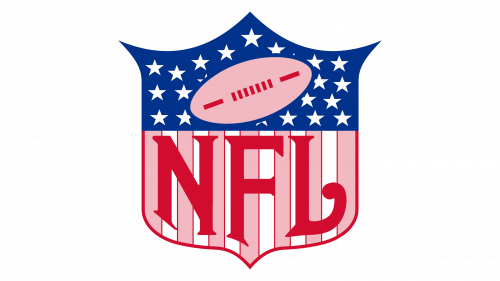
The 1960s were a transformative decade for professional football. The rise of television, the merger with the rival American Football League (AFL), and the birth of the Super Bowl required a logo that was bolder and more telegenic. The version of the shield adopted during this period is the one most Gen X and Baby Boomer fans associate with the golden age of the sport.
Refining the Elements
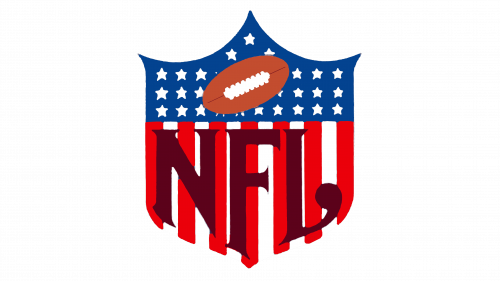
The pinstripes were removed, leaving a clean white background for the “NFL” letters. This improved contrast significantly, making the acronym legible on grainy black-and-white television sets. The font shifted to a custom, serifed block typeface that exuded stability and tradition. This typography became synonymous with the league.
The Mystery of the 25 Stars
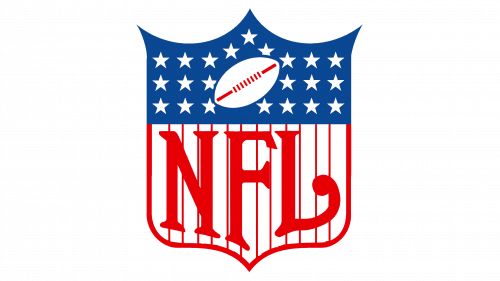
In this iteration, the blue field at the top of the shield contained exactly 25 white stars. For decades, fans and historians puzzled over the significance of the number 25. Did it represent the number of teams? No, as the number of franchises fluctuated frequently during expansion eras. The NFL has eventually clarified that the 25 stars had no specific numerical significance regarding teams or divisions; they were simply a design choice to create a balanced, “star-spangled” texture. This version of the logo reigned supreme for over four decades, adorning everything from merchandise to the 50-yard line of the Super Bowl.
The 2008 Redesign: Streamlining for the Digital Age
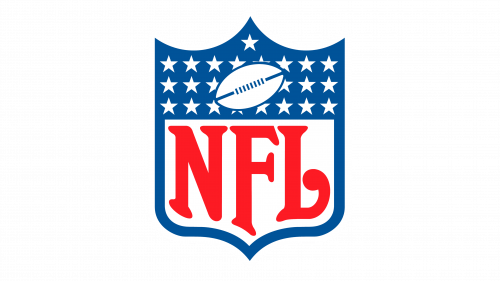
In 2008, the league unveiled the most significant update in the NFL Logo History: Evolution of America’s Football Identity. While the changes might appear subtle to the casual observer, they were drastic from a graphic design perspective. The redesign was driven by the necessity of the digital age. The previous logo, with its 25 small stars and complex “hamburger” shaped football, suffered from legibility issues when scaled down for mobile screens, website favicons, and broadcast overlays.
From 25 Stars to 8
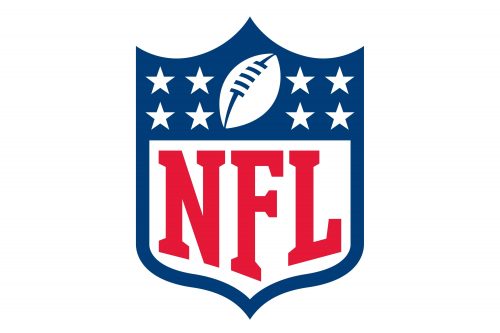
The most notable change was the reduction of stars. The 25 scattered stars were replaced by eight larger, clearly defined stars. This was not just an aesthetic cleanup; it introduced specific meaning. The eight stars represent the eight divisions of the NFL (four in the AFC and four in the NFC). This change imbued the logo with structural relevance, symbolizing the organization of the league itself.
The “Lacey” Football
The representation of the football at the top of the shield was modernized. The old version resembled a hamburger due to its flattened shape and vague detailing. The 2008 update introduced a football with a sharper angle, mimicking the look of the Vince Lombardi Trophy. The laces were simplified and cleaned up, creating a more vector-friendly graphic that looked crisp in High Definition.
Color and Typography Shifts
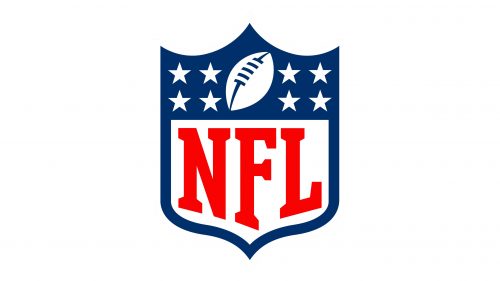
The colors were darkened. The bright royal blue was replaced with a deeper, commanding navy blue. This shift followed a broader trend in sports branding towards darker, more aggressive color palettes. The typography was also tweaked; the serif on the “L” was curved to match the bottom of the shield, and the font weight was increased to improve readability.
Team Logo Evolution: Parallel Histories
The evolution of the NFL shield did not happen in a vacuum; it ran parallel to the evolution of team branding. Understanding the league’s identity requires looking at how individual franchises evolved from illustrative mascots to sleek icons.
The Shift from Illustration to Iconography
In the mid-20th century, team logos were often detailed illustrations. The New England Patriots used “Pat Patriot,” a detailed drawing of a minuteman snapping a football. The Tampa Bay Buccaneers featured “Bucco Bruce,” a dashing pirate with a knife in his teeth. While beloved, these logos were difficult to reproduce on apparel and digital media.
Just as the NFL shield was streamlined in 2008, teams began modernizing their marks in the 1990s and 2000s. The Patriots switched to the “Flying Elvis,” a streamlined profile of a face. The Buccaneers adopted a ragged, intimidating red flag with a skull and crossed swords. This trend reinforces the broader theme of the NFL Logo History: Evolution of America’s Football Identity: a movement away from cartoonish charm toward corporate, aggressive, and scalable professionalism.
The Psychology of the Design
Why does the NFL logo work so well? It leverages several psychological design principles that establish authority.
- The Shield Shape: As mentioned, the shield implies defense. In the context of a contact sport, it suggests that the league is the guardian of the game’s integrity. It is a badge of honor, similar to law enforcement or military insignia.
- Patriotic Color Theory: By strictly adhering to red, white, and blue, the NFL positions itself as a fundamental component of American culture. It aligns the brand with the values of the nation, making football feel like a patriotic duty.
- Verticality: The 2008 redesign made the shield slightly taller and leaner. Vertical lines in design often suggest growth, ambition, and dominance.
Impact on Pop Culture and Merchandising
The NFL shield has transcended sports to become a fashion statement and a pop culture symbol. The consistency of the logo allows it to serve as a seal of quality. Whether it appears on a video game cover (Madden NFL), a jersey, or a cap, the shield validates the product.
In the world of streetwear and global fashion, the NFL logo carries weight even in countries where American football is not the primary sport. The aesthetic of the logo—bold, American, and classic—appeals to international markets that view the NFL as a symbol of American entertainment spectacle. The 2008 redesign was crucial for this global expansion, ensuring the logo was distinct and recognizable on merchandise ranging from high-end fashion collaborations to mass-market apparel.
Key Takeaways
- Function Over Form: The evolution of the NFL logo has largely been driven by the need for better functionality across different media (TV, print, digital).
- Meaningful Redesign: The shift from 25 stars to 8 stars in 2008 transformed the stars from mere decoration to a representation of the league’s divisional structure.
- Patriotic Roots: The consistent use of red, white, and blue has cemented the NFL as a symbol of American identity.
- Simplicity is Key: The removal of pinstripes and the simplification of the football graphic demonstrate the importance of clean lines in modern logo design.
- Brand Consistency: Unlike other brands that drastically change their look, the NFL has maintained the “shield” concept for over 80 years, building immense brand equity.
Frequently Asked Questions (FAQ)
Why did the NFL logo change in 2008?
The 2008 redesign was primarily motivated by the digital age. The league needed a logo that was cleaner and more scalable for HD television, mobile devices, and apparel. The previous logo’s 25 stars and thin lines caused “visual vibration” on screens and were difficult to embroider clearly.
What do the 8 stars on the NFL shield represent?
The 8 stars represent the eight divisions that make up the NFL: the NFC North, South, East, and West, and the AFC North, South, East, and West. This replaced the previous 25 stars, which had no specific meaning.
Has the NFL logo always been a shield?
While the league existed without a shield in the 1920s and 1930s, the shield shape has been the consistent identifier since the 1940s. It has undergone refinements, but the core silhouette has remained for over 80 years.
Why are the colors Red, White, and Blue?
The colors were chosen to evoke patriotism and align the league with American national identity. At the time of the logo’s inception, the NFL aimed to compete with baseball as the national pastime, and adopting the national colors was a strategic branding move.
What font is used in the NFL logo?
The current NFL logo uses a custom-designed typeface created specifically for the league during the 2008 rebrand. It is a “slab serif” style meant to convey strength and tradition, replacing the “University” style font used in the previous iteration.
Conclusion
The NFL Logo History: Evolution of America’s Football Identity is a testament to the power of consistent, thoughtful branding. From the chaotic days of the Canton Bulldogs to the high-definition spectacle of the modern Super Bowl, the NFL shield has stood as a constant. It has evolved from a cluttered, pinstriped badge into a sleek, meaningful icon that represents the structure of the league and the passion of its fans.
For designers, the NFL shield serves as a reminder that the best logos are those that can adapt to the times without losing their soul. By cleaning up lines, assigning meaning to abstract elements, and embracing digital necessities, the NFL has ensured that its shield will remain the gold standard of sports branding for generations to come. It is not just a logo; it is the visual heartbeat of American sports.