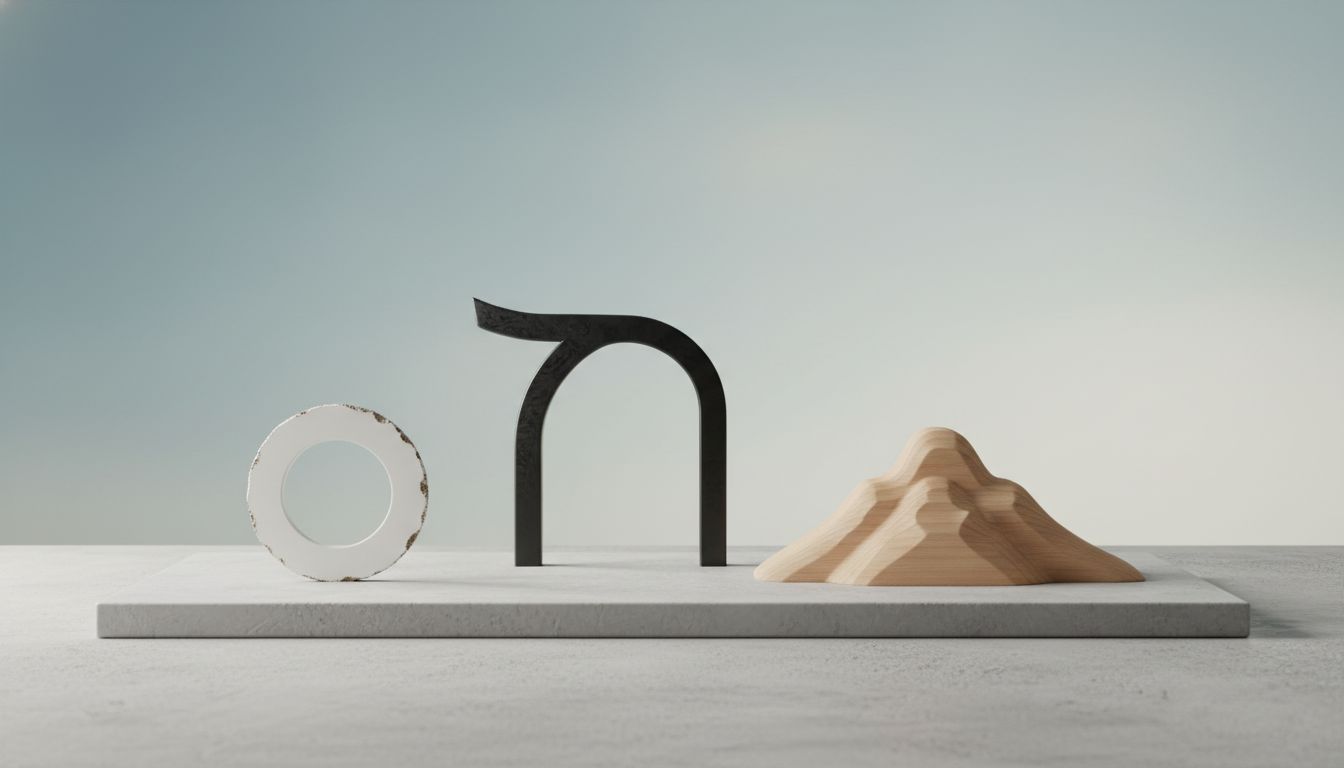
Introduction
In an increasingly cluttered digital landscape, consumers are bombarded with thousands of marketing messages and visual stimuli every single day. To cut through this overwhelming noise, forward-thinking brands are retreating from complex, over-designed visual identities and embracing a more profound, enduring aesthetic. This shift brings us to a fascinating intersection of culture and commercial art: The Art Of Simplicity: Inspiring Minimalist Japanese Logo Designs. Rooted in centuries of Zen philosophy and traditional aesthetics, Japanese minimalism is not merely a design trend; it is a fundamental approach to visual communication that prioritizes clarity, purpose, and emotional resonance.
At its core, Japanese minimalist design is about achieving maximum impact through minimal means. It is the practice of stripping away the non-essential until only the absolute truth of a brand remains. This methodology challenges designers to communicate complex corporate narratives using only a few meticulously chosen lines, shapes, and colors. As global markets become more interconnected, the principles underlying Japanese logo design have become a gold standard for international brands seeking timelessness and versatility.
This comprehensive guide delves deep into the philosophies, psychological impacts, and practical applications of Japanese minimalist logo design. Whether you are a startup founder looking to establish a strong visual identity, a seasoned marketer planning a corporate rebrand, or a design enthusiast eager to understand the mechanics of visual restraint, this exploration will provide actionable insights into how less truly becomes more. By mastering these principles, businesses can forge deeper connections with their audiences, projecting confidence, sophistication, and unshakeable authority.
The Philosophical Foundations of Japanese Minimalist Design
To truly understand The Art Of Simplicity: Inspiring Minimalist Japanese Logo Designs, one must first explore the cultural and philosophical bedrock upon which these designs are built. Japanese minimalism is deeply intertwined with Zen Buddhism and traditional concepts of beauty, which view space, asymmetry, and simplicity as pathways to enlightenment and clarity.
Ma (The Power of Negative Space)
In Western design, empty space is often viewed as a void waiting to be filled. In Japanese aesthetics, this space is known as Ma (間), and it is considered just as important—if not more so—than the objects that inhabit it. Ma translates to “gap,” “space,” or “pause.” In logo design, Ma is the deliberate use of negative space to give the primary subject room to breathe. It provides the viewer’s eye with a place to rest, reducing cognitive load and allowing the core message of the logo to resonate deeply. By mastering Ma, designers create logos that feel balanced, serene, and infinitely scalable.
Kanso (Simplicity and Elimination of Clutter)
Kanso (簡素) is the principle of simplicity or elimination of clutter. It dictates that beauty and utility are found in the most straightforward expression of a concept. In the context of branding, a Kanso-driven logo avoids unnecessary gradients, drop shadows, intricate illustrations, and excessive typography. Instead, it relies on fundamental geometric forms and clean typography. This principle ensures that the logo functions purely as an identifier, free from decorative elements that might distract from the brand’s core identity.
Shibui (Subtle Beauty and Understatement)
Shibui (渋味) refers to a particular aesthetic of simple, subtle, and unobtrusive beauty. A logo that embodies Shibui may appear plain at first glance, but it reveals profound depth, balance, and craftsmanship upon closer inspection. It is the opposite of flashy or ostentatious. Brands that utilize Shibui in their visual identity project quiet confidence. They do not need to shout to be heard; their authority is self-evident in the flawless execution of their minimalist design.
Seijaku (Tranquility and Energized Calm)
Seijaku (静寂) translates to tranquility or an energized calm. In visual design, this translates to harmony and balance that evokes a sense of peace. A logo designed with Seijaku in mind avoids chaotic, clashing colors or aggressive, jagged lines unless strictly necessary for the brand narrative. Instead, it uses smooth curves, balanced proportions, and grounded typography to create a sense of reliability and trust—essential traits for any business looking to establish long-term customer loyalty.
Why “The Art Of Simplicity: Inspiring Minimalist Japanese Logo Designs” Matters Today
The principles of Japanese minimalism are incredibly relevant in today’s hyper-digital, mobile-first world. The transition from complex emblems to minimalist icons is not merely an aesthetic preference; it is a strategic business necessity driven by technological advancements and shifting consumer psychology.
Timelessness Over Fleeting Trends
Design trends—such as 3D skeuomorphism, complex gradients, or overly detailed crests—come and go with the seasons. A logo tied too closely to a specific decade’s trend will inevitably look dated, necessitating costly and risky rebrands. Japanese minimalism, however, is inherently timeless. By relying on fundamental geometric truths and stark typography, these logos transcend eras. A circle, a perfectly proportioned square, or a clean sans-serif font does not age. This timelessness provides businesses with invaluable brand equity that compounds over decades.
Versatility Across Digital and Physical Platforms
Modern logos must perform flawlessly across an unprecedented array of mediums. A logo must be legible when scaled down to a 16×16 pixel favicon on a web browser, and it must retain its impact when blown up on a massive highway billboard. It must look crisp on a high-definition retina display and remain identifiable when embroidered onto a uniform or stamped into metal. Minimalist Japanese designs, with their lack of intricate details and reliance on bold, solid forms, are the ultimate scalable vector graphics. They guarantee brand consistency across every touchpoint.
Psychological Impact and Cognitive Ease
Human brains are hardwired to process simple shapes faster than complex imagery. In marketing, this is known as cognitive fluency—the ease with which information is processed. High cognitive fluency leads to a positive psychological response; we naturally prefer things that are easy to understand. By embracing The Art Of Simplicity: Inspiring Minimalist Japanese Logo Designs, brands reduce the cognitive friction required to process their identity. This immediate recognition fosters trust, memorability, and a stronger emotional connection with the consumer.
Core Characteristics of Minimalist Japanese Logos
While the philosophy behind the design is abstract, the execution relies on highly specific, tangible characteristics. Analyzing these elements provides a blueprint for creating an impactful minimalist logo.
Geometric Precision and Organic Forms
Japanese minimal logos frequently utilize primal geometric shapes—circles (often representing the Enso, or the sun, as seen in the Japanese flag), squares, and triangles. These shapes are mathematically precise, utilizing strict grid systems to ensure perfect symmetry and proportion. However, this mathematical rigidity is often balanced with organic, flowing lines inspired by traditional Japanese calligraphy (Shodo). This juxtaposition of rigid geometry and human fluidity creates logos that feel both highly professional and deeply human.
Monochromatic and Restrained Color Palettes
Color in Japanese minimalism is used with extreme intentionality. It is rare to see more than two colors in a minimalist Japanese logo. Black and white are the foundational pillars, offering the highest possible contrast and ensuring the logo works entirely on its form rather than relying on color to convey its message. When color is introduced, it is usually a single, bold hue—most commonly a stark, vibrant red (representing passion, energy, and the sun) or a deep, indigo blue (Aizome, representing stability, tradition, and trust).
Typography as a Primary Visual Element
In many Japanese logo designs, the typography itself is the logo. Rather than pairing an icon with text, the designer will manipulate the letterforms (whether Latin characters or Kanji) to create a unique, recognizable mark. This requires a masterful understanding of kerning, tracking, and font weight. Every curve of a letter, every ascender, and every descender is scrutinized. The typography is stripped of unnecessary serifs and flourishes, resulting in a bespoke wordmark that serves as a self-contained visual identity.
Case Studies: Iconic Japanese Minimalist Logos
To fully grasp the impact of these design principles, we must examine how they have been successfully implemented by some of Japan’s most globally recognized brands.
Muji: The Epitome of “No Brand” Branding
Muji, short for Mujirushi Ryohin (which literally translates to “No-Brand Quality Goods”), is perhaps the ultimate manifestation of Japanese minimalism in the corporate world. Their logo is nothing more than four bold, sans-serif Latin letters, typically presented in a deep, earthy red, often accompanied by the corresponding Kanji. There is no icon, no mascot, and no tagline incorporated into the mark. The logo’s power lies in its absolute refusal to be anything other than what it is. It reflects the company’s commitment to unbranded, highly functional, and sustainable products. The simplicity of the logo acts as a blank canvas, allowing the quality of the products to speak for themselves.
Uniqlo: Bold, Boxy, and Unforgettable
The Uniqlo logo, redesigned by legendary Japanese art director Kashiwa Sato in 2006, is a masterclass in modern Japanese minimalism. It consists of two squares—one featuring Latin characters and the other featuring Katakana characters. The striking juxtaposition of stark white typography against a vibrant, energetic red background is impossible to ignore. The logo draws heavy inspiration from traditional Japanese personal seals (Hanko), connecting the modern fast-fashion retailer to centuries of Japanese heritage. Its grid-like, modular nature makes it incredibly versatile for global storefronts and digital advertising.
Toyota: Overlapping Ellipses of Trust
While slightly more complex than Muji or Uniqlo, the Toyota logo remains a brilliant example of minimalist symbolism. Introduced in 1989, the logo features three overlapping ellipses. The two inner ovals represent the heart of the customer and the heart of the company, overlapping to represent a mutually beneficial relationship and trust. The outer oval symbolizes the world embracing Toyota. Furthermore, the overlapping shapes subtly spell out the letter “T”. It is a logo devoid of text or excessive color, relying entirely on the elegant geometry of intersecting curves to tell a profound corporate story.
How to Apply Japanese Minimalism to Your Brand Identity
Transitioning to a minimalist visual identity requires courage. It is often terrifying for business owners to strip away elements they feel tell their story. However, by adhering to a strategic process, brands can achieve a higher level of sophistication.
Start with the Core Message
Before any sketching begins, you must distill your brand’s essence into a single, unifying concept. What is the one thing your company stands for? If you are a logistics company, it might be “speed.” If you are a healthcare provider, it might be “care.” Once this single concept is identified, every design decision must serve to amplify that concept. Anything that does not directly communicate that core message must be discarded.
Embrace the Power of the Eraser
Minimalist design is often an exercise in reduction. Create a complex version of your logo, and then begin systematically removing elements. Remove the drop shadow. Does it still work? Yes. Remove the secondary color. Does it still work? Yes. Remove the outline. Does it still work? Yes. Keep erasing until removing one more element would destroy the recognizability of the mark. What you are left with is the purest form of your visual identity.
Partnering with the Right Agency
Achieving true simplicity is paradoxically the most difficult task in graphic design. It requires a seasoned eye, an understanding of spatial relationships, and a deep knowledge of brand strategy. Attempting to create a minimalist logo without professional guidance often results in a design that looks unfinished or amateurish, rather than intentionally simple. For businesses aiming to capture this level of refined aesthetic, collaborating with experts is vital. For example, engaging with a specialized agency like London Logo Designs ensures that your brand benefits from top-tier strategic thinking, resulting in a minimalist logo that is both culturally resonant and perfectly tailored to your target market.
Key Takeaways
- Less is More: Japanese minimalist logo design focuses on stripping away non-essential elements to reveal the brand’s core truth.
- Embrace Negative Space (Ma): The empty space around and within your logo is just as important as the drawn elements. It provides balance and cognitive ease.
- Timelessness over Trends: By relying on basic geometric shapes and clean typography, minimalist logos avoid looking dated and provide long-lasting brand equity.
- High Versatility: Simple, bold designs scale perfectly across all mediums, from tiny digital screens to massive physical billboards.
- Color Restraint: Utilize monochromatic palettes or a single, highly intentional pop of color to ensure the logo relies on its form rather than its hue.
- Professional Execution: Achieving elegant simplicity requires expert precision; partnering with experienced designers is crucial for a successful minimalist rebrand.
Frequently Asked Questions
What defines a Japanese minimalist logo?
A Japanese minimalist logo is defined by its adherence to principles like Kanso (simplicity) and Ma (negative space). It typically features clean lines, basic geometric shapes, restrained color palettes (often black, white, and one accent color like red), and a deliberate lack of decorative elements like gradients or complex illustrations.
How does ‘Ma’ (negative space) improve logo design?
Ma improves logo design by preventing visual clutter. By strategically using empty space, designers guide the viewer’s eye exactly where it needs to go. This reduction in visual noise makes the logo easier to process, faster to recognize, and more memorable, ultimately creating a more impactful brand identity.
Are minimalist logos suitable for all industries?
Yes, minimalist logos are highly adaptable and suitable for virtually any industry. While tech companies and fashion brands famously utilize minimalism, traditional industries like finance, healthcare, and logistics benefit immensely from the trust, clarity, and professionalism that a clean, minimalist visual identity projects.
How do I transition my current complex logo to a minimalist design?
The transition involves a process of strategic reduction. Start by identifying the most recognizable element of your current logo—be it a specific shape, a letter, or a color. Isolate that element and refine it using basic geometry. Remove secondary text, 3D effects, and multiple colors until only the strongest, most essential identifier remains.
Why are black and white logos so common in Japanese design?
Black and white represent the ultimate contrast and the purest form of visual communication. In Japanese aesthetics, stemming from traditional ink wash painting (Sumi-e) and calligraphy, black ink on white paper is viewed as the most direct way to capture the essence of a subject. A logo that works perfectly in black and white proves that its core design is structurally sound.
Conclusion
In a world defined by visual excess, choosing restraint is a powerful statement. The Art Of Simplicity: Inspiring Minimalist Japanese Logo Designs offers far more than just an aesthetic choice; it provides a comprehensive philosophy for effective, enduring brand communication. By embracing concepts like Ma, Kanso, and Shibui, businesses can create visual identities that cut through the noise, project unwavering confidence, and forge immediate, lasting connections with their audiences.
A minimalist logo is a declaration that your brand’s value is clear, your purpose is defined, and your confidence is absolute. It is the ultimate distillation of your corporate narrative into a single, unforgettable mark. As you look to the future of your brand, remember that you do not need to shout to be heard. Often, the most profound statements are made with the fewest words, and the most iconic brands are built on the simplest designs. By investing in the art of simplicity, you are investing in a legacy of timeless recognition and enduring success.