Introduction
A strong brand is built through more than a memorable logo or an attractive website. Every interaction a customer has with a business contributes to how they perceive it, from reading a business card and receiving a proposal to browsing a website or opening a company brochure. When these materials share a consistent visual identity, message, and tone, they create a recognizable experience that helps customers understand what the business represents. This is the foundation of unified brand materials.
Unified brand materials refer to the collection of visual and written resources that communicate a company’s identity across different platforms. These resources can include letterheads, business cards, brochures, presentation templates, packaging, email signatures, social media graphics, marketing documents, and digital advertisements. Each item serves a specific purpose, but together, they should communicate the same brand personality and professional standards.
For modern companies, maintaining consistency across these materials is essential. Customers often encounter a brand through several channels before making a purchasing decision. If the business looks different across its website, printed documents, and social media profiles, the experience can feel disconnected. Unified materials create a more organized and familiar impression, helping businesses build trust, improve recognition, and communicate their value more effectively.
Understanding the benefits of unified brand materials can help businesses develop a stronger identity, improve their marketing efforts, and create a more professional experience for customers and employees alike.
What Are Unified Brand Materials?
Unified brand materials are the physical and digital resources designed according to a shared set of brand guidelines. These guidelines usually define the company’s logo usage, color palette, typography, imagery, writing style, and overall visual direction. By following the same principles across different materials, businesses can maintain a consistent identity regardless of where their audience encounters them.
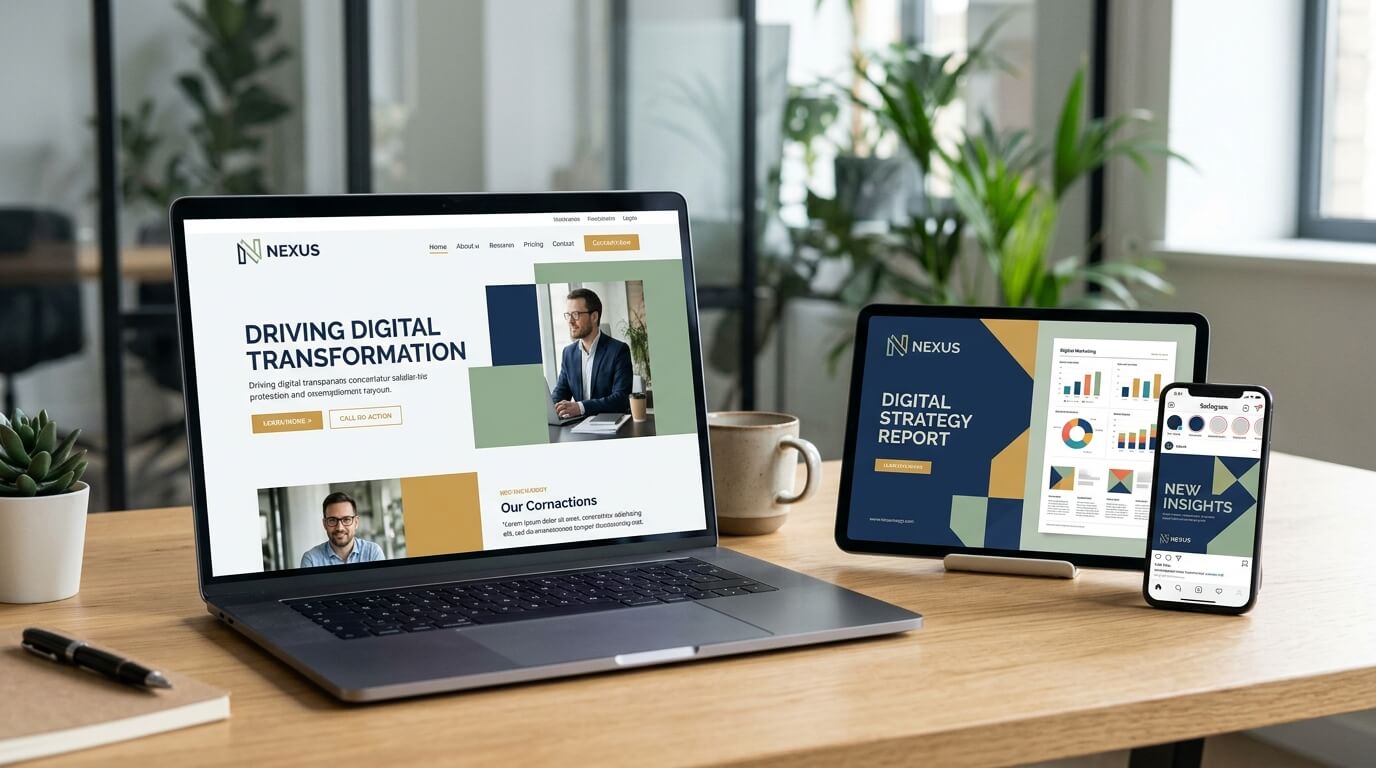
For example, a company might use navy blue, white, and a particular sans-serif font across its website, letterheads, business cards, social media posts, and sales presentations. Its logo would appear in approved variations, while its messaging would reflect the same values and tone. Although each material would have a different layout, the shared design elements would make them recognizable as part of the same brand.
Common Examples of Unified Brand Materials
Printed materials often include letterheads, envelopes, business cards, brochures, catalogs, folders, and promotional stationery. These resources are especially important for businesses that communicate with clients through formal documents, attend industry events, or distribute printed marketing materials.
Digital materials include email signatures, website graphics, presentation slides, downloadable brochures, social media templates, and digital advertisements. These assets help maintain a consistent identity across online communication channels.
Internal resources also contribute to brand consistency. Employee handbooks, proposal templates, reports, onboarding documents, and company presentations can follow the same visual standards. This creates a more organized working environment and ensures that employees represent the business consistently when communicating with customers, partners, and colleagues.
1. Builds Stronger Brand Recognition
One of the most important benefits of unified brand materials is improved brand recognition. Customers are more likely to remember a business when they repeatedly encounter familiar colors, typography, logos, and design patterns. These visual elements help people identify a company without needing to read its name every time.
Consistent branding creates a connection between different customer touchpoints. Someone who sees a company advertisement on social media might later receive its brochure or visit its website. When the same visual identity appears across these channels, the customer can recognize the connection more easily. This familiarity makes the business feel established and helps its identity remain memorable.
Creates a Familiar Customer Experience
Recognition develops through repeated exposure. However, repetition alone is not enough if the design changes dramatically between platforms. A logo that appears differently on every document, unrelated color schemes across advertisements, or inconsistent typography can weaken the connection between materials.
Unified brand materials solve this problem by establishing a recognizable visual system. The website, business stationery, marketing campaigns, and sales documents can each have their own layout while retaining the same essential characteristics. Over time, these repeated elements help customers associate the design with the company.
This is particularly valuable for businesses operating in competitive industries. When customers encounter numerous similar services, a recognizable brand identity can make one company easier to remember during the decision-making process.
2. Creates a More Professional Business Image
Professionalism influences how customers evaluate a company. Before they understand the quality of its products or services, they may judge its credibility through the appearance of its website, correspondence, marketing documents, and printed materials.
Unified brand materials create a polished impression because they demonstrate attention to detail. When a company uses consistent formatting, high-quality graphics, appropriate typography, and carefully prepared documents, it communicates that its operations are organized. Customers may perceive this consistency as a reflection of the company’s broader approach to business.
Improves the Quality of Business Communication
Consider a company that sends a professionally designed proposal but follows it with an email signature that uses unrelated fonts, colors, and logos. The difference may appear minor, but repeated inconsistencies can make the overall experience feel less coordinated.
A unified approach helps every communication feel connected. Proposals, invoices, reports, business letters, and email signatures can follow established design standards without sacrificing readability or their individual purposes.
For small businesses and startups, this benefit is especially important. A consistent visual identity can help a relatively new company present itself confidently alongside more established competitors. It does not replace experience or service quality, but it creates a stronger foundation for a credible first impression.
3. Builds Customer Trust and Confidence
Trust develops when customers experience reliability, transparency, and consistency. Unified brand materials can support this process by presenting a stable identity across different interactions. When the same company name, logo, colors, and messaging appear across its official communication channels, customers have an easier time identifying its materials and understanding who they are dealing with.
Inconsistent branding can sometimes create confusion. A customer might question whether a document belongs to the same company if its design, contact details, or visual identity differs significantly from what they have seen before. Consistent materials reduce unnecessary uncertainty and help customers navigate the business relationship more confidently.
Reinforces a Consistent Brand Promise
Brand identity is not limited to visual appearance. It also includes the expectations a company establishes through its communication. A business that emphasizes reliability should communicate clearly and consistently, while a company that focuses on innovation may use modern design and forward-looking messaging.
Unified materials help connect these promises across different customer touchpoints. A company can reinforce its values through its website, printed literature, presentations, and customer correspondence. When its messaging and visual identity work together, the brand becomes easier to understand.
However, trust cannot be created through design alone. Businesses must support their brand promises with dependable service, accurate information, and responsible customer communication. Unified materials strengthen the impression of reliability when they reflect the company’s actual behavior.
4. Improves Marketing Effectiveness
Marketing becomes more effective when every campaign contributes to a recognizable brand identity. Businesses often distribute content across websites, social media, email campaigns, print advertisements, brochures, and industry events. If each channel uses unrelated design elements, the company may struggle to build a clear identity.
Unified brand materials help connect these activities. A social media advertisement can use the same colors and typography as a landing page, while a printed brochure can reinforce the same message presented in a sales email. This creates continuity between the initial advertisement and the customer’s next interaction.
Supports Consistent Campaign Messaging
Marketing campaigns often require multiple assets, including promotional graphics, downloadable guides, presentation slides, event displays, and email headers. A shared design system makes these resources feel like parts of the same campaign rather than separate efforts.
This consistency can improve the customer’s ability to recognize campaign materials and understand the intended message. It also allows businesses to reuse approved design elements without rebuilding their visual identity for every promotion.
Unified branding does not guarantee higher conversions or sales. Results still depend on the relevance of the offer, the quality of the message, audience targeting, and the customer experience. Nevertheless, consistent materials create a more coherent environment in which marketing activities can support one another.
5. Saves Time and Reduces Design Costs
Creating marketing and communication materials from scratch can require significant time and resources. Without established brand guidelines, employees and designers may repeatedly make decisions about colors, fonts, logo placement, image styles, and document formatting.
A unified brand system simplifies these decisions. Once the company establishes its visual standards, many materials can be produced using approved templates. Employees can prepare presentations, reports, letters, and social media graphics without redesigning every element.
Makes Templates Easier to Reuse
Reusable templates are among the most practical advantages of unified brand materials. A company can develop standardized layouts for proposals, invoices, letterheads, email signatures, presentations, and promotional documents. Employees can then update the content while preserving the approved design.
This approach reduces repetitive work and can make collaboration between departments more efficient. Marketing teams spend less time correcting inconsistent graphics, while administrative employees can prepare professional documents more quickly.
The initial investment in branding guidelines and template development may require planning and design resources. However, the resulting system can reduce repeated production work over time. Businesses should still review templates regularly to ensure that their designs remain accessible, accurate, and suitable for their current needs.
6. Strengthens Communication Across Departments
As businesses grow, different departments may begin creating their own communication materials. Marketing teams might develop social media graphics, sales teams might prepare proposals, and human resources departments might produce recruitment documents. Without shared standards, these materials can gradually develop different visual styles.
Unified brand materials provide a common framework for everyone. Employees understand which logos to use, how to apply brand colors, what typography is approved, and how to maintain the company’s preferred tone of voice. This reduces confusion and creates a more consistent experience across departments.
Helps Employees Represent the Brand
Employees frequently communicate with customers, suppliers, business partners, and prospective hires. The materials they use contribute to the impression those audiences form of the company.
Standardized email signatures, presentation templates, letterheads, and document layouts help employees represent the business consistently. New employees can also learn the company’s communication standards more quickly when approved templates and guidelines are readily available.
A shared system does not mean every department must communicate in exactly the same way. Human resources documents may require a different tone from sales presentations, and technical reports may need a simpler layout than promotional brochures. The goal is to preserve the brand’s core identity while allowing each department to meet its specific communication needs.
7. Creates a Better Customer Experience
Customers interact with businesses through many different channels. They might discover a product through an advertisement, research the company on its website, contact a representative by email, and receive a printed proposal before making a decision.
A unified visual identity helps these interactions feel connected. Customers can move between channels without encountering an entirely different brand presentation at every stage. This continuity reduces visual confusion and makes the business easier to navigate.
Makes Information Easier to Understand
Customer experience depends on more than appearance. The way information is organized also matters. Consistent document structures, readable typography, clear headings, and predictable placement of contact details can make business materials easier to use.
For instance, a customer who regularly receives reports from a company may benefit from having key information presented in familiar locations. Similarly, a brochure that follows the company’s established design system can guide readers through its services without introducing unnecessary visual distractions.
Unified brand materials should therefore prioritize usability as well as appearance. Text must remain readable, important information should be easy to locate, and digital resources should work across different screen sizes. Accessibility also matters, including sufficient color contrast and appropriate font sizes.
8. Supports Business Growth and Expansion
A company entering a new market, launching another product, or expanding its team needs a brand identity that can grow with it. Without a consistent framework, each new service or location may introduce different design choices, creating a fragmented identity over time.
Unified brand materials provide a foundation that can accommodate growth. Businesses can introduce new brochures, product sheets, regional campaigns, and digital assets while maintaining the same core visual standards. This makes the brand easier to manage as its operations become more complex.
Maintains Consistency Across Locations and Services
Businesses with multiple offices or service divisions often face the challenge of maintaining a shared identity while addressing different audiences. A central brand guide can establish common rules for logos, colors, typography, and messaging, while allowing suitable flexibility for local requirements.
For example, a company with offices in several cities can use the same letterhead format and email signature standards across its locations. Each office can update its address and contact information without changing the company’s fundamental visual identity.
This approach also supports future marketing campaigns. New services can be introduced using existing design principles, helping customers understand how they relate to the broader business.
9. Improves Brand Consistency Across Print and Digital Channels
Print and digital materials have different technical requirements. A letterhead must reproduce clearly on paper, while a website graphic needs to display well on screens of different sizes. Social media images require platform-appropriate dimensions, and email signatures must remain readable across email clients.
Although these formats differ, the underlying brand identity should remain recognizable. Unified brand materials make it possible to adapt designs for each medium without losing the company’s defining visual characteristics.
Adapts the Brand to Different Formats
A logo may need a horizontal version for a website header and a compact version for a business card. Colors may require appropriate digital and print specifications, while typography may need alternatives for systems that do not support the preferred font.
These adaptations should follow documented guidelines rather than being made independently each time. Businesses should also account for the differences between RGB colors used for most digital displays and CMYK color processes commonly used in commercial printing. Colors can appear different across screens and printed surfaces, so testing is important.
The purpose of consistency is not to make every asset identical. It is to preserve the same recognizable identity while adjusting the design to suit the format, audience, and intended use.
10. Helps a Business Stand Out From Competitors
Many businesses compete in markets where products, services, and prices appear similar. In these situations, a distinctive and consistent brand identity can help customers remember one company over another.
Unified materials allow businesses to develop a recognizable design language. Their typography, color combinations, photography, layouts, and written communication can work together to express the company’s personality and positioning.
Communicates What Makes the Business Different
A technology company might use clean layouts and structured graphics to communicate precision and innovation. A creative studio may use expressive imagery and distinctive typography to reflect its artistic approach. A professional consulting firm might favor restrained colors, clear documents, and formal communication to convey expertise.
These choices become more meaningful when applied consistently. Rather than relying on a single advertisement to communicate its identity, the business reinforces its positioning across multiple interactions.
However, standing out does not require copying every current design trend. A useful brand identity should reflect the company’s audience, values, services, and competitive position. Unified materials help make those characteristics recognizable without forcing the business into a visual style that does not suit it.
Key Brand Materials and Their Benefits
Different materials support different communication goals, but they should contribute to the same overall identity. The following table outlines common examples and the benefits of keeping them consistent.
| Brand material | Primary purpose | Benefit of unification |
| Business cards | Share professional contact information | Creates a recognizable first impression |
| Letterheads and envelopes | Support formal correspondence | Makes official communication look consistent |
| Email signatures | Identify employees and contact details | Maintains brand identity in everyday communication |
| Brochures | Explain services and offerings | Improves recognition across sales materials |
| Website graphics | Communicate online brand identity | Connects digital experiences with other channels |
| Social media templates | Support regular content publishing | Creates a consistent visual presence |
| Presentation templates | Organize proposals and business information | Improves professional communication |
| Packaging | Present products and brand information | Strengthens recognition at the point of delivery |
How to Create Unified Brand Materials for Your Business
Developing unified brand materials begins with understanding the company’s existing identity. Businesses should review their current website, stationery, presentations, marketing graphics, and other communication resources to identify inconsistencies. This assessment helps reveal where design elements differ and which materials require the most attention.
Establish Clear Brand Guidelines
A brand guide should document the approved logo variations, color palette, typography, imagery, spacing rules, and writing style. It should also explain how these elements should be used across common formats. Clear examples are often more helpful than general instructions because employees can see how the standards apply to actual materials.
Guidelines should be practical enough for everyday use. If employees cannot easily locate the correct logo, font, or template, they may create alternatives that weaken consistency. Keeping approved assets in a shared, organized location can make the system easier to follow.
Prioritize High-Impact Materials
Businesses do not always need to redesign every asset at once. A more practical approach is to start with materials that customers and employees use most frequently. These might include the website, email signatures, letterheads, business cards, sales presentations, and social media templates.
Once the main resources follow the same standards, the company can update secondary materials such as internal reports, event displays, and specialized brochures. This gradual process makes the work easier to manage while establishing a reliable foundation for future design projects.
Review and Maintain Consistency
Brand consistency requires ongoing attention. Companies may change their services, update their contact details, introduce new products, or adjust their market positioning. Outdated materials can create confusion even when their original designs were consistent.
Regular reviews help businesses identify old logos, incorrect contact information, inconsistent colors, and outdated messaging. It is also useful to assign responsibility for approving new materials so that departments can create content efficiently without departing from established standards.
Conclusion
Unified brand materials help businesses build recognition, communicate professionally, strengthen customer trust, and maintain a consistent presence across print and digital channels. They also simplify internal workflows, support marketing campaigns, and make it easier to expand a brand as the company grows.
The most effective approach combines recognizable visual elements with clear messaging, practical templates, and regular reviews. When every material supports the same identity, customers receive a more coherent experience, and employees gain a reliable framework for communication. Investing in unified brand materials is therefore a practical step toward building a stronger, more recognizable, and more professionally managed business.
Frequently Asked Questions
Q1. What are unified brand materials?
Unified brand materials are printed and digital resources that follow the same visual identity and communication standards. Examples include business cards, letterheads, brochures, email signatures, websites, and social media graphics.
Q2. Why are unified brand materials important?
They help businesses improve brand recognition, create a professional image, build customer confidence, and maintain consistency across different communication channels.
Q3. Which brand materials should a business unify first?
Businesses should generally begin with frequently used materials such as their website, business cards, letterheads, email signatures, sales presentations, and social media templates.
Q4. Can unified brand materials reduce business costs?
Yes. Reusable templates and established design guidelines can reduce repeated design work, minimize corrections, and help employees create consistent materials more efficiently.
Q5. How often should brand materials be reviewed?
Businesses should review their materials periodically and whenever major changes occur, such as a rebrand, new service launch, updated contact information, or change in business positioning. Regular reviews help keep all resources accurate and consistent.