Introduction
In the modern digital landscape, few brands have achieved the ubiquitous global recognition of Netflix. From its humble origins in 1997 as a disruptive DVD-by-mail service to its current reign as a titan of global streaming and original content production, the company’s growth has been nothing short of astronomical. However, a company’s success is rarely built on its service alone; it is inextricably linked to its brand identity. Understanding The Story Behind Netflix’s Iconic “N” Logo Evolution is essentially a masterclass in modern corporate branding, adaptability, and visual psychology.
A logo is the silent ambassador of a brand. For Netflix, its visual identity had to evolve dynamically to keep pace with rapid technological advancements, shifting consumer behaviors, and its own aggressive expansion into over 190 countries. The transition from physical media to digital streaming required a monumental shift in how the brand presented itself to the world. A logo that looked great printed on a cardboard envelope was not necessarily optimized for a 4K television screen, a smartphone app, or a smart-watch interface.
This comprehensive exploration will delve deep into the strategic, psychological, and design-oriented decisions that fueled Netflix’s visual transformation. By examining each phase of the company’s brand history—from the cluttered celluloid graphics of the late 90s to the sleek, cinematic minimalism of today—we uncover invaluable lessons for businesses and designers alike. Whether you are an entrepreneur looking to rebrand or a designer studying corporate identity, the evolution of Netflix provides a definitive blueprint for building a timeless, adaptable, and emotionally resonant brand.
The Dawn of a Giant: The Original Netflix Logo (1997–2000)
The Cinema-Inspired Beginnings
When Marc Randolph and Reed Hastings founded Netflix in 1997, the internet was in its infancy, and physical media ruled the entertainment industry. Blockbuster Video was the undisputed king, and Netflix positioned itself as a convenient, late-fee-free alternative. To communicate this premise, the original Netflix logo was deeply literal and heavily rooted in traditional cinematic imagery.
The first logo featured a stark, gradient-heavy design. The word “Net” was separated from “Flix” by a graphic of a celluloid film reel. The typography utilized a thin, somewhat generic serif font, and the color palette was a moody combination of black and a deep, muted purple. This design choice was highly indicative of late-90s dot-com aesthetics, where literal representations in logos were common practice to help consumers understand new, unfamiliar business models.
Why the First Logo Was Replaced
While functional for its time, the 1997 logo suffered from severe scalability and legibility issues. The intricate details of the film reel graphic became lost when scaled down, and the purple-and-black color scheme lacked the aggressive, attention-grabbing contrast needed to stand out in a crowded market. Furthermore, as the company began to refine its focus purely on DVD rentals, the literal film reel felt outdated. By 2000, Netflix realized it needed a bolder, more confident visual identity to signal its ambitions to dethrone the brick-and-mortar rental giants.
The Blockbuster Killer Era: The Red Envelope Logo (2000–2014)
Establishing the Core Brand Colors
In 2000, Netflix introduced a rebrand that would define its identity for the next 14 years. This era marked the birth of the iconic “Netflix Red.” The new logo featured bold, white, uppercase typography set against a stark red background, or conversely, solid red text on a white background. This shift to red was a masterstroke in color psychology. Red is inherently associated with excitement, passion, energy, and the classic velvet curtains of a traditional movie theater. More practically, it was the exact color of the physical DVD mailers that were suddenly appearing in millions of mailboxes across the United States.
The Drop Shadow and Arc
The defining characteristics of the 2000 logo were its dramatic lower arc and the heavy black drop shadow applied to the typography. The arc was designed to emulate the curvature of a vintage CinemaScope screen, subtly reinforcing the brand’s connection to premium cinematic experiences. The heavy drop shadow gave the text a three-dimensional, extruded look.
In the context of the early 2000s web design and physical print media, this 3D effect served a functional purpose: it made the logo pop off the screen and the physical mailers. It felt substantial, heavy, and established. This logo oversaw Netflix’s explosive growth, the introduction of its streaming service in 2007, and its first foray into original programming with “House of Cards.” However, as the digital landscape evolved into the mobile era, this heavy, skeuomorphic design began to show its age.
The Digital Shift: The Flat Design Era (2014–Present)
Embracing Modern Minimalism
By 2014, the tech world had undergone a massive aesthetic shift. Driven by the proliferation of smartphones and high-resolution digital displays, “flat design” became the industry standard. Companies stripped away gradients, drop shadows, and bevels in favor of clean, minimalist vector graphics that loaded quickly and looked crisp on any screen size. Netflix, now primarily a global streaming powerhouse, needed its branding to reflect this modern digital reality.
The 2014 redesign, executed by the New York-based design firm Gretel, was a brilliant exercise in subtraction. The heavy black drop shadow was completely removed, as was the dark background. What remained was a clean, flat, and highly refined typographic logo. The iconic cinematic arc was retained, preserving the brand’s heritage, but the overall presentation was significantly modernized.
The Psychology Behind the “Netflix Red”
With the removal of the black drop shadow, the specific shade of red became even more critical. Netflix deepened its signature color, moving to a richer, more vibrant crimson. In visual branding, this specific shade serves a dual purpose. First, it commands immediate visual attention on a crowded smart TV dashboard or mobile home screen. Second, it evokes the emotional anticipation of an entertainment event. When the screen goes dark and the vibrant red Netflix logo appears, it triggers a Pavlovian response in the viewer, signaling that premium entertainment is about to begin.
The Story Behind Netflix’s Iconic “N” Logo Evolution
Introducing the “N” Monogram (2016)
As mobile usage skyrocketed, Netflix faced a unique design challenge. The full, six-letter wordmark, complete with its signature arc, was difficult to read when compressed into the tiny square real estate of an iOS or Android app icon. Furthermore, as Netflix expanded its social media presence, it needed a compact, instantly recognizable avatar. This necessity birthed the most significant chapter in The Story Behind Netflix’s Iconic “N” Logo Evolution.
In 2016, Netflix unveiled the standalone “N” monogram. It is crucial to note that this did not replace the primary wordmark; rather, it was introduced as a complementary asset specifically designed for vertical and square digital spaces. The “N” is not merely the first letter of the primary font; it is a meticulously crafted piece of standalone design.
The Ribbon Effect and Visual Depth
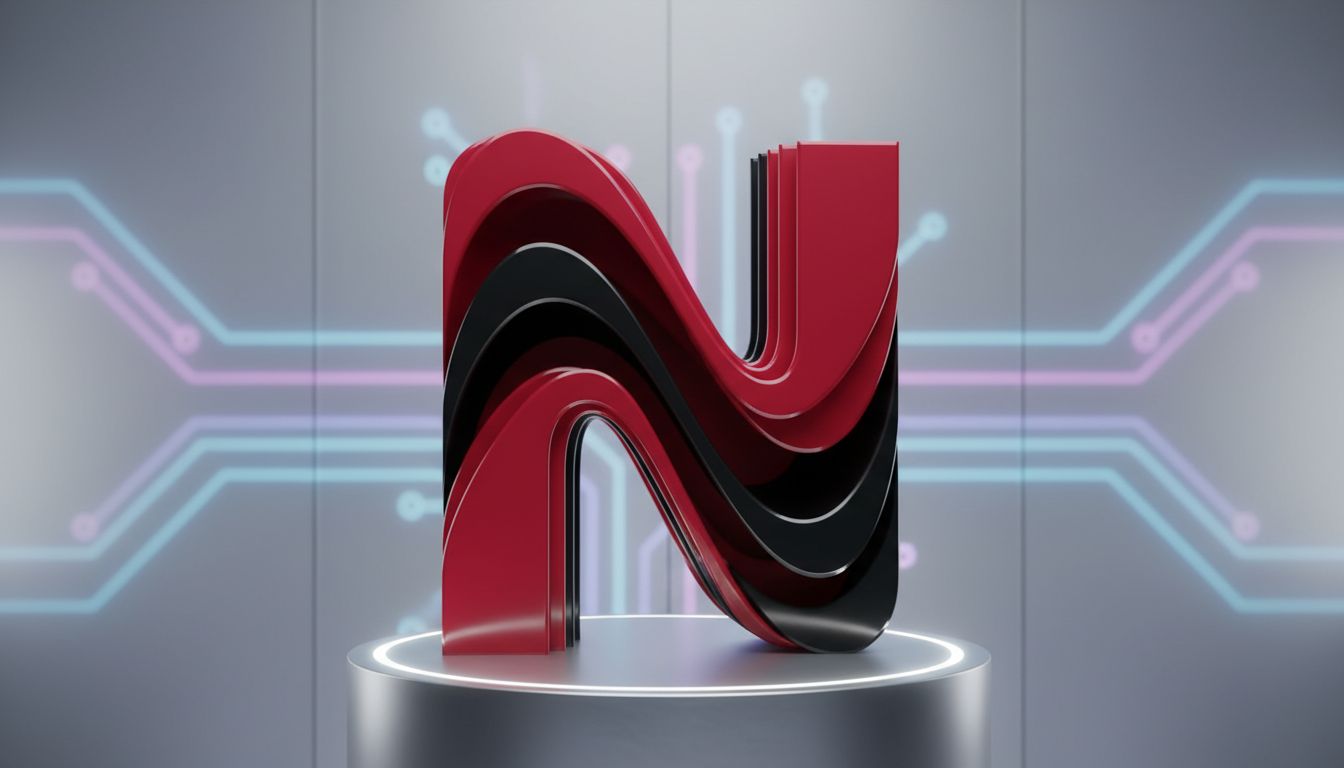
The genius of the “N” icon lies in its construction. It is designed to look like a single, continuous ribbon folded over itself. This is achieved through subtle use of shading and varying tones of red. The two outer vertical legs of the “N” are a slightly darker, muted red, while the diagonal crossbar is a bright, luminous red that casts a subtle shadow over the right leg.
This “ribbon fold” accomplishes several things. First, it reintroduces a sense of depth and three-dimensionality that was lost during the 2014 flat redesign, but it does so in a modern, sophisticated way that doesn’t rely on outdated drop shadows. Second, the ribbon imagery subliminally evokes the idea of a red carpet, a celluloid film strip, or a ticket stub, maintaining the brand’s connection to the magic of Hollywood. The “N” monogram is a triumph of responsive design, proving that a brand can maintain a cohesive identity while adapting its assets for specific technological use cases.
The Anatomy of a Successful Rebrand and Corporate Identity
Adaptability Across Devices
The core lesson from Netflix’s visual evolution is the absolute necessity of adaptability. A modern logo cannot exist in a vacuum; it must perform seamlessly across an incredibly diverse array of touchpoints. Netflix’s branding system is responsive. The full wordmark is utilized on large screens, billboards, and cinematic intros. The “N” monogram takes over on mobile apps, social media avatars, and favicons. This dual-logo strategy ensures maximum legibility and brand recognition regardless of how the user is interacting with the service.
The Role of Custom Typography: Netflix Sans
To further solidify its brand identity and reduce licensing costs, Netflix introduced its own custom typeface, “Netflix Sans,” in 2018. Developed in-house, this font was designed with display aesthetics and screen legibility in mind. The clean, geometric sans-serif typeface perfectly complements the minimalism of the 2014 logo and the 2016 monogram. By owning its typography, Netflix ensures a unified, proprietary visual language across its entire user interface, marketing materials, and corporate communications.
Lessons for Modern Brand Identity
For businesses looking to establish or refresh their visual identity, the Netflix case study highlights the importance of strategic foresight. A logo should not just look good; it must solve business problems. It must scale, it must communicate the brand’s core values, and it must evoke the right emotional response from the target audience.
Achieving this level of brand synergy requires professional expertise and a deep understanding of market trends. If you are looking to create a brand identity that withstands the test of time and digital shifts, consulting with experts like London Logo Designs can provide the strategic foundation your business needs to build a scalable and impactful visual presence. Just as Netflix partnered with top-tier design agencies to refine its look, investing in professional logo design is a critical step in securing a competitive advantage in your industry.
Key Takeaways
- Evolution is Necessary: A brand’s visual identity must evolve alongside its business model and technological advancements. Netflix shifted from physical media to digital streaming, and its logo transformed accordingly.
- Simplicity Scales: The transition from a heavily shadowed, 3D logo to a flat, minimalist design allowed Netflix to maintain crisp legibility across all modern devices, from 4K TVs to smartwatches.
- Responsive Branding: The introduction of the standalone “N” monogram proves the value of having a responsive logo system. Brands need variations of their logo optimized for specific digital spaces, like app icons and social media profiles.
- Color is Psychological: The specific, vibrant “Netflix Red” is used strategically to command attention, evoke the excitement of a cinema, and create a strong, instantly recognizable visual anchor.
- Subtle Details Matter: The “ribbon fold” effect on the “N” monogram creates a modern illusion of depth without relying on outdated 3D effects, subtly nodding to red carpets and film strips.
Frequently Asked Questions
Why did Netflix change its logo from the original film reel design?
The original 1997 film reel logo was too literal, difficult to scale, and featured a dark purple color scheme that lacked visual impact. As Netflix shifted its focus to DVD rentals and eventually streaming, it needed a bolder, more scalable, and recognizable logo that stood out on physical mailers and digital screens.
What does the “N” in the newer Netflix logo represent?
The standalone “N” monogram, introduced in 2016, represents a continuous ribbon folded over itself. This design subtly evokes imagery of a red carpet or a celluloid film strip. Practically, it serves as a highly legible, compact icon optimized for mobile apps and social media avatars.
Did the “N” logo replace the full Netflix wordmark?
No, the “N” monogram did not replace the primary wordmark. Netflix uses a responsive branding system. The full wordmark is used for large-scale applications like website headers, billboards, and TV interfaces, while the “N” is used for space-constrained environments like mobile app icons.
Why did Netflix remove the drop shadow from its logo in 2014?
In 2014, the digital design industry moved aggressively toward “flat design” to ensure better performance and cleaner aesthetics on high-resolution mobile devices. Netflix removed the drop shadow to modernize its brand, making the logo cleaner, more scalable, and better suited for a global, digital-first streaming platform.
What font does the current Netflix logo use?
The current Netflix logo uses a highly customized typographic treatment. However, for its broader brand identity, user interface, and marketing materials, the company developed its own proprietary, custom typeface called “Netflix Sans” to ensure brand consistency and eliminate massive font licensing fees.
Conclusion
The visual journey of Netflix is a testament to the power of strategic, forward-thinking design. The Story Behind Netflix’s Iconic “N” Logo Evolution is not just about changing fonts or updating colors; it is a narrative about a company that continuously anticipates the future of technology and consumer behavior. By shedding its literal, outdated 90s aesthetic in favor of a bold, responsive, and cinematically inspired visual system, Netflix has cemented its status as a premier global brand.
The transition from the heavy, drop-shadowed text of the DVD era to the sleek, flat wordmark and the ingenious ribbon-folded “N” monogram demonstrates that true brand strength lies in adaptability. Netflix proves that a brand can maintain its core DNA—the cinematic arc, the vibrant red—while completely modernizing its execution to fit the screens of tomorrow.
For modern businesses, the lessons are clear: your visual identity must be a living, breathing asset. It must be scalable, memorable, and meticulously crafted to perform in a digital-first world. By understanding the psychology of color, the necessity of responsive design, and the power of simplicity, any brand can build a visual legacy that commands attention and inspires loyalty in an ever-changing marketplace.